
In the heart of Sindh, in a quiet village far from city noise, a mother from a low-income family cried, not because she was given money, but because someone listened. That someone was Usman Zahid.
“I just listened to her,” Usman recalls. “Her children were struggling. She was overwhelmed. And in that moment, I realized something important, real impact doesn’t begin with power. It begins with the presence.”
That moment shaped everything Usman does today. From surviving a life-threatening accident to leading national projects in child development, his mission has stayed the same: make life better for people like her.

A Devastating Car Crash—and a Comeback
In 2006, Usman Zahid life changed in a split second. A major car accident left him with 17 fractures on the left side of his face and skull. His jaw was wired shut. He couldn’t talk, eat, or use his dominant hand.
For an entire year, he was bedridden.

But even in that silence, he found strength.
“I couldn’t move. Couldn’t talk. But I could still think. I could still lead.”
Just a month after the accident, Usman returned to work, using only his left hand to help design a client’s exhibition booth in Germany. He may have been physically broken, but his will was intact.
“Even when your body is broken, your will doesn’t have to be,” he says.
Today, he writes with both hands and leads with both grit and gratitude.
The Book That Lit a Fire
Usman’s mindset didn’t come from a conference or a coach. It came from a book: The Compound Effect by Darren Hardy.
“That book changed my life. It was my first self-help purchase. It taught me that transformation doesn’t require huge leaps. Just small, consistent actions done well.”
This philosophy—small systems over big goals—became the heartbeat of his work. Whether he’s consulting for global organizations or helping individuals build better lives, his approach is grounded in simple, sustainable design.
Designing Change in Pakistan’s Remote Communities
Today, Usman is a partner in White Rice Impact, a social innovation and design firm. In one of their most powerful projects, his team worked with UNICEF Pakistan to reduce child stunting in underserved regions.
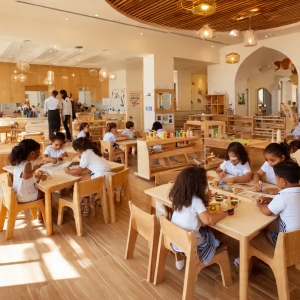
Their approach was different. Instead of telling mothers what they were doing wrong, they focused on teaching easy-to-follow routines around nutrition, hygiene, and early learning.
More than 11,000 mothers were trained across remote villages. They learned how to build small but powerful habits to improve their children’s growth and development.
“It wasn’t about lectures or leaflets. It was about behavioral design. How do you make the right thing easy to do, every day?”
A Bold Vision for the Nation’s Future
Right now, Usman is leading a new initiative to integrate Early Childhood Development (ECD) into Pakistan’s national curriculum.
Why?
Because, according to Usman, the early years of life are where national success is built.
“If we want Pakistan to thrive, we need to start with its youngest citizens. That means equipping parents with the tools to support their children from day one.”
His goal is not just local, it’s global. He wants to empower 1 million people by 2030 to find clarity in their lives, grow in their careers, and contribute meaningfully to the world.
Simplicity Is the Secret
Usman used to chase big ideas. But over the years, he’s come to realize that the secret to success is in the small things.
“I’d tell my younger self: start smaller. Trust systems more than sprints. Focus on building habits, not chasing hacks.”
This mindset has shaped every project he touches. Whether working on climate, education, or health, his method remains the same: make it easier, make it doable, and make it stick.
He believes lasting impact doesn’t come from working harder—it comes from designing smarter.
From Local Voices to Global Tables
Usman now works with the United Nations and other global partners, consulting on projects related to public health, education reform, and climate resilience.
His gift lies in making complex problems feel human and solvable.
“We don’t need more jargon or 100-page reports. We need systems that help people make better decisions every day,” he says.
Whether he’s in a boardroom in Geneva or a village in Balochistan, Usman’s purpose is the same: create clarity out of chaos.
What People Will Remember
When asked how he wants to be remembered, Usman smiles humbly.
“As the guy who made systems that actually worked. Who helped people go from surviving to thriving.”
And those who’ve worked with him agree. He has an ability to turn overwhelm into order, helping others take action with confidence and clarity.
His Mission: 1 Million Transformed by 2030
By the end of the decade, Usman wants to empower 1 million people to redesign their lives. He’s doing this through tools, courses, systems, and programs that teach clarity, productivity, and emotional resilience.
He believes that when people live with structure and intention, they not only achieve more, they become beacons of change for their families and communities.
“This isn’t just about self-improvement,” he says. “It’s about nation-building from the inside out.”
A Message for Young Dreamers
For anyone starting their journey, Usman offers this advice:
“Start smaller than you think. Trust the system. Don’t mistake movement for progress. Build habits that serve you. And never underestimate the power of one small, well-designed step repeated over time.”
Final Thought
Usman Zahid’s story isn’t one of overnight success. It’s one of quiet consistency, of learning from pain, of using design to make life better for those who need it most.
He listened when others spoke. He stood up when life knocked him down. And now, he’s building the future of Pakistan, one routine, one mother, one child at a time.
You can follow his journey on LinkedIn and explore his work at White Rice Impact.
Read More: Binghatti Capital Aims High: $1 Billion Shariah‑Compliant Power Move!