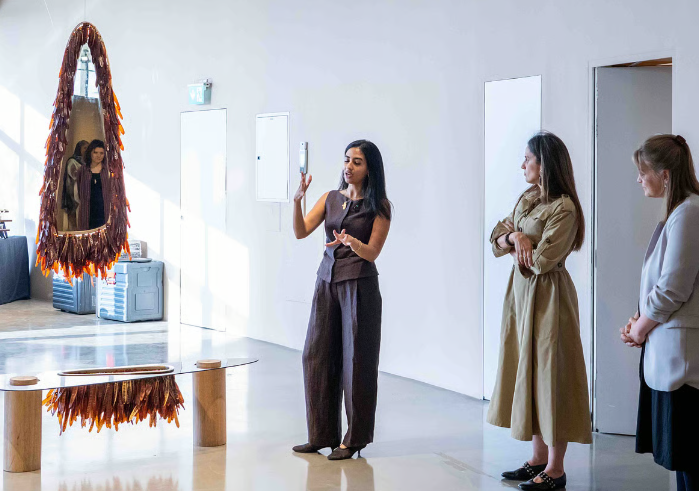
In the UAE, expats are leading a remarkable eco-friendly innovation—creating plant-based leather using local natural resources. This breakthrough material offers a sustainable alternative to traditional animal leather, aligning with global efforts to protect the environment. Alongside this innovation, a stunning mural inspired by Emirati chants has been unveiled, showing how modern creativity can honor and celebrate cultural heritage. This story highlights how expats contribute to the UAE’s sustainability goals while supporting local culture and art.
What is UAE Plant-Based Leather Innovation?
Plant-based leather is an environmentally friendly material made from natural plant fibers instead of animal hides. It mimics the look and feel of leather but avoids the environmental and ethical problems caused by traditional leather production.
In the UAE, expats have developed this plant-based leather by using local plants and agricultural waste, including date palm leaves and cactus fibers. These materials are abundant in the region but often go unused or discarded. By turning them into leather-like products, the innovators are reducing waste and creating a new, sustainable resource.

Unlike animal leather, plant-based leather avoids harmful tanning processes that release toxic chemicals into the environment. It also requires less water and energy to produce. This makes it a greener, cruelty-free alternative that appeals to environmentally conscious consumers worldwide.
How Expats Are Driving This Eco-Friendly Movement in the UAE
The UAE is home to a large expat population from all over the world, many with backgrounds in sustainability, design, and innovation. A group of these expats came together with a shared vision: to create a sustainable leather alternative that would fit the UAE’s climate and culture.

Among them is Maria Lopez, a designer from Spain who has worked extensively in sustainable fashion. “We saw an opportunity to use the plants and agricultural byproducts around us. These resources are often overlooked, but they have incredible potential to be transformed into something useful and beautiful,” she says.
Another key member, Ahmed Al-Nouri, an environmental scientist from Egypt, helped develop the extraction process for plant fibers. “The goal was to create a material that performs like leather but is better for the planet,” Ahmed explains. “We experimented with different plants and processes until we found a formula that works well in the UAE’s climate.”
Together, this diverse team has formed a small company that produces plant-based leather locally, creating new jobs and skills within the community. Their work supports the UAE’s goals to promote green technology and reduce environmental impact.
The Science Behind Plant-Based Leather: A Closer Look
The process of making plant-based leather involves harvesting plant fibers, treating them to remove impurities, and binding them into sheets that resemble traditional leather. In the UAE’s version, date palm leaves are collected from farms and urban areas, where pruning creates a lot of waste.
These leaves go through a natural pulping process, combined with natural binders like cactus juice to create a flexible and strong material. The result is a leather-like fabric that can be dyed, stitched, and molded, making it suitable for fashion accessories, upholstery, and more.
One advantage of this plant-based leather is its breathability and biodegradability. Unlike synthetic alternatives made from plastics, it breaks down naturally without harming the environment.
A Stunning Mural Celebrating Emirati Chants and Culture
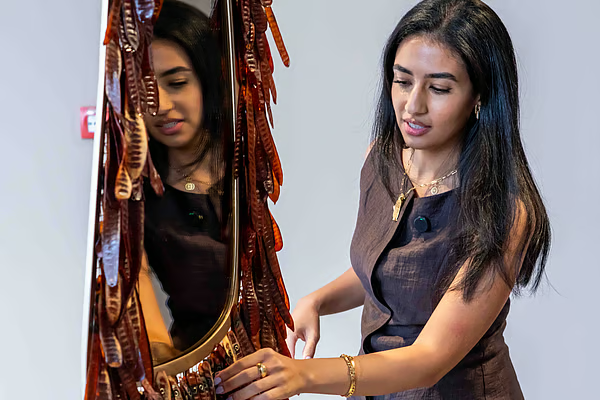
Alongside the plant-based leather innovation, the team collaborated with local Emirati artists to create a mural that celebrates traditional Emirati chants, also called “Al Nabati poetry.” These chants are an oral tradition of poetic verses that tell stories of the land, the sea, and Emirati life.
The mural uses vibrant colors and symbols from Emirati heritage, including desert landscapes, falcons, and the dhow boats. Painted on a wall near the production studio, it attracts locals and tourists alike, inviting viewers to reflect on the connection between innovation and tradition.
Artist Fatima Al Mazrouei led the mural project. She says, “The chants are the soul of the Emirati people. Bringing them to life on this wall connects our past with the future. It also reminds us that progress and culture should go hand in hand.”
Why Plant-Based Leather Innovation Matters for the UAE’s Future
The UAE is rapidly growing into a global hub for trade, tourism, and luxury goods. However, this growth has environmental costs. The government has launched multiple initiatives to protect natural resources and reduce pollution, aiming for a more sustainable future.
Plant-based leather innovation fits perfectly with these goals. It offers a local, green alternative to imported animal leather, cuts down pollution, and supports the circular economy by turning waste into valuable products.
Experts believe the UAE can become a leader in sustainable fashion by investing in such green technologies. “The global market for vegan leather is expanding fast,” says sustainability consultant Dr. Salma Hussein. “By developing our own plant-based leather industry, we can tap into this market while preserving our environment.”
How the Local Community Benefits from This Innovation and Art
Beyond environmental benefits, this project creates positive social and economic impacts. Local farmers benefit because their agricultural waste is collected and used, giving them an extra income source and reducing burning of waste that causes air pollution.
The mural project also supports local artists, providing them with visibility and opportunities to share Emirati culture with a wider audience. It has become a gathering place for cultural events and educational tours that promote environmental awareness.
Tourists visiting the mural often learn about the plant-based leather innovation, creating a ripple effect of knowledge about sustainability and Emirati heritage.
Future Plans: Expanding Plant-Based Leather and Cultural Art in the UAE
The innovators behind the UAE plant-based leather project have ambitious plans. They want to expand production and introduce new products such as shoes, handbags, furniture covers, and even car interiors made from plant-based leather.
“We are working to improve the material’s durability and texture so it can compete with high-end leather,” says Maria Lopez. “Our dream is to see UAE plant-based leather used in fashion shows, luxury boutiques, and international markets.”
At the same time, the mural artists are planning a series of artworks inspired by other elements of Emirati culture and nature. These projects aim to strengthen community ties and inspire young Emiratis to appreciate their heritage while embracing innovation.
Voices From the Community: What Locals and Expats Say
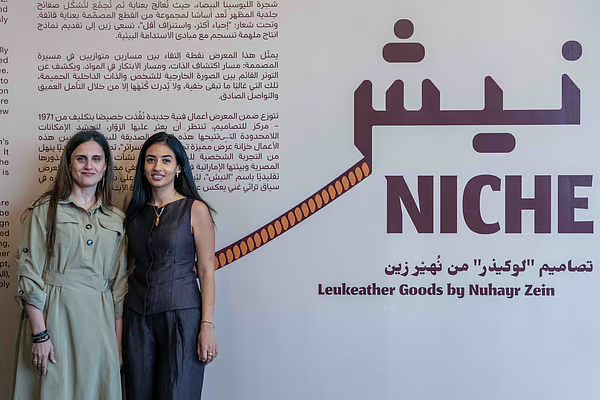
Local residents have welcomed the project warmly. “It’s wonderful to see our traditions being honored in modern ways,” says Saeed Al Mansoori, a Dubai-based businessman. “The plant-based leather is impressive, and the mural is beautiful. It makes me proud of our culture and our future.”
Expats like Ahmed and Maria feel proud to contribute to the UAE’s vision. “Living here means becoming part of a dynamic and forward-thinking society,” Ahmed says. “Our work shows how expats can help make a difference.”
Conclusion: A Powerful Blend of Sustainability and Culture in the UAE
The UAE plant-based leather innovation led by expats is a shining example of how sustainability and culture can come together. By using local plants to create eco-friendly leather, this project reduces waste and supports green technology. The accompanying mural inspired by Emirati chants connects modern creativity with deep-rooted traditions.
This story encourages everyone to think about how innovation can respect and enhance cultural heritage while protecting the environment. The UAE is showing the world that progress and preservation can go hand in hand for a brighter, greener future.
Read More: Hidden Bar Abu Dhabi Is Back With A Stunning New Look