The first UAE National Day celebrations in 1972 marked more than just an anniversary. They represented the emergence of a young nation ready to take its place on the global stage. The event brought together communities from all seven emirates to celebrate unity, culture, and the vision of the country’s founders. The atmosphere was one of optimism and excitement, reflecting the determination of a nation eager to define its identity in the world.
A Historic Celebration Under Sheikh Zayed
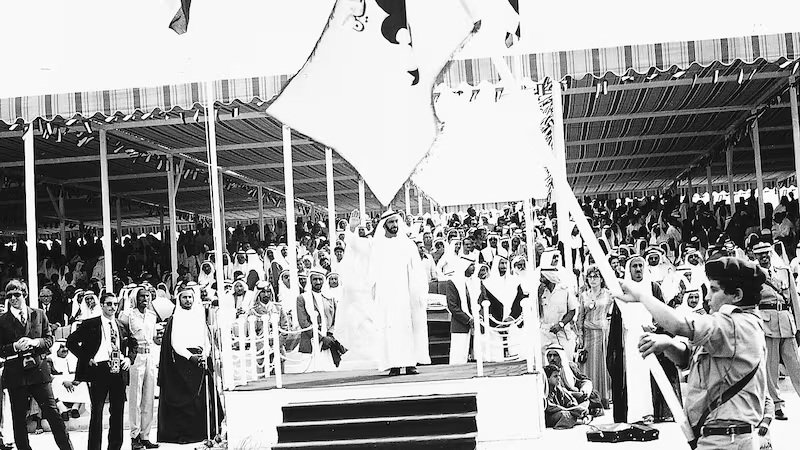
The celebrations were presided over by the UAE’s founding father, the late Sheikh Zayed bin Sultan Al Nahyan. His leadership and vision guided the early steps of the young federation, and the first National Day provided an opportunity to showcase the country’s progress and ambition. A grand parade was held, displaying the pride and unity of the newly formed nation. People from all walks of life came together to participate in the festivities, and the streets of Abu Dhabi were filled with a sense of hope and celebration.
The choice of Abu Dhabi as the host city highlighted its growing importance as the capital and center of national activity. The National Day celebrations were not just a commemoration; they were a statement of the nation’s determination to stand strong and establish its place in the region and the world.

Cultural Brilliance with Nagat Al Saghira
A major highlight of the 1972 celebrations was the performance of Egyptian singer Nagat Al Saghira. She was one of the most celebrated voices in the Arab world, known for her musical talent and her contribution to cinema. Her appearance in Abu Dhabi reflected the UAE’s commitment to cultural excellence and its desire to establish itself as a hub for artistic expression.
At the time, Nagat Al Saghira was in her mid-thirties and at the height of her fame. Her films were popular across the Arab world, and her voice was widely admired. Her performance in Abu Dhabi was a clear signal that the UAE was ambitious not only politically and economically but also culturally. By inviting such a prominent figure, the young nation demonstrated its confidence and intent to connect with the broader Arab world, making the first National Day a truly memorable occasion.

The Debut of the National Anthem
The first National Day also featured the public debut of the UAE national anthem, Ishi Biladi. At the time, the anthem was performed only as a melody without lyrics, which would not be added until 1986. Even without words, the anthem had a powerful impact. Its melody created a sense of unity and pride, symbolizing the country’s aspirations as it entered its second year.
There has been some debate over the original composer of the anthem. Some believe it was created by Mohammed Abdel Wahab, one of Egypt’s most renowned musicians, known for his work on patriotic songs and national anthems for other Arab countries. Others suggest that his nephew, Saad Abdel Wahab, may have been involved. Regardless of its exact origin, the anthem’s debut in 1972 established a lasting tradition of national pride and has remained an important symbol of unity ever since.
A Year of Historic Achievements
The first National Day came at a time of remarkable progress for the UAE. By 1972, the nation had already achieved several milestones. It had joined the United Nations and welcomed Ras Al Khaimah as the seventh emirate, completing the federation. The country had also become a member of major global institutions such as the World Bank and the International Monetary Fund. Plans for introducing a national currency, the dirham, were underway, signaling economic stability and future growth.
These achievements reflected a nation gaining momentum and confidence. The National Day celebrations provided a moment for citizens to come together and reflect on the progress that had been made in a short period. It was a time to celebrate the unity of the emirates and the vision of the country’s leaders, who had laid the foundations for a prosperous and stable future.
Building a Tradition of Unity and Pride
The first UAE National Day set the tone for future celebrations. It was more than a single day of events; it became a tradition of national unity, pride, and cultural expression. The combination of public participation, cultural performances, and patriotic symbolism created a template for future National Days. Every year since 1972, citizens and residents have celebrated with parades, concerts, and community events, reflecting the enduring legacy of that first celebration.
The presence of a major Arab artist, the debut of the anthem, and the participation of people from all emirates showed that the UAE valued both cultural and national identity. These elements became central to the country’s celebrations and continue to inspire pride among the population. The first National Day was a moment when the spirit of the federation was fully visible, and it remains an important milestone in the nation’s history.

The Cultural Significance of the 1972 Celebration
Inviting Nagat Al Saghira to perform was a deliberate choice that underscored the UAE’s ambitions. It was not only a musical event but also a statement about the country’s cultural aspirations. By hosting an artist of such stature, the UAE demonstrated its commitment to fostering arts and culture from the very beginning. This emphasis on cultural events became a key feature of National Day celebrations in subsequent years, reinforcing the idea that the UAE was not just building economically and politically but also culturally.
The concert also allowed the first public performance of the national anthem, even without lyrics. This moment had a profound impact on attendees, creating a sense of identity and unity at a time when the country was still defining itself. The melody itself symbolized hope, progress, and national pride, and it has remained an enduring part of UAE tradition.
The First National Day and Its Legacy
The first National Day in 1972 captured the optimism and ambition of a country taking its earliest steps on the world stage. It reflected a nation eager to embrace its future while celebrating its heritage and cultural connections. The event brought together citizens, leaders, and cultural figures, creating a shared sense of pride and belonging.
Since that first celebration, National Day has grown in scale and significance. The traditions established in 1972, such as public concerts, parades, and performances of the national anthem, continue to be central to the celebrations. Each year, the country honors the vision of its founding fathers and the unity of its people, reflecting on how far the UAE has come and the values it continues to uphold.
Conclusion
The inaugural UAE National Day was more than a ceremonial event. It was the first public expression of a national identity that was just beginning to take shape. Under the leadership of Sheikh Zayed bin Sultan Al Nahyan, the nation celebrated its unity, embraced its culture, and looked confidently toward the future.
The debut of the national anthem, the presence of a prominent Arab artist, and the enthusiastic participation of citizens from all emirates established traditions that have lasted for decades. The 1972 National Day remains a defining moment in the UAE’s history, symbolizing the journey of a young nation from its formative years to the thriving, confident country it is today. It was a celebration of unity, culture, and progress, laying the foundation for a national pride that continues to inspire generations.
Do follow UAE Stories on Instagram
Read Next – UAE Eid Al Etihad Long Weekend Weather Forecast