
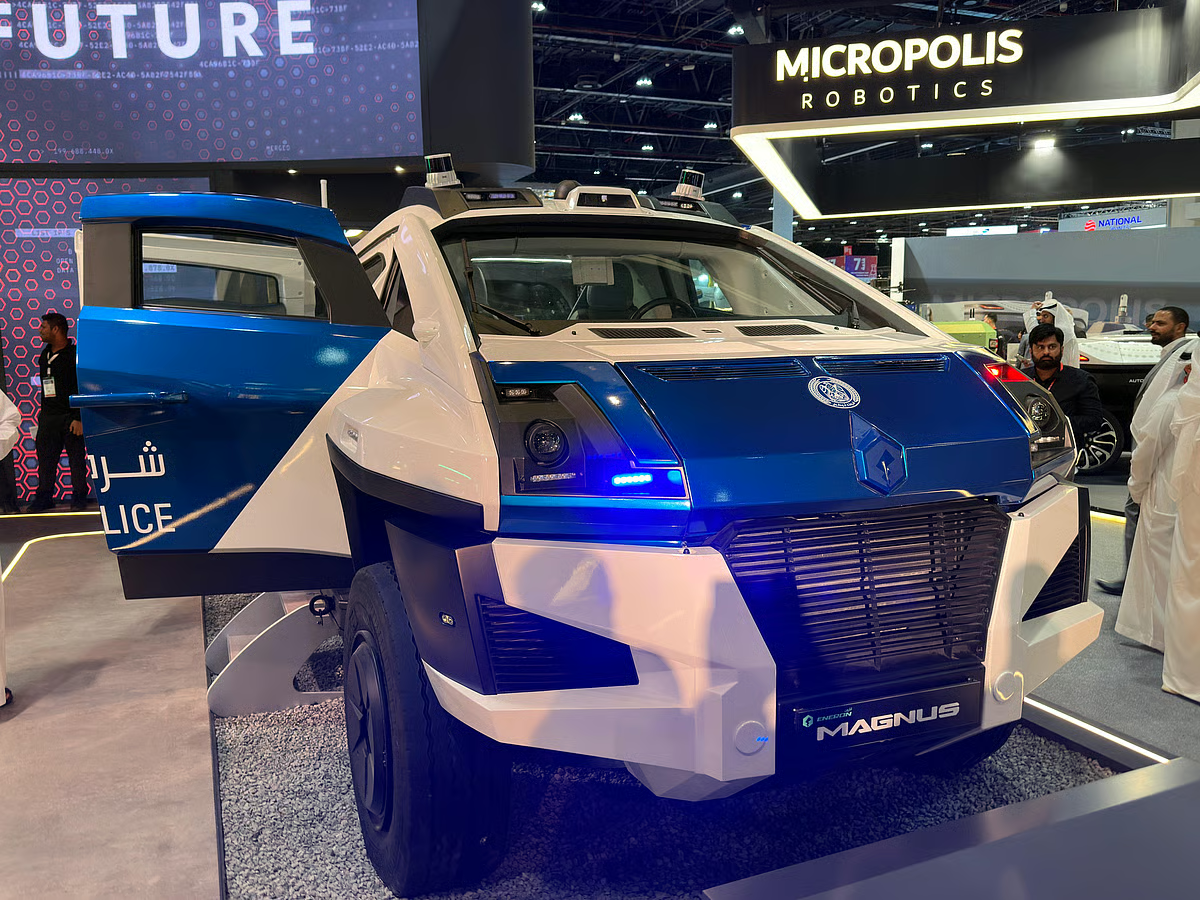
The UAE is stepping into the future of policing and sustainability with a bold new plan: the launch of a mobile police station with EV drones. This futuristic unit is designed to offer services to motorists, enhance road safety, and recharge electric vehicles (EVs) on the move.
The announcement signals a major step in how the country integrates advanced technology with public service and green initiatives.
Revolution in Policing and Roadside Support
The mobile police station is not just a traditional van with a few officers inside. It’s a smart, self-contained unit capable of serving a wide range of needs, from accident response and traffic support to energy assistance for EVs.

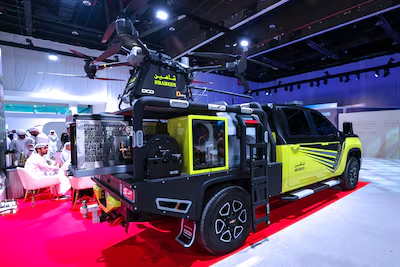
What sets this unit apart is the inclusion of drones that can recharge electric vehicles on the road. These drones are equipped with mobile battery systems that can be flown directly to a stranded EV, providing it with just enough power to reach the nearest charging station.
This means that UAE motorists won’t have to worry as much about getting stuck with a dead battery: help is just a drone flight away.

Part of the UAE’s Smart City Vision
The idea of a UAE mobile police station with EV drone support fits perfectly into the country’s larger ambition of building smart, sustainable cities. These police stations are expected to serve multiple urban locations and will be deployed in high-traffic or high-demand areas based on real-time data.
This aligns with Dubai and Abu Dhabi’s broader strategies to adopt AI, robotics, and smart infrastructure. These mobile units will help reduce traffic response times and offer services without the need to visit a traditional police station.
What Services Will These Units Provide?
The mobile stations will function as full-service hubs. According to early reports, they will include:
- On-site police support for accidents, disputes, or emergencies
- Digital kiosks to report crimes, lost items, or pay fines
- Live monitoring systems with integrated cameras and sensors
- EV charging drones for energy support on the road
The drones that recharge electric vehicles are the highlight. Controlled remotely, they can be deployed in minutes and are expected to make a big difference in EV user confidence.
Why This Matters for EV Drivers in the UAE
As the country pushes for wider adoption of electric vehicles, range anxiety — the fear of running out of battery — remains a major concern. The ability to request drone-based emergency charging support could help resolve that issue.
The move also shows how the UAE is not just encouraging the sale of EVs but is also investing in real-world infrastructure to support them.
This is crucial as the UAE aims to have more than 40% of all vehicles electric by 2050, in line with its Net Zero goals.
How the Drone EV Charging Works
The EV-charging drones will carry high-capacity battery packs and are programmed to locate stranded vehicles through GPS. Once deployed, the drone lands next to the car, connects via a standard charging port, and supplies enough power for a short trip.
Each drone will carry a quick-charge lithium battery capable of providing 10-20 kilometers of range, depending on vehicle type. While it’s not a full charge, it’s enough to reach a nearby station or safe location.
Future versions could include solar charging or swappable batteries, increasing range and efficiency.
Security, Surveillance, and Traffic Monitoring
Beyond helping EVs, the mobile police station has another major advantage: enhanced public safety.
With advanced cameras, radar systems, and drones that can do aerial monitoring, each station will function like a mobile surveillance unit. This can:
- Monitor traffic violations
- Identify reckless driving
- Assist during road accidents
- Help in criminal investigations
These systems are fully integrated with national databases and real-time traffic control centers.
Designed for Flexibility and Fast Deployment
One of the biggest benefits of a UAE mobile police station with EV drone capability is flexibility. These units don’t require permanent infrastructure. They can be dispatched where they’re most needed, whether it’s a major event, traffic hotspot, or a highway stretch with high EV traffic.
Officials say this kind of mobility is key to efficient policing in the future.
When Will We See Them on the Roads?
While there is no official launch date yet, the project is already in the testing phase. The first models are expected to roll out in Dubai and Abu Dhabi by the end of 2025, according to early estimates.
Authorities have said public trials will begin soon to assess real-world performance, especially for the drone EV charging service.
Public Reaction and Expert Opinions
Early reactions from residents and experts have been largely positive. Drivers welcome the idea of emergency charging by drone, and tech experts see this as a smart use of AI and robotics in everyday life.
Security analysts have also praised the idea for improving rapid-response capabilities during emergencies.
“The combination of mobility, energy support, and surveillance makes this a next-generation solution,” said a smart mobility researcher from Dubai Future Foundation.
What This Means for the Future
This is more than just a high-tech idea. It reflects a shift in how governments approach urban mobility, sustainability, and public service.
By combining smart policing with green energy support, the UAE is once again showing leadership in tech-driven innovation.
As cities around the world face growing traffic, rising EV numbers, and demand for faster services, the UAE mobile police station with EV drone model could soon inspire similar projects in other countries.
Final Thoughts
The UAE’s move to launch mobile police stations with EV-charging drones is both futuristic and practical. It addresses real concerns: from road safety and police accessibility to EV range anxiety, using advanced technology.
Once operational, these units could change the way we think about roadside assistance and smart policing.
Whether you’re driving an electric car or just passing through, the roads in the UAE are about to get a lot smarter and a lot safer.
Read More: UAE AI Education Boost: Empowering Students With Future-Ready Skills