The Comprehensive Economic Partnership Agreement (CEPA) between the UAE and Cambodia, which became effective earlier this year, is expected to significantly boost non-oil trade between the two nations, targeting more than USD 1 billion by 2030. The agreement is designed to strengthen economic collaboration, create new investment opportunities, and establish a framework for businesses in both countries to expand and diversify their operations.
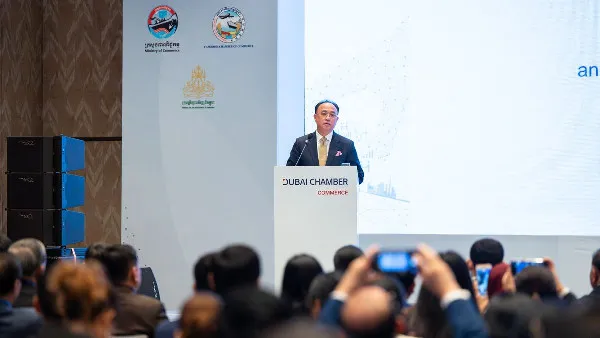
Neak Oknha Kith Meng, President of the Cambodia Chamber of Commerce, emphasized CEPA’s strategic importance during the “Doing Business with Cambodia” forum. He described the agreement as more than a trade deal, calling it a crucial policy tool that can help both countries leverage their economic strengths and tap into broader regional markets.
CEPA as a Gateway to ASEAN and GCC Markets
Kith Meng highlighted that CEPA provides the UAE with a strategic entry into the ASEAN market, which includes approximately 680 million consumers. For Cambodia, the agreement offers preferential access to the Gulf Cooperation Council (GCC) markets, enabling the country to diversify its economy, attract foreign investments, and integrate more closely with global trade networks. This partnership is seen as mutually beneficial, strengthening trade ties while paving the way for sustainable economic growth.

The agreement is expected to drive expansion across several key sectors, including infrastructure, logistics, tourism, renewable energy, and the digital economy. These areas are critical for Cambodia as it seeks to position itself as a regional transport hub while catering to the rising tourism and business demands from the UAE and other Middle Eastern countries.
Infrastructure and logistics projects are particularly attractive to UAE investors due to Cambodia’s plans to modernize its transport networks and improve connectivity within the region. Tourism initiatives aim to tap into the growing number of visitors from the Middle East, offering opportunities for investment in hotels, resorts, and leisure facilities. Renewable energy projects, including solar and wind initiatives, are being promoted to lower industrial energy costs and enhance business competitiveness.

UAE Investment Opportunities in Cambodia
A Dubai Chamber delegation recently visited Phnom Penh under the “New Horizons” program, underscoring the growing interest of UAE investors in Cambodia. Kith Meng described the visit as a symbol of Cambodia’s new phase of openness and international engagement. He highlighted that this engagement demonstrates a shared commitment to strengthening bilateral economic relations and exploring joint investment ventures.
Cooperation in the digital economy is becoming a priority, particularly in financial technology. FinTech investments are being encouraged to facilitate cross-border trade finance, improve payment systems, and streamline business operations. Cambodia is also establishing vocational training centers to create a skilled workforce capable of supporting its expanding manufacturing and service industries. These initiatives are aligned with Cambodia’s strategy to promote robust economic growth through investor-friendly policies and financial stability.
Infrastructure projects remain a key area of interest for UAE businesses. Cambodia’s focus on modernizing roads, ports, and logistics networks provides opportunities for foreign investors to participate in large-scale development projects. Tourism and hospitality sectors also offer significant potential as Cambodia seeks to attract more visitors from the Middle East. Investments in hotels, resorts, and leisure facilities are expected to support the country’s tourism ambitions while creating profitable opportunities for UAE companies. Renewable energy initiatives are also gaining attention, helping businesses reduce costs, improve sustainability, and enhance industrial competitiveness.
Strengthening Bilateral Economic Ties
Kith Meng emphasized Cambodia’s strategic role as a gateway to the broader ASEAN market, benefiting from major regional trade agreements such as the Regional Comprehensive Economic Partnership (RCEP). He encouraged UAE companies to explore investment opportunities in Cambodia, assuring full support from the Cambodia Chamber of Commerce for market entry and guidance.
The diversity of the Emirati delegation visiting Phnom Penh, which included representatives from oil and gas, construction materials, food and beverages, and healthcare sectors, reflects the growing interest of UAE investors in Cambodian opportunities. Kith Meng expressed appreciation for Dubai Chambers’ role in promoting bilateral economic cooperation and facilitating trade relations between the two countries.
Cambodia’s updated investment laws offer incentives such as tax holidays, streamlined procedures for foreign enterprises, and other benefits, making the country an attractive destination for UAE investors seeking long-term growth. By establishing operations in Cambodia, UAE businesses can access both ASEAN and GCC markets, benefiting from trade agreements and a supportive business environment.
Collaborative Growth Across Key Sectors
Several sectors are expected to see significant investment under CEPA. Infrastructure development remains a priority, with projects aimed at improving transport networks, port facilities, and industrial zones. These efforts are expected to boost logistics efficiency and reinforce Cambodia’s role as a regional trade hub.
Tourism and hospitality also present promising opportunities for collaboration. Cambodia is steadily improving its tourism infrastructure to attract visitors from the Middle East and beyond. UAE investors can contribute by developing hotels, resorts, entertainment facilities, and travel services. These collaborations are expected to support Cambodia’s tourism growth while offering lucrative ventures for UAE businesses.
Renewable energy is another focal area. Cambodia is promoting solar, wind, and other clean energy projects to reduce industrial energy costs, lower carbon emissions, and enhance competitiveness. UAE companies with expertise in sustainable energy solutions are well-positioned to invest in these initiatives, contributing to both economic growth and environmental sustainability.
The digital economy is rapidly expanding in Cambodia, with FinTech solutions playing a central role. Cross-border trade finance, digital payment systems, and e-commerce platforms are being developed to enhance business efficiency and connectivity between the UAE and Cambodia. Vocational training centers are also being established to cultivate a skilled workforce capable of supporting manufacturing and services growth, creating a strong foundation for long-term economic development.
Future Outlook for UAE-Cambodia Trade
The Comprehensive Economic Partnership Agreement is expected to elevate UAE-Cambodia non-oil trade significantly, targeting over USD 1 billion by 2030. By unlocking opportunities in infrastructure, tourism, renewable energy, and the digital economy, CEPA provides a clear roadmap for sustained growth and stronger economic collaboration.
In the coming years, increased UAE investments, joint ventures, and strategic partnerships are likely to emerge in Cambodia. Businesses from both countries can benefit from favorable policies, regional trade agreements, and new market opportunities. CEPA is not just a trade agreement but a catalyst for innovation, investment, and long-term economic development, creating a win-win scenario for both nations.
With CEPA in place, the UAE gains access to a fast-growing ASEAN market, while Cambodia benefits from diversified investment inflows and stronger integration into the GCC hub. As both countries continue to explore trade and investment opportunities, the UAE-Cambodia partnership is expected to become a model of successful international cooperation, driving economic growth and shared prosperity for years to come.
Do follow UAE Stories on Instagram
Read Next – UAE President Approves AED 4 Billion Housing Benefits Package for Citizens in 2025