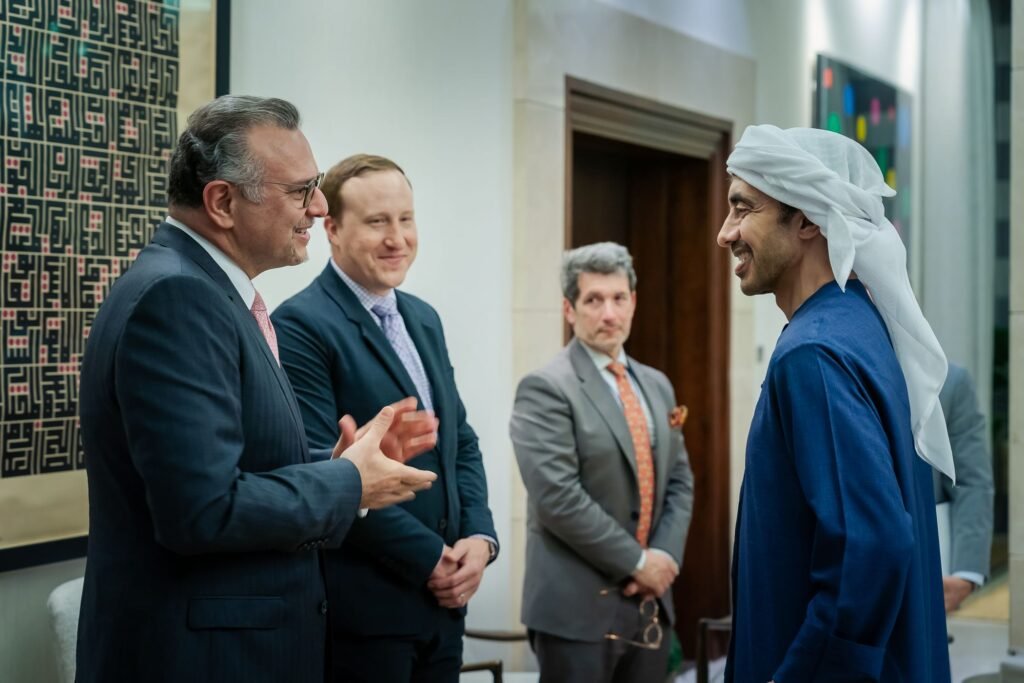
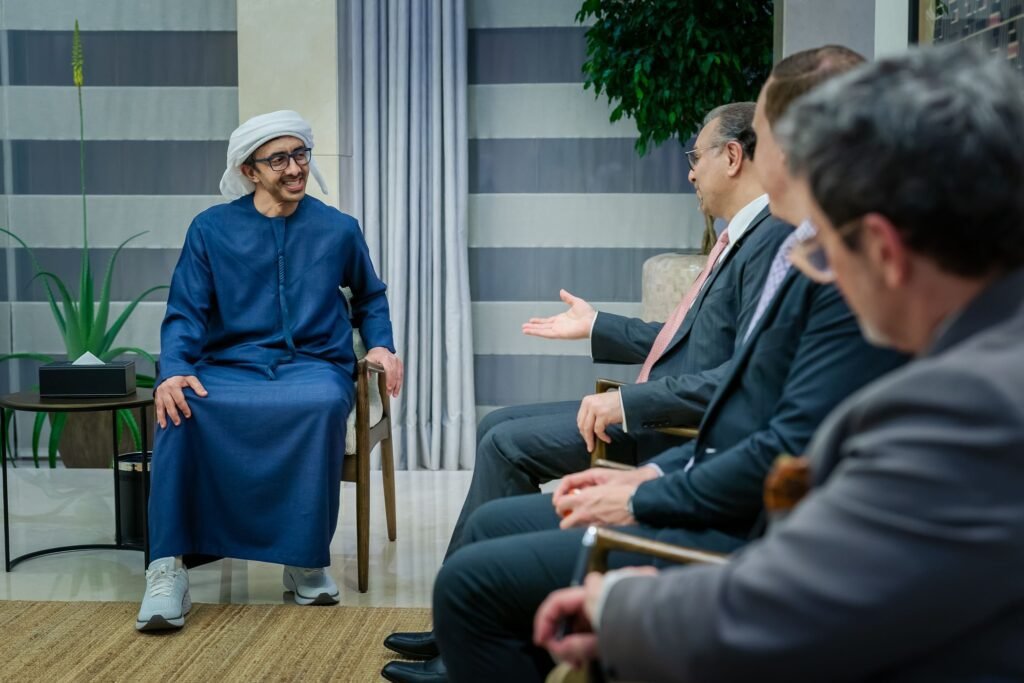
The Sudan Crisis Diplomacy effort gained renewed momentum on Tuesday, November 25, 2025, when His Highness Sheikh Abdullah bin Zayed Al Nahyan, the United Arab Emirates Deputy Prime Minister and Minister of Foreign Affairs, met in Abu Dhabi with Massad Boulos, Advisor to the President of the United States for African and Arab Affairs. Their meeting signaled a strengthened commitment to finding a peaceful resolution to Sudan’s prolonged civil war.
With the conflict in Sudan continuing for more than two years and creating immense suffering, this high-level engagement arrived at a critical moment. Both sides emphasized the urgent need to end the violence, protect civilians, and ensure that humanitarian aid reaches people in need without obstruction.
Why Sudan Crisis Diplomacy Is Urgent
Sudan’s civil war began in April 2023 as a struggle for power between the Sudanese Armed Forces and the Rapid Support Forces. This confrontation rapidly expanded into a nationwide conflict, causing extensive destruction and a severe humanitarian crisis. Entire communities have been displaced, infrastructure has collapsed, and millions of people live in constant fear and uncertainty.

As the situation deteriorated, the international community increasingly recognized the need for coordinated diplomatic action. The United Arab Emirates and the United States have played leading roles in encouraging dialogue, supporting relief efforts, and urging all parties in Sudan to focus on political solutions rather than military confrontation.
Key Highlights from the Abu Dhabi Meeting
During the meeting in Abu Dhabi, His Highness Sheikh Abdullah bin Zayed Al Nahyan and Massad Boulos discussed several essential priorities that define the current phase of Sudan Crisis Diplomacy.

Stopping the War and Protecting Civilians
The first priority highlighted was the immediate need for a ceasefire. Without a cessation of hostilities, humanitarian conditions will continue to deteriorate, making recovery even more difficult. His Highness Sheikh Abdullah bin Zayed Al Nahyan emphasized the importance of taking every possible measure to end the war, which has already lasted more than two years and continues to inflict severe suffering on Sudanese families.
Civilians remain in constant danger as fighting continues across various regions. An unconditional and immediate ceasefire would create space for dialogue, reduce civilian casualties, and lay the foundation for long-term stability.
Ensuring Humanitarian Aid Reaches People in Need
Humanitarian access is one of the most pressing challenges in Sudan. Many areas remain inaccessible due to ongoing battles, damaged infrastructure, and obstructions created by armed groups. As a result, relief agencies are unable to deliver adequate food, medical supplies, and basic necessities to millions of displaced families.
Both the United Arab Emirates and the United States emphasized the need to open secure humanitarian corridors and protect the delivery of essential supplies. The two sides underlined that civilian lives must be treated as a priority and that humanitarian workers must be allowed to operate without fear or restrictions.
Supporting a Civilian-Led Political Process
His Highness Sheikh Abdullah bin Zayed Al Nahyan reaffirmed the United Arab Emirates support for a political process guided by civilian leadership. He emphasized that enduring peace cannot be achieved through military power alone. Instead, Sudan’s future depends on constructive political dialogue, meaningful negotiations, and the involvement of civilian stakeholders.
The United States shares this position and continues to encourage Sudanese political groups, civil society organizations, and community representatives to participate in efforts to shape the country’s next political chapter. A stable, civilian-led government is viewed as essential for long-term peace and national recovery.
Strengthening the United Arab Emirates–United States Strategic Partnership
The meeting also highlighted the broader strategic relationship between the United Arab Emirates and the United States. Their cooperation extends across multiple areas, including international security, counterterrorism, regional stability, economic development, and humanitarian coordination.
Reem bint Ebrahim Al Hashimy, Minister of State for International Cooperation, and Sheikh Shakhboot bin Nahyan Al Nahyan, Minister of State, attended the meeting. Their presence reflected the strong institutional commitment of the United Arab Emirates to advancing peace efforts and strengthening coordination with global partners.
The Humanitarian and Political Dimensions of Sudan’s Conflict
Understanding the full importance of Sudan Crisis Diplomacy requires examining the toll the conflict has taken on the country.
Humanitarian Consequences
The war has led to widespread human suffering. Millions of people have been displaced from their homes. Many families are living in temporary shelters, overcrowded camps, or makeshift housing. Access to clean water, food, and healthcare has become severely limited.
Schools and hospitals have been destroyed or abandoned. Medical supplies are scarce, and many health centers have closed due to safety concerns or shortages. Disease outbreaks have become more common, especially in areas where people are living in crowded conditions.
Economic Collapse
Sudan’s economy has been severely damaged by the conflict. Businesses have closed, agricultural production has fallen, and inflation has risen sharply. Many families have lost their income, and essential goods have become unaffordable or unavailable.
Rebuilding Sudan’s economy will require extensive support, political stability, and long-term reconstruction programs. Without peace, economic recovery remains out of reach.
Political Fragmentation
The conflict has deepened divisions within Sudan’s political landscape. Tensions between military groups, political parties, and civilian organizations have made it difficult to establish trust. Some previous agreements have collapsed, adding to the complexity of negotiations.
A unified political effort is necessary to rebuild governance structures and restore confidence among the Sudanese population.
The Role of the United Arab Emirates and the United States in Diplomacy
The involvement of the United Arab Emirates and the United States is essential because both nations have strong diplomatic ties and the ability to influence regional and international actors.
United Arab Emirates Contribution
The United Arab Emirates has emphasized humanitarian relief, diplomatic engagement, and support for peaceful solutions. It has provided significant humanitarian assistance to Sudan, including food, medicine, shelter, and logistical support. Its diplomatic initiatives focus on promoting ceasefire efforts and encouraging political dialogue.
United States Engagement
The United States continues to support efforts to end the conflict by calling for a ceasefire, promoting political negotiations, and coordinating humanitarian assistance. The United States views stability in Sudan as crucial for the security of the wider region.
The meeting between His Highness Sheikh Abdullah bin Zayed Al Nahyan and Massad Boulos demonstrated the convergence of United Arab Emirates and United States efforts in addressing Sudan’s crisis.

Challenges That Lie Ahead
Despite renewed diplomatic energy, several challenges will continue to affect Sudan Crisis Diplomacy.
The presence of multiple armed factions complicates ceasefire negotiations. Years of conflict have created deep mistrust between groups. Humanitarian access remains restricted in many regions. Neighboring countries are affected by the conflict and must be involved in peace efforts. Rebuilding Sudan’s economy will require resources, stability, and time.
Looking Toward the Future of Sudan Crisis Diplomacy
The United Arab Emirates and the United States will continue to collaborate on diplomatic initiatives, coordinate humanitarian assistance, and encourage Sudanese groups to engage in constructive dialogue.
Their efforts will focus on promoting a ceasefire, supporting a civilian-led political process, and helping Sudan move toward long-term stability. Continued international cooperation will be necessary to ensure that progress is sustained and that the Sudanese people receive the support they need.
Conclusion
The meeting between His Highness Sheikh Abdullah bin Zayed Al Nahyan and Massad Boulos represents an important step forward in Sudan Crisis Diplomacy. With millions of people affected by the conflict, the need for urgent diplomatic action remains clear. The renewed commitment shown by the United Arab Emirates and the United States offers hope that Sudan can eventually achieve peace, stability, and a path toward recovery.
Do follow her on Instagram
Read Next – Sheikh Mohamed Receives Kuwaiti Deputy PM in a Remarkable Meeting