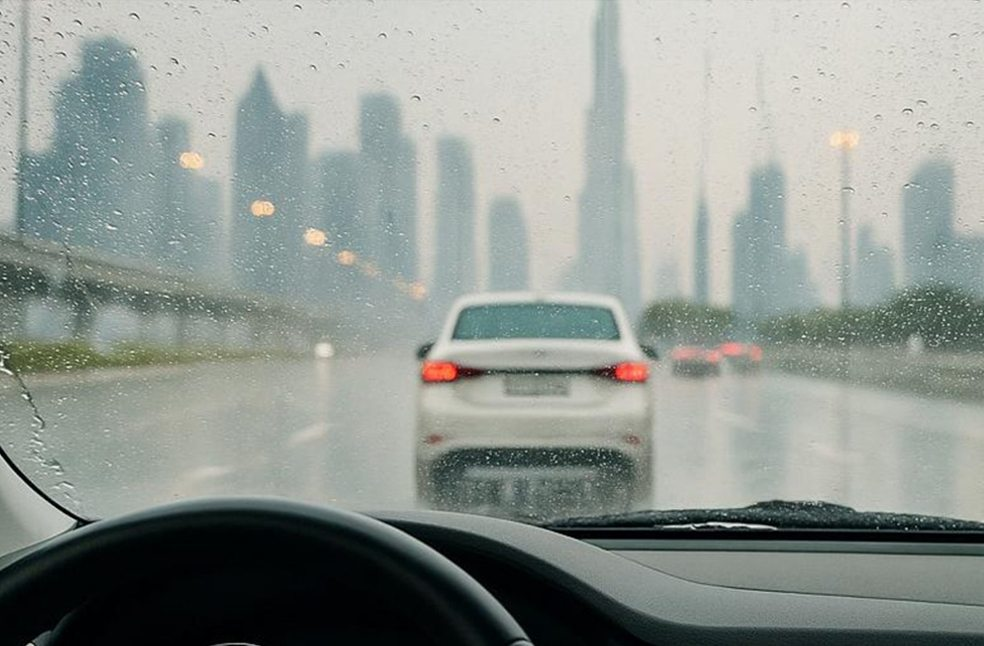
RTA rain safety tips are being highlighted as changing weather conditions create challenging driving environments across the UAE. With rainfall affecting several regions and wet roads increasing the risk of accidents, motorists are being reminded to adjust their driving habits and prioritise safety at all times. The advisory reinforces that awareness, preparation, and patience can significantly reduce dangers during unstable weather.
The Dubai Roads and Transport Authority has urged drivers to remain alert as rain, strong winds, and occasional hail impact visibility and road grip. By following simple but essential precautions, motorists can protect themselves, their passengers, and other road users.
Rainfall and Unstable Weather Across the UAE
According to forecasts by the National Center of Meteorology, parts of the country are experiencing rain due to the influence of a surface low-pressure system supported by an upper-air low. This weather pattern has resulted in partly cloudy to cloudy skies, intermittent showers, and gusty winds.

Overnight rainfall was recorded in areas of Ras Al Khaimah and Fujairah, while scattered showers were observed in Al Ain. Hail was also reported in Al Rams and northern parts of Ras Al Khaimah, with residents sharing early-morning footage showing hailstones falling during dawn hours.
While the rain has brought much-needed relief from warmer conditions, it has also created hazardous driving environments, particularly on highways, intersections, and low-lying areas where water tends to accumulate.

Why Driving in the Rain Requires Extra Care
Driving during rainfall is fundamentally different from driving in dry conditions. Water on the road reduces tire grip, increases braking distance, and can obscure lane markings. When rain mixes with oil residue on the road surface, especially at intersections, it creates an extremely slippery layer that can cause vehicles to skid without warning.
Visibility also becomes a major concern. Rain, fog, and spray from other vehicles can limit a driver’s ability to see obstacles, pedestrians, or sudden changes in traffic flow. These factors make calm, defensive driving essential during wet weather.
Recognising these risks, the RTA has outlined comprehensive safety guidance to help motorists adapt their driving behaviour during rain.
Vehicle Checks Before Driving in the Rain
The RTA emphasises that road safety starts before the engine is turned on. Ensuring that a vehicle is in good working condition is particularly important during adverse weather.
Drivers are advised to check that brakes respond effectively, as wet conditions can reduce braking performance. Tires should have sufficient tread depth and correct air pressure to maintain grip on slippery roads. Headlights must be fully functional to improve visibility and allow other drivers to see the vehicle clearly.
Windshield wipers play a critical role during rain. Even a short journey can become dangerous if wipers leave streaks or fail to clear water properly. Drivers should also check washer fluid levels and keep windows and mirrors clean to prevent blurred vision while driving.
Safe Driving Practices on Wet Roads
Once on the road, motorists are encouraged to adjust their driving style to match conditions. Reducing speed is one of the most effective ways to maintain control on wet surfaces. Driving within reduced, safe limits allows more time to react to unexpected situations such as sudden braking or pooling water.
Maintaining a greater distance from the vehicle ahead is equally important. Wet roads increase stopping distances, and tailgating can quickly lead to rear-end collisions. The RTA strongly advises against overtaking slower vehicles during rain, as sudden lane changes may result in skidding.
At traffic lights and junctions, drivers should accelerate gently and avoid sudden manoeuvres. Smooth steering, controlled braking, and steady acceleration help maintain traction and vehicle stability.
Visibility and Proper Use of Lights
Poor visibility is one of the most dangerous aspects of rainy driving. The RTA reminds motorists to switch on headlights during rainfall, even during daylight hours, to ensure they are visible to other road users.
Fog lights may be used when visibility is severely reduced, but high beams should be avoided as they reflect off rain and fog, further impairing vision. Hazard lights should only be activated in emergency situations, such as a breakdown or sudden stop, and not during normal rainy driving, as misuse can confuse other drivers.
Driving Through Wet or Flooded Areas
Standing or flowing water on roads poses serious risks, and motorists are urged to avoid flooded areas whenever possible. Driving through deep water can lead to loss of control, engine damage, or brake failure.
If encountering water on the road, drivers should assess its depth and movement carefully. Fast-moving water or water of unknown depth should never be crossed. Stopping on the road or near lane markings must also be avoided, as it increases the likelihood of collisions from vehicles approaching from behind.
Intersections require particular caution, as water mixed with oil often makes these areas especially slippery. In tunnels, drivers should remain within their lanes and proceed carefully, especially when lane markings are difficult to see due to water or lighting conditions.
After passing through deep water or wet tunnels, motorists are advised to test their brakes gently at low speed to ensure they are working effectively before resuming normal driving.
Planning Ahead and Staying Patient
Rainy weather often leads to traffic congestion and delays. The RTA encourages motorists to plan extra travel time, anticipate slower traffic, and remain patient throughout their journey.
Aggressive driving, impatience, and sudden reactions significantly increase accident risks during unstable weather. Staying alert, scanning the road ahead, and anticipating sudden stops or lane changes can help drivers respond safely to changing conditions.
Shared Responsibility for Road Safety
The RTA’s advisory highlights that road safety is a shared responsibility. Every driver’s actions impact not only their own safety but also that of passengers, pedestrians, and fellow road users.
By following official safety guidelines, adjusting driving habits, and remaining calm and attentive, motorists can significantly reduce the risks associated with wet and slippery roads.
As weather conditions continue to fluctuate, the RTA urges all drivers to stay informed, drive responsibly, and prioritise safety over speed—ensuring that every journey during rainy conditions ends safely.
Do follow UAE Stories on Instagram
Read Next – UAE Kuwait Week Launches a Nationwide Celebration of Brotherhood