
A major leap forward in epilepsy diagnosis and patient-centered neurological care
Cleveland Clinic Abu Dhabi has achieved a major medical milestone by successfully performing the first robotic-assisted stereoelectroencephalography (SEEG) procedure in the United Arab Emirates. The breakthrough procedure was completed in early February 2026 and represents a significant advancement in the diagnosis and management of complex epilepsy cases across the region.
This achievement builds on the hospital’s earlier success in 2025, when it became the first center in the UAE to perform a non-robotic SEEG procedure. The transition to robotic assistance marks a new era of precision, safety, and efficiency in neurological diagnostics, reinforcing Abu Dhabi’s growing reputation as a regional hub for advanced healthcare innovation.
Understanding the Challenge of Complex Epilepsy
Epilepsy affects millions of people worldwide, and while many patients respond well to medication, a significant number continue to experience uncontrolled seizures. For these individuals, identifying the precise origin of seizure activity within the brain is essential to determining whether surgery or other targeted treatments may be effective.

Traditional diagnostic tools such as scalp electroencephalography and imaging scans can sometimes fall short, particularly when seizures originate deep within the brain or involve multiple regions. This is where SEEG plays a critical role, offering clinicians a highly detailed and three-dimensional understanding of brain activity during seizures.
What Is Robotic-Assisted SEEG?
Robotic-assisted stereoelectroencephalography is a minimally invasive diagnostic procedure designed to locate seizure onset zones deep within the brain. It involves the implantation of thin electrodes into carefully selected brain regions to record electrical activity over several days. The data gathered allows neurologists and neurosurgeons to pinpoint exactly where seizures begin and how they spread.

Unlike traditional frame-based SEEG, which requires a rigid metal frame to be fixed to the patient’s skull, the robotic approach uses advanced imaging, planning software, and robotic guidance to place electrodes with exceptional accuracy. This reduces physical discomfort for patients and significantly shortens procedural time.
Moving Beyond Traditional Frame-Based Techniques
For decades, frame-based SEEG has been an effective but demanding method. Patients must undergo lengthy preparation, and the rigid head frame can cause discomfort and anxiety. The process also requires meticulous manual adjustments, increasing the time spent in the operating room.
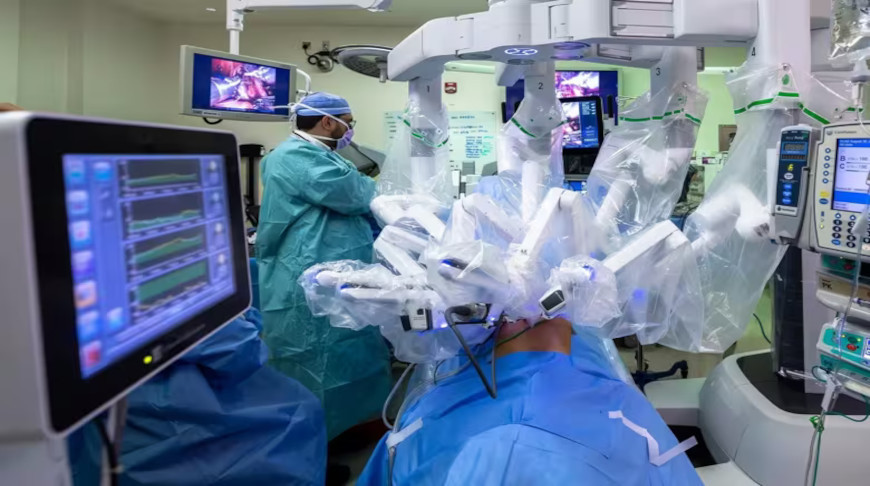
Robotic-assisted SEEG eliminates many of these challenges. By using robotic arms guided by preoperative imaging, surgeons can achieve submillimeter accuracy while minimizing invasiveness. The result is a smoother experience for patients, faster recovery times, and enhanced overall safety.
Clinical Impact at Cleveland Clinic Abu Dhabi
Since introducing robotic-assisted SEEG, Cleveland Clinic Abu Dhabi has already completed three such procedures, highlighting the growing clinical impact of this technology. Each case contributes valuable experience and further refines the hospital’s ability to deliver personalized epilepsy care.
The successful adoption of robotic SEEG reflects the institution’s long-term investment in advanced neurosurgical technologies and multidisciplinary collaboration. Neurologists, neurosurgeons, radiologists, and specialized nursing teams work together to ensure that each patient receives an individualized diagnostic and treatment plan.
Leadership Driving Innovation in Neuroscience
The robotic SEEG program is led by Dr. Florian Roser, Chief Medical Officer and Institute Chief of Neurosurgery at Cleveland Clinic Abu Dhabi. Under his leadership, the hospital has consistently introduced cutting-edge neurological procedures previously unavailable in the region.
Dr. Roser emphasized that robotic SEEG allows clinicians to tailor electrode placement to each patient’s unique brain anatomy. This personalized approach improves diagnostic accuracy and supports better-informed decisions about future treatments, including epilepsy surgery.
A Vision for Safer and Smarter Care
Dr. Georges-Pascal Haber, Chief Executive Officer of Cleveland Clinic Abu Dhabi, highlighted the broader significance of the milestone. He noted that bringing robotic SEEG to the UAE is not just about adopting new technology, but about transforming patient outcomes through safer and more precise diagnostics.
According to Dr. Haber, innovation in neurology is advancing rapidly, and investments in technologies like robotic SEEG allow clinicians to understand the brain in ways that were previously impossible. This understanding directly translates into better care pathways and improved quality of life for people living with epilepsy.
Enhancing Patient Experience and Recovery
One of the most important benefits of robotic-assisted SEEG is the improved patient experience. The minimally invasive nature of the procedure reduces surgical trauma, lowers the risk of complications, and shortens hospital stays. Patients can return to daily activities sooner, with less physical and emotional stress.
For families and caregivers, the clarity provided by accurate seizure mapping offers renewed hope. Knowing the precise origin of seizures enables clinicians to recommend targeted therapies with greater confidence, whether that involves surgery, neuromodulation, or optimized medical management.
Positioning the UAE as a Regional Leader
The successful performance of the UAE’s first robotic SEEG procedure underscores the country’s commitment to advancing specialized healthcare services. Cleveland Clinic Abu Dhabi’s achievement aligns with broader national goals to provide world-class medical care locally, reducing the need for patients to seek complex treatments abroad.
By integrating robotics, advanced imaging, and multidisciplinary expertise, the hospital is setting new benchmarks for neurological care in the Middle East. This milestone also opens the door for further innovations in functional neurosurgery and brain mapping technologies.
Shaping the Future of Epilepsy Care
As robotic-assisted SEEG becomes more widely adopted, its impact on epilepsy care is expected to grow. The ability to deliver highly accurate, patient-specific diagnostics represents a critical step toward more effective and less invasive treatments.
Cleveland Clinic Abu Dhabi’s pioneering work in this field reflects a broader shift toward precision medicine in neurology. By combining technological innovation with compassionate, patient-centered care, the hospital is helping shape the future of epilepsy diagnosis and treatment in the UAE and beyond.
The successful introduction of robotic SEEG is not just a technological achievement; it is a promise of better outcomes, deeper understanding, and renewed possibilities for people living with complex epilepsy.
Do follow UAE Stories on Instagram
Read Next – Khalifa University Researchers Boost Soil Fertility in Arid Areas