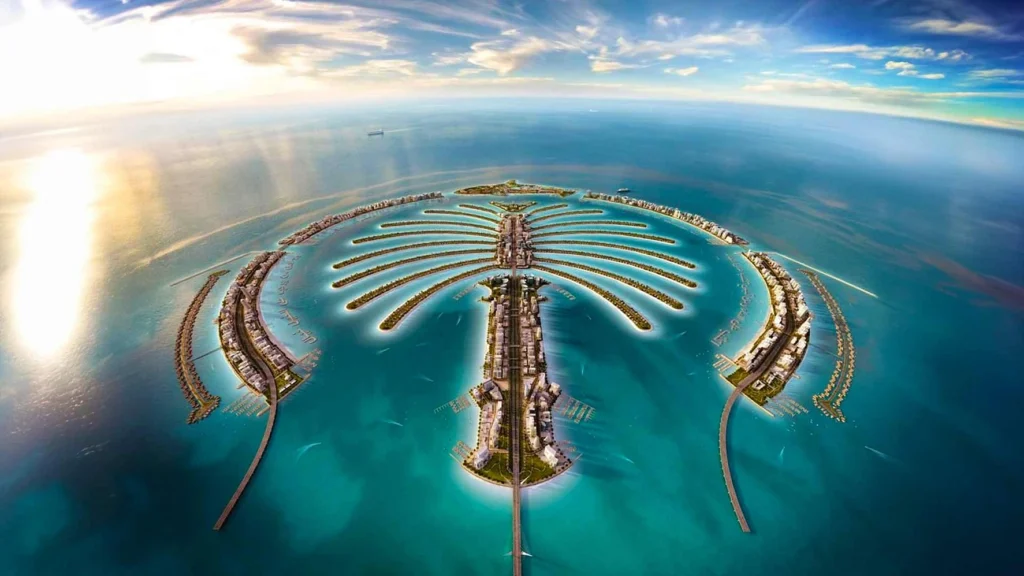
Palm Jebel Ali revival drives property demand in Dubai’s outer zones, marking one of the most significant turning points in the city’s real estate landscape. Once a paused megaproject, the iconic Palm Jebel Ali is now making a powerful comeback under Dubai’s renewed development strategy, reshaping the city’s geography of luxury and growth. As this visionary island project rises again, it is setting off a ripple effect of excitement across the property market, particularly in Dubai’s emerging outer zones, where investors are finding new opportunities, better value, and long-term potential.
The revival of Palm Jebel Ali is not just about building another luxury destination—it’s about redefining the boundaries of Dubai’s expansion and inspiring renewed confidence in the city’s long-term real estate vision.
A Vision Reborn: The Return of Palm Jebel Ali
When Palm Jebel Ali was first announced in the early 2000s, it promised to be one of the most ambitious developments in Dubai—a larger, more innovative sibling to the Palm Jumeirah. However, following the global financial crisis, construction was halted, and the project remained dormant for years.

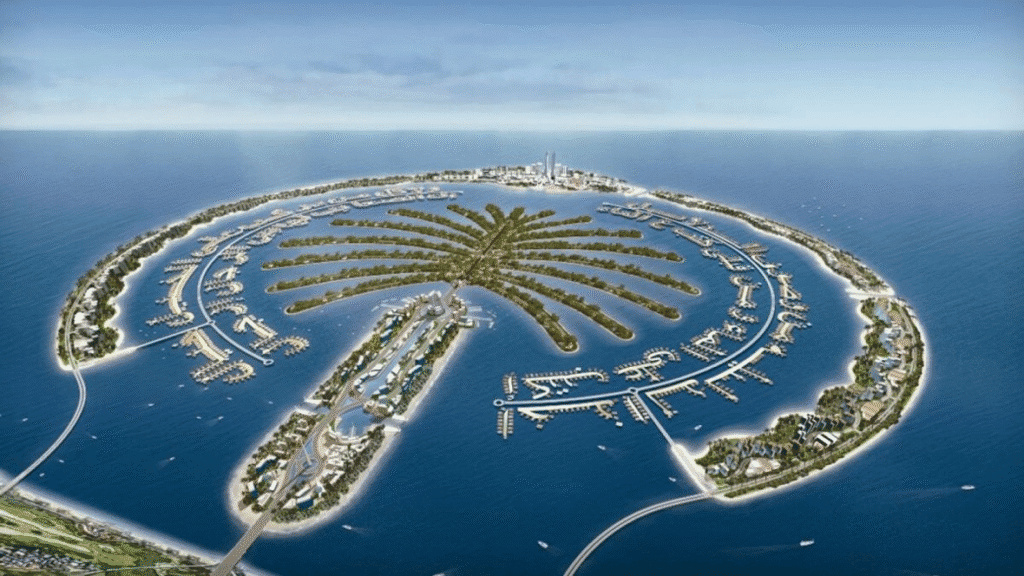
Now, under Dubai’s forward-looking leadership and renewed real estate strategy, Palm Jebel Ali has officially been revived and reimagined for the modern era. The project, led by Nakheel, will feature cutting-edge sustainable design, world-class waterfront living, and smart infrastructure.
The revived masterplan covers over 13.4 square kilometers—twice the size of Palm Jumeirah—and will add more than 80 hotels and resorts, 110 kilometers of pristine coastline, and thousands of residential villas and apartments.

This grand return is symbolic of Dubai’s continued growth and resilience. It also signals a new phase in the emirate’s real estate evolution, with outer zones like Jebel Ali, Dubai South, and surrounding areas becoming the next major investment frontiers.
Why Palm Jebel Ali Matters to Dubai’s Property Market
Palm Jebel Ali’s revival has far-reaching implications for Dubai’s economy and real estate sector. Firstly, it represents renewed investor confidence in Dubai’s large-scale developments. Secondly, it shifts market dynamics toward the city’s outer zones, where new infrastructure, space, and affordability meet luxury and lifestyle.
Developers, brokers, and investors alike are already positioning themselves to benefit from this shift. Property searches for areas around Jebel Ali, Dubai Waterfront, and Dubai South have surged since the announcement, reflecting growing interest in these expanding districts.
The return of Palm Jebel Ali also aligns perfectly with Dubai’s 2040 Urban Master Plan, which emphasizes balanced city growth, sustainable communities, and expanding residential and commercial activity beyond the traditional urban core.
Expanding Horizons: The Rise of Dubai’s Outer Zones
Dubai’s real estate growth story is now extending beyond Downtown, Dubai Marina, and Palm Jumeirah. The outer zones, long considered “up-and-coming,” are finally getting their moment in the spotlight.
Areas such as Jebel Ali, Dubai South, Dubailand, and Al Qudra are witnessing increased demand for both residential and investment properties. The appeal lies in spacious layouts, modern developments, and improved connectivity via Sheikh Zayed Road, Emirates Road, and the upcoming Etihad Rail network.
The revival of Palm Jebel Ali is expected to significantly boost real estate activity in nearby communities. Developers are racing to launch new villa communities, beachfront residences, and mixed-use developments to meet the rising demand.
This expansion reflects a broader lifestyle shift in Dubai—families and investors are looking for space, serenity, and long-term value, rather than just centrality.
Investor Confidence Returns with Renewed Momentum
The announcement of Palm Jebel Ali’s relaunch has reignited investor optimism in Dubai’s luxury and off-plan markets. Demand for waterfront properties has surged, with inquiries and pre-sales activity rising steadily in areas near the project site.
Investors view Palm Jebel Ali as a high-value, long-term opportunity, especially given its prime location between the Jebel Ali Free Zone and Dubai South. Its proximity to the upcoming Al Maktoum International Airport—set to become the world’s largest—adds further appeal for global buyers seeking connectivity and exclusivity.
Dubai’s stable governance, investor-friendly policies, and transparent regulations continue to reinforce its position as a safe haven for real estate investment. With Palm Jebel Ali at the forefront, the next decade could see another golden era of property growth reminiscent of Dubai’s early boom years.
Sustainable Living at the Heart of Palm Jebel Ali
Unlike its earlier design, the revived Palm Jebel Ali is built on the foundation of sustainability and innovation.
The development is designed to operate with 30% renewable energy and will feature smart infrastructure systems that reduce waste and optimize energy efficiency. Green mobility solutions, such as electric vehicle charging stations, water taxis, and pedestrian-friendly pathways, are integral to its masterplan.
This emphasis on sustainability resonates strongly with modern homebuyers and international investors who prioritize eco-friendly developments. Dubai’s commitment to green real estate through projects like Palm Jebel Ali aligns with global sustainability goals, enhancing the city’s reputation as a future-focused metropolis.
Impact on Dubai’s Luxury Real Estate Market
Palm Jebel Ali’s return has reinvigorated Dubai’s luxury property market, which continues to see record-breaking demand and price appreciation.
Ultra-luxury villas, waterfront penthouses, and branded residences are in high demand, especially among wealthy international buyers from Europe, Asia, and the GCC. The limited supply of beachfront homes on Palm Jumeirah has pushed investors to explore new opportunities—making Palm Jebel Ali the next big frontier for luxury living.
Market analysts predict that villa prices in Jebel Ali and surrounding areas could increase significantly over the next few years as the project takes shape.
Luxury developers are also expected to introduce branded residences, hospitality partnerships, and wellness-oriented communities to cater to high-net-worth individuals drawn by the allure of owning a home on Dubai’s newest island masterpiece.
Boosting Infrastructure and Employment in Outer Zones
Palm Jebel Ali’s development will drive massive infrastructure improvements in the outer zones of Dubai.
The surrounding areas are set to benefit from enhanced roads, bridges, and public transport systems, connecting the island seamlessly to the rest of the city. The expansion of Dubai Metro’s Red Line and future plans for the Etihad Rail network will further improve accessibility.
Moreover, the revival of such a large-scale project will create thousands of new jobs in construction, hospitality, retail, and tourism. This surge in employment will stimulate local economies and strengthen Dubai’s position as a hub for innovation and lifestyle excellence.
Dubai South and Jebel Ali: The New Real Estate Hotspots
The rise of Palm Jebel Ali is expected to uplift nearby communities such as Dubai South and Jebel Ali Village.
Dubai South, with its proximity to Al Maktoum International Airport and the Expo City Dubai district, is already seeing heightened investor interest. Affordable housing projects, logistics hubs, and commercial zones are all benefiting from this development wave.
Meanwhile, Jebel Ali Village—one of Dubai’s oldest communities—has been undergoing major redevelopment, blending heritage with modern comfort. Its location near the revived Palm Jebel Ali offers residents the rare balance of suburban tranquility and coastal luxury.
These areas are rapidly evolving into self-contained neighborhoods offering schools, parks, retail outlets, and leisure facilities—ideal for both local families and expatriates.
The Global Appeal of Palm Jebel Ali
Palm Jebel Ali is not just a Dubai story—it’s a global attraction. International investors see it as an opportunity to be part of one of the world’s most iconic property destinations.
The new masterplan promises exclusive waterfront living, modern design, and a lifestyle experience unmatched anywhere else in the Middle East. With global brands expected to collaborate on hotel and residential projects, Palm Jebel Ali is set to draw a new wave of foreign direct investment into Dubai’s property market.
Moreover, its position along Dubai’s western coast offers strategic access to international shipping lanes, adding a layer of logistical significance to the project’s global appeal.
Balancing Affordability and Luxury in Outer Zones
As Palm Jebel Ali and nearby developments rise, Dubai is striking a balance between luxury and accessibility.
While the island will cater to the ultra-premium segment, the outer zones surrounding it offer more affordable yet high-quality options for mid-range buyers. This diversity ensures that Dubai’s real estate remains inclusive, catering to a wide range of residents and investors.
Communities in Dubai South, Dubailand, and Jebel Ali Hills are emerging as alternatives for those seeking modern homes, excellent connectivity, and promising capital appreciation without the central city price tag.
This layered growth model ensures sustainable expansion without overheating the market, keeping Dubai attractive to both first-time buyers and seasoned investors.
Future Outlook: A Decade of Growth Ahead
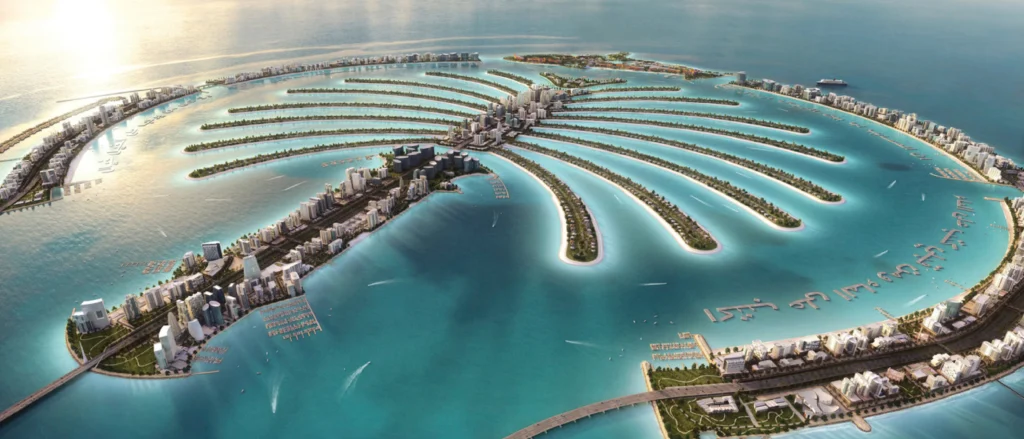
The revival of Palm Jebel Ali marks the beginning of a new growth chapter for Dubai’s real estate market. Over the next decade, it will likely serve as a catalyst for further expansion into the city’s western corridor.
With its strategic location, sustainable vision, and luxurious lifestyle offerings, Palm Jebel Ali is poised to become the next global symbol of Dubai’s ambition.
Developers are expected to roll out complementary projects in surrounding zones, from residential communities and marinas to retail and entertainment districts, further diversifying Dubai’s property portfolio.
As infrastructure and amenities evolve, the outer zones will no longer be viewed as “peripheral”—they will represent the city’s new frontier of innovation, lifestyle, and opportunity.
Conclusion
Palm Jebel Ali’s revival drives property demand in Dubai’s outer zones, reshaping the city’s real estate map and reinforcing its status as a global hub for luxury living and sustainable development.
This landmark comeback not only revives a long-awaited dream but also energizes Dubai’s next wave of urban expansion. As the city grows outward, it continues to evolve upward—combining world-class innovation, lifestyle excellence, and investor confidence in one powerful vision.
From Jebel Ali to Dubai South, the future is bright, bold, and beautifully designed—just like the reborn Palm Jebel Ali, which once again stands as a testament to Dubai’s unwavering spirit of progress.
ChatGPT can make mistakes. Check important info.
Do follow UAE Stories on Instagram
Read Next – Latifa bint Mohammed Drives Urban Innovation at Cities Summit