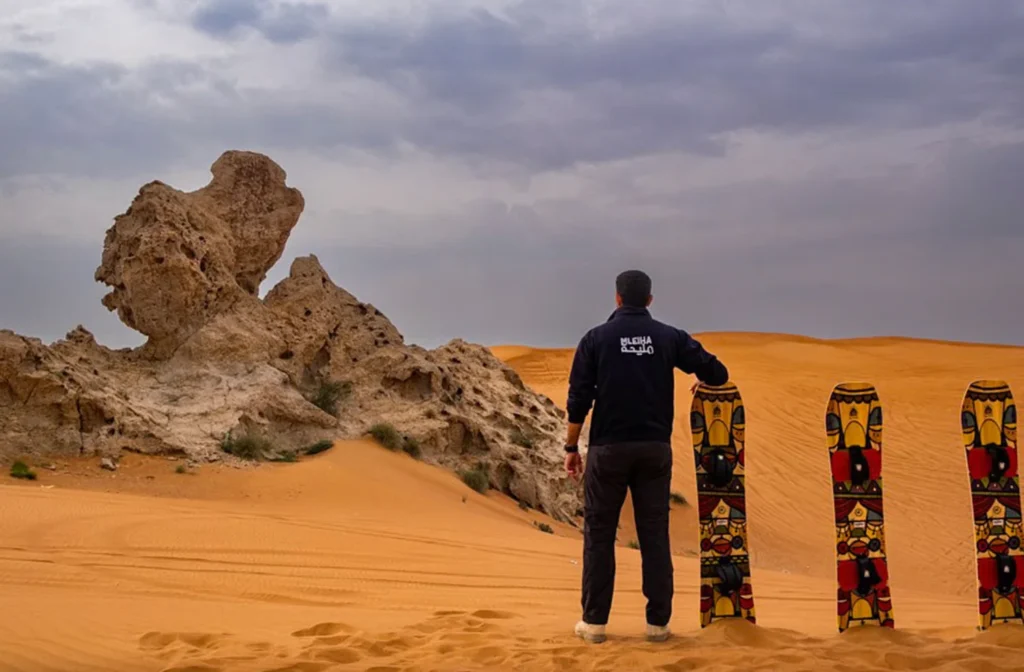
Mleiha National Park in Sharjah, UAE, is a remarkable destination that showcases the country’s rich human history. Spanning over 34 square kilometers, the park offers a glimpse into a past that dates back more than 210,000 years. From early human migrations to ancient civilizations, Mleiha captures the story of human survival and adaptation in the desert landscape.
Early Human Presence in Mleiha
Archaeological findings indicate that early humans passed through the Mleiha region during their migration out of Africa over 210,000 years ago. The Faya-1 site in Jebel Faya has produced stone tools and artifacts that provide valuable insights into the lives of these early inhabitants. These discoveries suggest that Mleiha served as an important stop for human populations moving northward, adapting to changing climates and desert conditions.
These ancient tools, mainly made from stone, reveal that the people of that era were skilled in crafting hunting and survival equipment. The site represents one of the oldest known human settlements in the Arabian Peninsula, highlighting Mleiha’s significance in understanding human evolution.

The Neolithic Era: Settlements and Cultural Developments
By around 7,000 years ago, the Neolithic period brought significant developments to Mleiha. Communities began establishing permanent settlements, indicating a shift from nomadic lifestyles to more stable living arrangements. Excavations in the park have uncovered evidence of domesticated animals, early farming practices, and intricately made tools.
Among the remarkable artifacts found in the area is a pendant crafted from dugong ivory, demonstrating not only artistic skills but also the connections between coastal and desert communities. The presence of these artifacts reflects cultural exchange and innovation during the Neolithic period.

Bronze Age: Tombs and Architecture
The Bronze Age in Mleiha saw the construction of fortified structures and elaborate tombs. The Umm an-Nar tomb, dating back roughly 4,500 years, is a testament to the architectural abilities of the people during this era. These tombs were often located near communal settlements and provide insights into the social and religious practices of the time.
The architectural style, including circular tombs with multiple burial chambers, shows a sophisticated understanding of construction and community organization. These discoveries help historians and archaeologists reconstruct life during the Bronze Age in the region.
Pre-Islamic Kingdoms and Trade
Between the 3rd century BCE and the 3rd century CE, Mleiha became an active trading hub. Archaeologists have found Mediterranean amphorae, coins, and evidence of metallurgical activities, suggesting that the region played a key role in regional and international trade networks. Items from the Greco-Roman world indicate that cultural and commercial exchanges enriched the local civilizations.
The evidence of trade also suggests that Mleiha was part of a broader network connecting the Arabian Peninsula with other civilizations. This period illustrates the dynamic nature of the region and the ability of its inhabitants to interact with distant cultures.
Mleiha National Park as a UNESCO World Heritage Site
Mleiha National Park is part of the Faya Palaeolandscape, which was recognized as a UNESCO World Heritage Site. This designation highlights the global significance of the region in understanding human evolution and adaptation to desert environments. The park’s archaeological importance provides scientists and visitors with valuable insights into early human migration, settlement, and cultural development.
The UNESCO recognition also emphasizes the need to preserve and protect the area, ensuring that future generations can continue to learn from its rich history.
The Mleiha Archaeological Centre
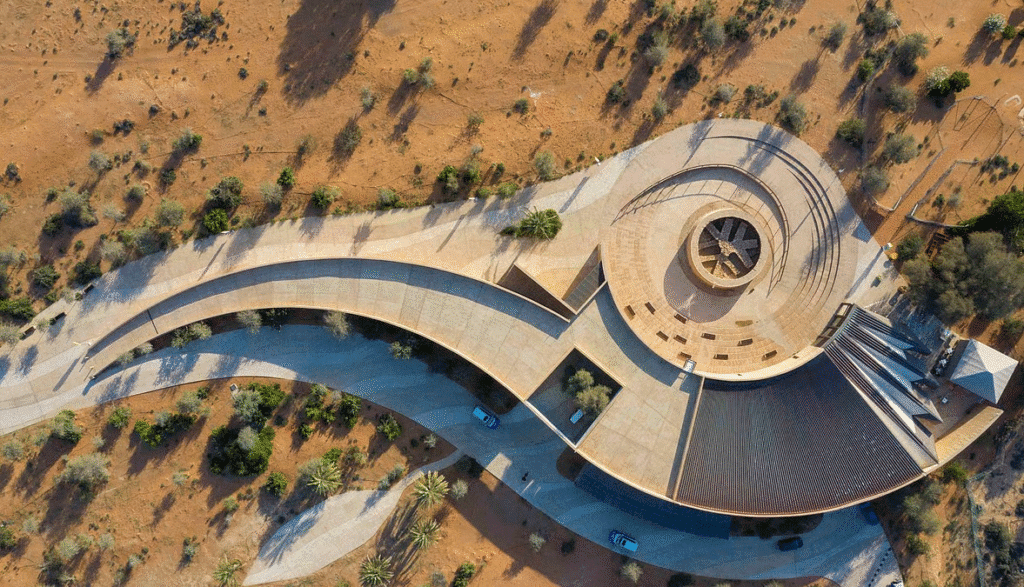
At the heart of the park is the Mleiha Archaeological Centre, a modern facility designed to showcase the region’s past. Built around a preserved Umm an-Nar tomb, the centre displays artifacts from the Paleolithic period through to the Iron Age. Visitors can explore ancient tools, pottery, and other historical objects, gaining a deep understanding of life in the region over thousands of years.
The centre also offers interactive exhibits, guided tours, and educational programs. It provides a comprehensive experience for visitors, combining historical knowledge with immersive storytelling about the lives of people who lived in Mleiha.
Eco-Tourism and Conservation
Mleiha National Park is not only an archaeological treasure but also a hub for eco-tourism and conservation. The park offers sustainable activities such as guided desert safaris, stargazing, and nature walks. These programs aim to educate visitors about the desert ecosystem and promote environmental awareness.

Conservation efforts at Mleiha focus on protecting both the archaeological sites and the natural landscape. By combining tourism with responsible stewardship, the park ensures that its historical and ecological resources remain intact for future generations.
Planning a Visit
Mleiha National Park is open year-round, welcoming visitors to explore its archaeological and natural offerings. The Mleiha Archaeological Centre operates from 9:00 AM to 7:00 PM on weekdays and extends to 9:00 PM on weekends. Visitors are encouraged to check for updates on timings, special events, and guided tours to make the most of their experience.
The park is easily accessible from Sharjah and nearby emirates, making it an ideal destination for both residents and tourists. Whether you are interested in history, culture, or nature, Mleiha offers a unique experience that combines all three.
Conclusion
Mleiha National Park presents an extraordinary journey through 210,000 years of human history. From early human migrations to advanced civilizations, the park reveals the ingenuity, resilience, and cultural richness of the people who once inhabited this desert region. It is a place where history comes alive, offering visitors an immersive experience that blends archaeology, eco-tourism, and education.
For history enthusiasts, nature lovers, and curious travelers, Mleiha National Park is more than a destination; it is a living story of human evolution and heritage. The UAE’s investment in preserving this site ensures that Mleiha remains a symbol of cultural pride and environmental stewardship for generations to come.
Do follow UAE Stories on Instagram
Read Next – How Safe Is Dubai for Women Expats