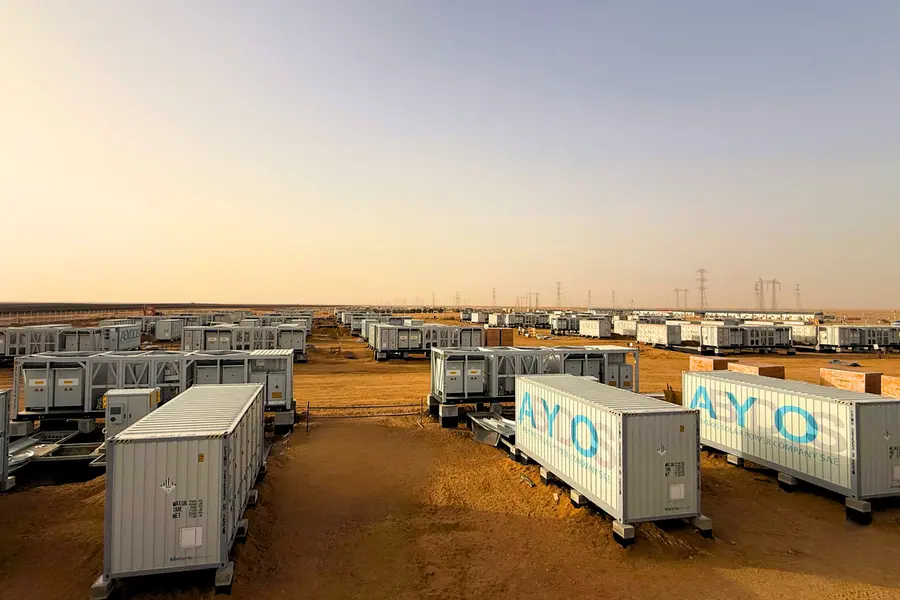
The Middle East BESS expansion is rapidly emerging as a crucial part of the region’s energy transformation. With the growing adoption of solar power, increasing electricity demand, and the need for grid flexibility, battery energy storage systems (BESS) are becoming essential to ensure reliable and sustainable power.
According to a recent S&P Global report, Saudi Arabia and the UAE are expected to lead the Middle East in utility-scale battery storage deployment. Their national energy policies, renewable targets, and ongoing projects are driving the region toward large-scale energy storage adoption, setting an example for neighboring Gulf countries.
Importance of the Middle East BESS Expansion
Supporting the Energy Transition
The Middle East is rich in solar energy potential, but renewable sources such as solar and wind are intermittent. Energy production peaks during the day, while demand often rises at night. Without storage, much of the generated power goes unused. Battery storage bridges this gap by storing excess energy for later use.

Battery energy storage systems provide several benefits:
- Store solar power during the day and release it at night.
- Support grid frequency and voltage stability.
- Reduce peak demand pressure on power networks.
- Offer reliable backup power during outages.
As renewable capacity expands, storage becomes vital for maintaining a stable and flexible energy system.

Market Growth and Projections
The Middle East BESS market was valued at around USD 0.66 billion in 2024 and is projected to reach approximately USD 2.6 billion by 2033, growing at a rate of nearly 15% annually. The UAE accounted for more than one-third of the market share in 2024, making it the largest BESS market in the region. Saudi Arabia is rapidly catching up, driven by its ambitious renewable energy projects and large-scale tenders that integrate storage systems into their design.
The pace of development clearly shows that the Middle East BESS expansion is not just a concept—it is becoming a significant regional reality.
Saudi Arabia: Turning Vision 2030 into Action
National Goals and Strategy
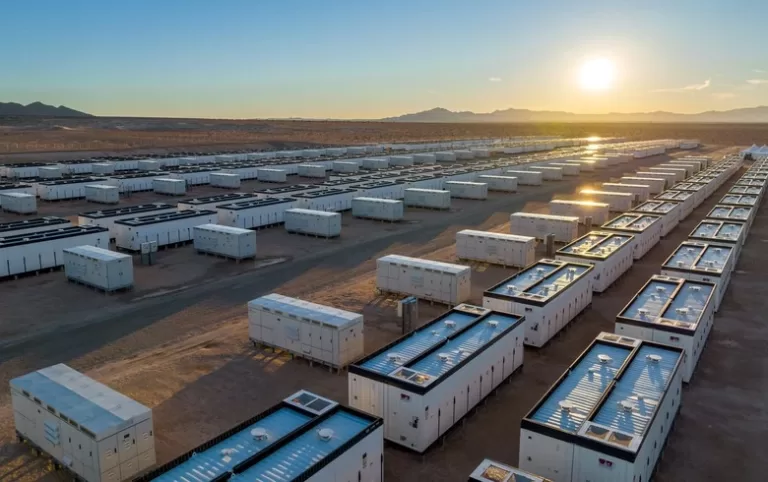
Saudi Arabia’s Vision 2030 aims to generate half of the country’s electricity from renewable sources by 2030. To achieve this, the government has embedded energy storage within its renewable development plans. BESS plays a key role in supporting large solar and wind projects by ensuring power reliability and grid flexibility.
Large-Scale Projects and Investments
By late 2024, Saudi Arabia had already awarded more than 25 GWh of battery storage capacity through major tenders. These projects are linked to solar and wind developments across the kingdom, including those tied to the futuristic NEOM city. The government’s Renewable Energy Project Development Office (REPDO) and the Saudi Power Procurement Company are both including storage systems in new tenders to make renewable power more dispatchable and efficient.
Saudi Arabia’s projects also aim to support hydrogen production and industrial operations, making storage a part of a broader energy diversification effort.
Key Challenges
Despite its progress, Saudi Arabia faces several challenges in expanding its BESS sector:
- High initial capital investment and long project lead times.
- Heavy reliance on imported battery materials and components.
- The need for new regulations and market frameworks for energy storage.
- Technical challenges in integrating storage into existing grid infrastructure.
However, Saudi Arabia’s strong policy support and investment incentives are helping overcome these hurdles, positioning the country as a leader in energy transition.
UAE: A Model for Integrated Energy Storage
National Targets and Strategy
The UAE has committed to achieving net-zero emissions by 2050. The country has been a pioneer in renewable energy, with large-scale solar projects already operational in Dubai and Abu Dhabi. Battery storage is now becoming a key element of this renewable ecosystem, allowing the UAE to optimize its solar output and maintain grid stability.
Notable BESS Projects
One of the UAE’s landmark developments includes a solar project with a combined battery capacity of nearly 20 GWh. The country is integrating storage with renewable and hydrogen projects, creating a flexible and reliable power system. Masdar, the UAE’s clean energy champion, is at the forefront of this movement, investing in hybrid solar-plus-storage plants to enhance the country’s energy resilience.
Regional Leadership
The UAE holds the largest share of the BESS market in the Middle East and serves as a regional benchmark for successful renewable integration. It attracts international partners, financing institutions, and technology providers who see the UAE as a reliable and innovative market for clean energy deployment. The country’s experience is likely to shape policy frameworks and investment strategies across the Gulf.
Broader Middle East and GCC Dynamics
Regional Momentum
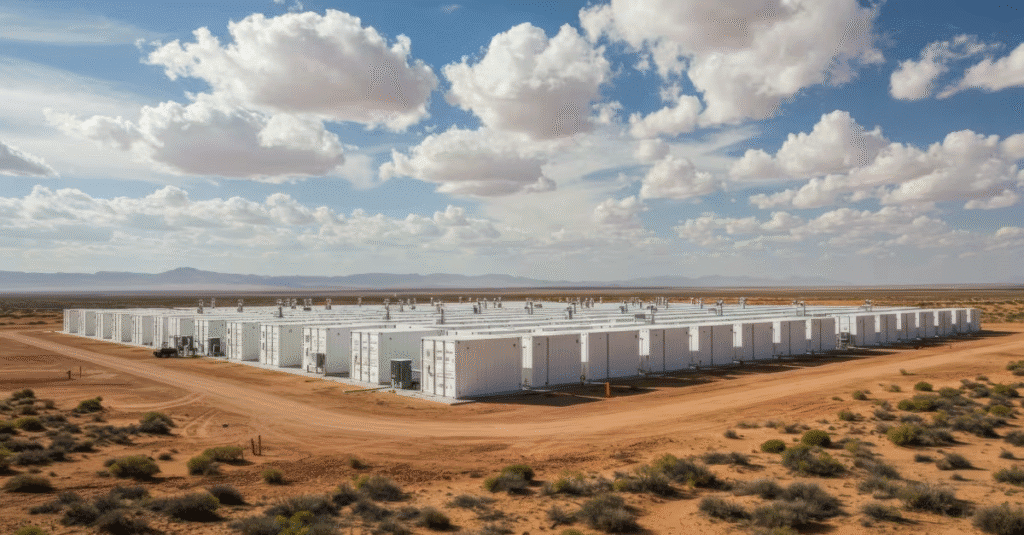
While Saudi Arabia and the UAE lead the way, other Gulf Cooperation Council (GCC) countries are beginning to follow their example. Qatar, Oman, and Bahrain are exploring utility-scale storage solutions to support renewable projects and grid operations. Oman, for example, is using storage systems in remote desert regions to stabilize power supply from solar and wind facilities.
Qatar is also planning to add battery storage to its solar farms to ensure consistent energy delivery throughout the day and night. Although these efforts are still in their early stages, they indicate a growing regional recognition of storage as an essential part of the clean energy value chain.
Common Drivers
Several shared factors are pushing the region toward rapid BESS adoption:
- Rising electricity demand due to population growth and industrialization.
- Falling battery prices, which have dropped by more than 80% in the past decade.
- National energy security and diversification goals.
- Availability of government-backed financing and public-private partnerships.
Key Challenges Across the Region
Despite progress, there are challenges that all Middle Eastern nations face:
- Heavy dependence on imported materials such as lithium.
- Limited recycling and battery disposal infrastructure.
- Regulatory uncertainty about how storage assets will participate in electricity markets.
- Need for advanced grid modernization to accommodate large-scale storage systems.
Why Saudi Arabia and the UAE Are Leading
Saudi Arabia and the UAE stand out in the Middle East BESS expansion because of their clear policy direction, financial capability, and integrated approach to clean energy. Their success is built on several advantages:
- Ambitious renewable energy goals tied to long-term national visions.
- Government-led auctions that include BESS components from the start.
- Economic and institutional strength to attract global investors and technology partners.
- Integration of storage into broader clean energy plans, including hydrogen and desalination.
- Early establishment of energy regulatory frameworks and grid planning strategies.
Their leadership is intentional, combining policy, finance, and technology to create a sustainable and scalable storage ecosystem.
The Road Ahead for Middle East BESS Expansion
The Middle East’s transition to clean energy is accelerating, and battery energy storage will play a defining role in shaping its success. Saudi Arabia and the UAE are expected to remain at the forefront, demonstrating how large-scale renewables can coexist with reliable power systems.
In the coming years, we can expect:
- Larger and more cost-effective battery installations across the Gulf.
- Cross-border energy cooperation, potentially linking national grids with storage networks.
- Growth in local manufacturing of battery components and development of recycling facilities.
- Expansion of hybrid solar, wind, and hydrogen projects integrating advanced storage solutions.
The Middle East BESS expansion represents more than just an energy transition; it signals a new era of technological innovation, environmental responsibility, and regional cooperation. With Saudi Arabia and the UAE leading the charge, the region is on track to become a global model for clean energy integration and storage deployment.
Do follow UAE Stories on Instagram
Read Next – Emirates Unveils $8 Million Facility to Upskill 25,000 Cabin Crew