
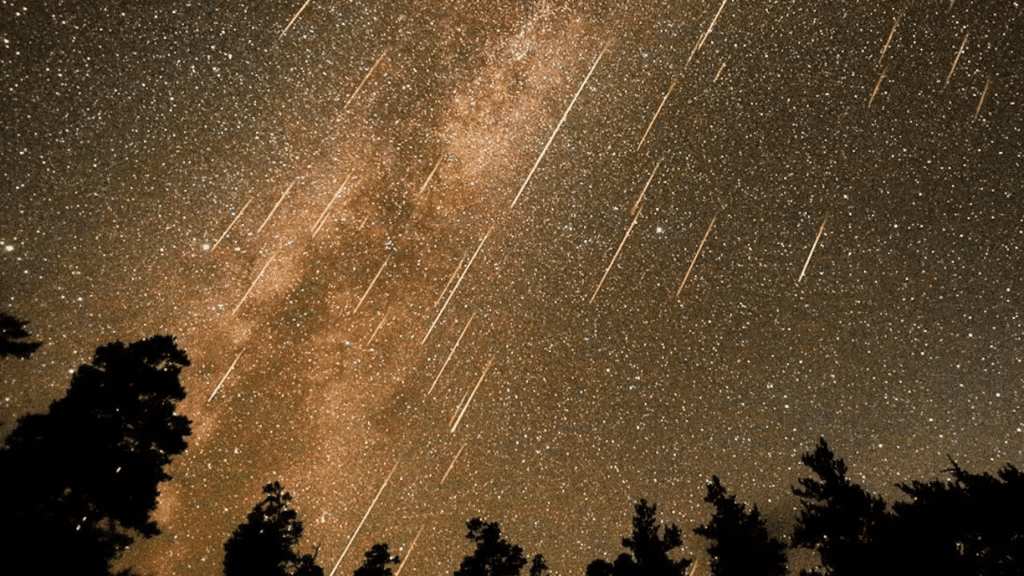
The Lyrids meteor shower is one of the most enduring and emotionally resonant sky events ever observed by humanity. Every year, as Earth moves through a trail of ancient cosmic debris, the night sky comes alive with sudden streaks of light. In modern times, this spectacle reaches its peak between April 22 and April 23, offering skywatchers a chance to witness a phenomenon that has captivated humans for thousands of years.
According to NASA, records of the Lyrids date back more than 2,700 years, making it one of the oldest known meteor showers ever documented. The fact that people across vastly different eras have looked up at the same event gives the Lyrids a rare emotional weight. It is not just an astronomical occurrence, but a timeless connection between generations.
An Ancient Meteor Shower Observed for Millennia
Long before scientific explanations existed, ancient civilizations carefully recorded unusual activity in the sky. Historical accounts from China describe falling stars appearing like rain, a vivid image that still matches what observers report today during the Lyrids’ peak nights of April 22–23.

The shower originates from debris shed by Comet Thatcher, a long-period comet that orbits the Sun roughly once every 415 years. As Earth passes through this dusty trail each April, tiny fragments collide with our atmosphere at extreme speeds. The friction causes them to burn up, producing the glowing trails we call meteors.
What makes the Lyrids remarkable is their consistency across centuries. While many meteor showers were identified only in recent history, the Lyrids have been reliably observed for nearly three millennia, returning each year as a quiet reminder of Earth’s place in a larger cosmic rhythm.

What to Expect During April 22–23
During the peak nights of April 22–23, observers under dark skies can typically expect to see around 10 to 20 meteors per hour. While this number may seem modest compared to some modern meteor showers, the Lyrids compensate with brightness and occasional dramatic surprises.
Lyrid meteors travel at speeds of about 49 kilometers per second, producing sharp, fast streaks across the sky. Many leave behind glowing trails that linger for a moment before fading. In some years, the shower has surprised observers with sudden outbursts, briefly increasing activity beyond expected rates.
The real excitement lies in the possibility of fireballs. These exceptionally bright meteors can flare suddenly, sometimes appearing brighter than Venus and leaving a lasting impression on anyone lucky enough to see one.
Fireballs: The Lyrids’ Most Thrilling Feature
One of the reasons the Lyrids meteor shower remains so popular is its reputation for producing fireballs. Fireballs occur when larger fragments of comet debris enter Earth’s atmosphere, releasing intense light and energy.
These events are rare and unpredictable, which makes them especially thrilling. A quiet sky can suddenly erupt with a brilliant flash, briefly illuminating the landscape below. For many observers, witnessing a Lyrid fireball becomes a lifelong memory, a fleeting moment that feels both powerful and personal.
Even seasoned astronomers regard Lyrid fireballs with a sense of respect. They are reminders that despite centuries of observation, the universe still holds the ability to surprise us.
Where the Meteors Appear in the Sky
The Lyrids appear to radiate from the constellation Lyra, near the bright star Vega. This point, known as the radiant, becomes higher in the sky as the night progresses. Because of this, the best viewing often occurs during the late-night and pre-dawn hours of April 22–23.
However, meteors can streak across any part of the sky, so it is best to keep your view wide rather than focusing on a single point. No telescopes or binoculars are required. In fact, the naked eye is the most effective way to observe meteor showers, allowing you to take in as much of the sky as possible.
Clear skies, minimal light pollution, and patience are far more important than any equipment.
A Quiet Experience That Rewards Patience
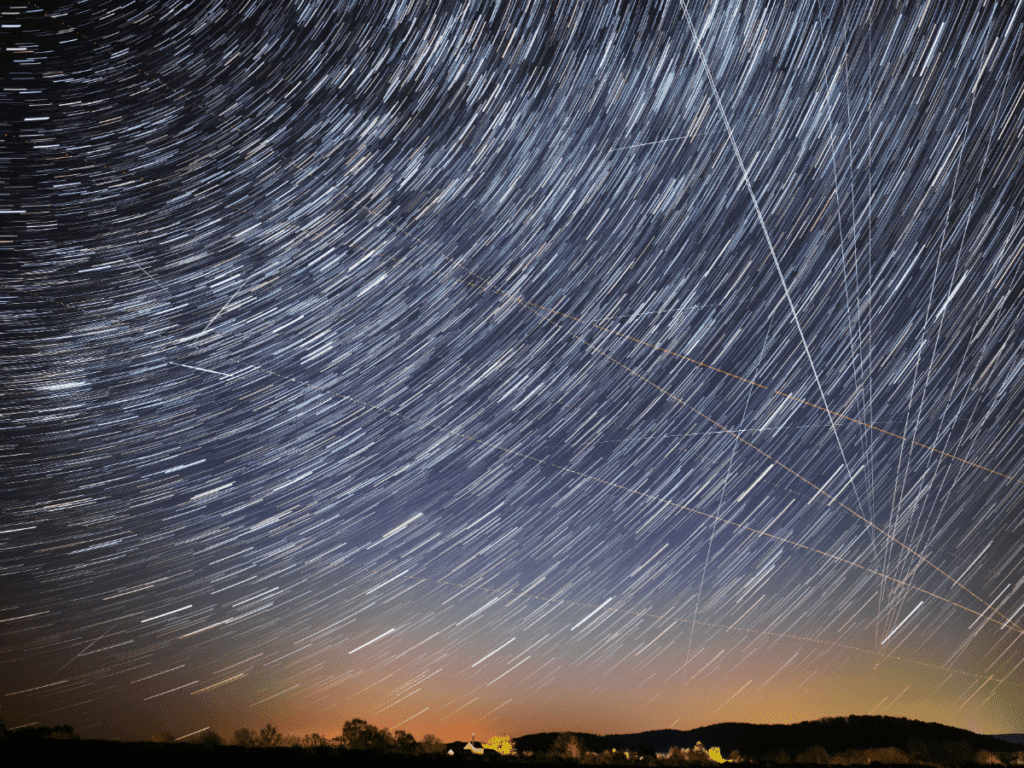
Watching the Lyrids is not about constant action. There may be long pauses between meteors, moments of stillness where the sky appears unchanged. These pauses are part of the experience, allowing your eyes to fully adjust to the darkness and your mind to slow down.
This calm rhythm creates a deeply human connection to the night sky. You are not rushing or multitasking. You are simply present, waiting for something extraordinary to happen. When a meteor finally appears, it feels more meaningful because of that stillness.
Many people find that the Lyrids offer a rare sense of peace, a reminder that beauty often arrives quietly and without warning.
Why the Lyrids Still Matter Today
In a world filled with artificial light and constant digital distractions, the Lyrids meteor shower offers a powerful reminder of what lies beyond everyday life. It proves that wonder still exists above us, accessible to anyone willing to look up on the nights of April 22–23.
From a scientific perspective, the Lyrids help researchers better understand how comet debris interacts with Earth’s atmosphere. From a cultural perspective, they represent one of humanity’s longest-running shared observations of the natural world.
Emotionally, the Lyrids provide perspective. Each meteor lasts only a second, yet it can leave a lasting impression. That contrast between fleeting moments and lasting impact reflects something deeply human.
A Celestial Tradition Shared Across Generations
Perhaps the most remarkable aspect of the Lyrids meteor shower is its continuity. Families, friends, and solo observers across centuries have paused their lives during late April to watch the same sky. The dates change on calendars, but the experience remains strikingly similar.
When you observe the Lyrids on April 22–23, you are participating in a tradition that stretches back thousands of years. Ancient observers stood under the same stars, felt the same sense of wonder, and asked the same silent questions.
The Lyrids remind us that while civilizations rise and fall, the sky remains. Its beauty endures, returning each year with quiet reliability, inviting us to stop, look up, and remember our place in the universe.
Do follow UAE Stories on Instagram
Read Next – Stargazers Invited to Jupiter Opposition Event in Dubai