
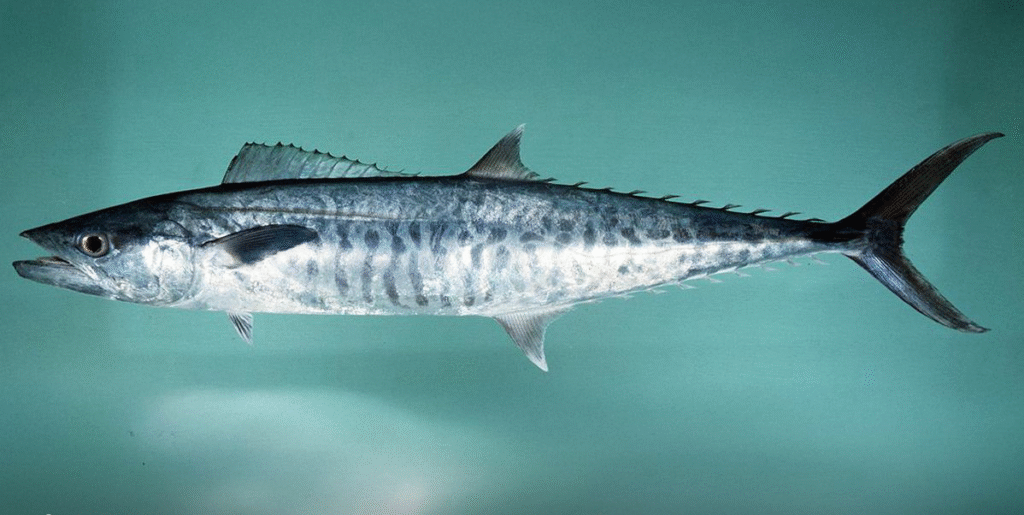
The Kingfish second spawning season in Abu Dhabi has been officially confirmed by the Environment Agency – Abu Dhabi (EAD). Researchers have discovered that, in addition to the well-known primary spawning period from April to June, kingfish also reproduce between September and November. This new finding provides crucial insight into the life cycle of kingfish and strengthens the scientific foundation for sustainable fishery management in the region.
The discovery reflects years of meticulous research by EAD scientists who have dedicated themselves to studying kingfish reproductive patterns. By documenting the second spawning season, researchers can better understand how these migratory fish behave and reproduce. This knowledge is essential to ensure that conservation efforts and fishery management practices are both effective and sustainable.
Dr. Shaikha Salem Al Dhaheri, Secretary-General of EAD, explained that this achievement aligns with the vision of H.H. Sheikh Hamdan bin Zayed Al Nahyan, which emphasizes scientific research and the protection of marine resources. She described the discovery of a second spawning season as a strategic milestone in managing fish stocks and ensuring the long-term sustainability of Abu Dhabi’s marine biodiversity.

Scientific Research Behind the Discovery
The discovery of the second spawning season is the result of a comprehensive research program that combined laboratory analysis with field observations. Samples were collected from the waters around Abu Dhabi and examined in detail to study the biological and reproductive behavior of kingfish. This approach allowed scientists to identify patterns in their spawning cycles and understand the factors influencing reproduction.
Ahmed Esmaeil Alhashmi, Executive Director of Terrestrial and Marine Biodiversity at EAD, highlighted the significance of the research. He noted that understanding the existence of two spawning periods allows authorities to implement targeted conservation strategies. Protecting the species during its reproductive seasons ensures that kingfish populations remain healthy and sustainable.

Kingfish are known to be migratory pelagic fish, moving in small groups across various depths in the Arabian Gulf. They travel long distances in search of food and suitable spawning locations. The identification of two separate spawning periods shows their biological resilience and helps explain how populations maintain stability despite environmental changes and human activities.
Kingfish Biology and Behavior
Kingfish are highly adaptable species with fascinating biological traits. Their migratory nature allows them to exploit different areas of the Gulf for feeding and reproduction. Understanding their life cycles is crucial for ensuring sustainable fisheries and maintaining ecological balance.
The existence of a second spawning season indicates that kingfish populations have an additional opportunity for reproduction, which contributes to replenishing stocks naturally. This biological advantage is vital for managing the species sustainably, as it reduces the risk of overfishing during peak reproductive periods.
Kingfish play an important role in the marine ecosystem, acting as both predators and prey in the food chain. By protecting their spawning grounds, scientists ensure the health of the overall ecosystem, which includes other species dependent on kingfish for survival.
Innovative Research Techniques
The Environment Agency – Abu Dhabi has employed a variety of advanced techniques to study kingfish in detail. Laboratory studies include DNA analysis to understand genetic and biological traits, which provides insights into their reproduction, growth, and adaptability.
In 2023, EAD launched a pioneering satellite tracking initiative for kingfish, marking a first in global marine research. This project involves attaching tracking devices to the fish, which monitor their movements, migration routes, and spawning behavior. The real-time data collected allows scientists to observe patterns that would otherwise be difficult to detect and provides a more accurate picture of kingfish ecology.
The combination of field observations, laboratory analysis, and satellite tracking creates a comprehensive understanding of kingfish life cycles. This integrated approach ensures that conservation strategies are grounded in science and based on reliable data.
Implications for Sustainable Fishery Management
The discovery of a second spawning season has significant implications for sustainable fishery management in Abu Dhabi. By understanding when kingfish reproduce, authorities can implement seasonal fishing regulations to prevent interference with critical spawning periods. This ensures that fish populations remain healthy and abundant.
The data collected from satellite tracking and DNA analysis also supports the development of predictive models. These models help scientists and policymakers anticipate population trends and make informed decisions about fishing limits and habitat protection. This evidence-based approach enhances the overall sustainability of fisheries in the region.
Moreover, protecting kingfish during their spawning seasons contributes to broader marine biodiversity conservation. Healthy populations of kingfish help maintain the balance of marine ecosystems, benefiting other species and supporting long-term environmental stability.
Kingfish as a Cultural and Ecological Symbol
Kingfish are not only economically important but also culturally significant in Abu Dhabi. They are an iconic part of the marine ecosystem, and their well-being reflects the health of coastal waters. The identification of a second spawning season demonstrates the effectiveness of science-led conservation efforts and highlights Abu Dhabi’s commitment to preserving marine biodiversity.
Understanding kingfish reproduction also benefits local communities. Sustainable fisheries ensure that residents and businesses dependent on fishing can continue to thrive without compromising the natural environment. By balancing ecological protection with economic activity, Abu Dhabi sets an example for responsible marine management.
Future Directions in Kingfish Research
EAD’s research on kingfish is ongoing. Scientists aim to study how environmental factors such as water temperature, salinity, and food availability influence spawning behavior. Understanding these variables will allow for better predictions of reproductive patterns and more precise conservation measures.
The findings also open opportunities for regional collaboration. Neighboring Gulf countries can use similar scientific approaches to protect kingfish and other migratory species. Sharing data and research methods contributes to collective efforts to safeguard marine resources across the region.
EAD plans to continue monitoring kingfish populations and refining strategies to protect their habitats. The combination of technological innovation, scientific expertise, and policy implementation ensures that kingfish populations remain sustainable for generations to come.
Conclusion
The announcement of a second kingfish spawning season in Abu Dhabi marks a significant milestone in marine science and conservation. This discovery enhances understanding of kingfish biology, supports sustainable fishery management, and contributes to biodiversity preservation.
Through advanced research techniques, including DNA analysis and satellite tracking, EAD has provided valuable insights into kingfish reproduction and behavior. The existence of dual spawning periods highlights the species’ resilience and offers opportunities for more effective management strategies.
Protecting kingfish during both spawning seasons ensures healthy populations, maintains ecological balance, and supports the livelihoods of local communities. Abu Dhabi’s commitment to science-based conservation demonstrates how innovative research and careful planning can safeguard natural resources while promoting sustainable development.
The dual spawning season discovery reinforces the importance of continuous research and the application of modern technology in environmental conservation. It is a significant step toward ensuring that marine ecosystems in Abu Dhabi remain thriving, resilient, and sustainable for the future.
Do follow UAE Stories on Instagram
Read Next – National Bird Research Center Celebrates First Asian Houbara Chick Hatch