A sustainable breakthrough for water scarcity and degraded land
Researchers at Khalifa University of Science and Technology have achieved a major scientific breakthrough that could redefine agriculture in arid and semi-arid regions. By developing a low-cost soil enhancement technology using nanocellulose fibers derived from pineapple peel waste, the team has introduced a sustainable and scalable solution to some of the most pressing environmental challenges facing dry regions today—soil degradation, water scarcity, and food insecurity.
The innovation offers new hope for countries where sandy soils dominate the landscape and traditional farming remains costly, water-intensive, and often unsustainable. By transforming agricultural waste into a valuable soil amendment, the research highlights how advanced materials science can support climate-resilient agriculture.
Turning food waste into fertile ground
At the heart of the research lies nanocellulose, a naturally derived material extracted from pineapple peel waste. Nanocellulose fibers are known for their high surface area, strength, and ability to retain water. When introduced into sandy soils, these fibers bind soil particles together, dramatically altering the soil’s physical and chemical properties.

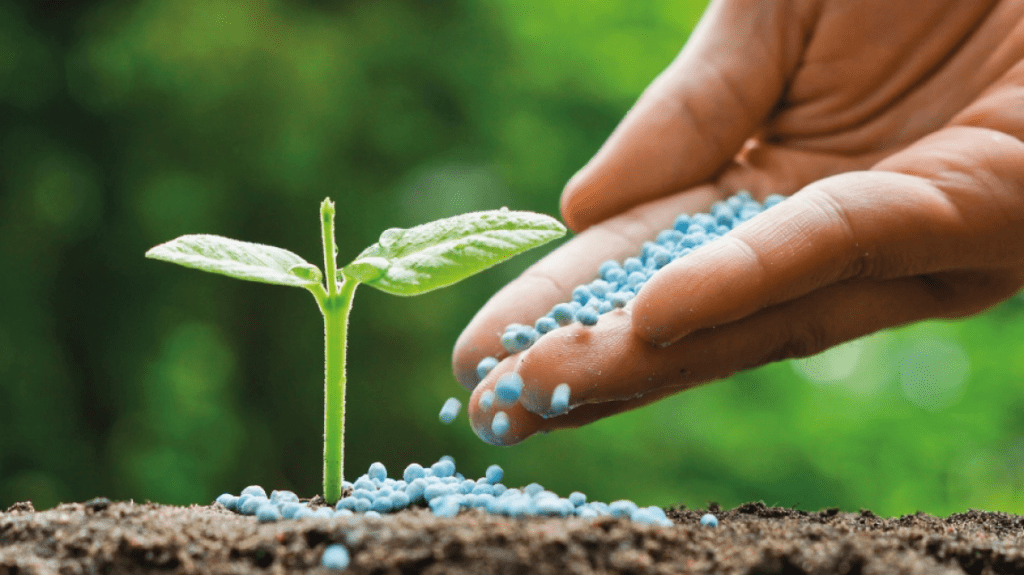
Sandy soils, common in arid regions, typically struggle to retain moisture and nutrients. Water drains quickly, fertilizers leach away, and plant roots fail to establish strong anchorage. The nanocellulose-based amendment directly addresses these limitations by improving soil structure while remaining environmentally friendly and biodegradable.
How nanocellulose transforms sandy soils
The research demonstrates that adding nanocellulose fibers to sandy soil improves water retention capacity, allowing the soil to hold moisture for longer periods. This alone can significantly reduce irrigation needs, a critical advantage in water-scarce environments.

Beyond water retention, the fibers also enhance soil mechanical strength. Stronger soil structure supports root growth, improves plant stability, and reduces erosion caused by wind or irrigation. These improvements are particularly valuable in desert climates, where loose soils are easily displaced.
Equally important is the effect on nutrient availability. The nanocellulose fibers help retain essential nutrients in the root zone, preventing them from being washed away. This results in healthier plants and more efficient fertilizer use, reducing both costs and environmental impact.
Supporting plant and microbial life
Healthy soil is not just about structure and water—it is also about life. The study explored how nanocellulose-amended soils influence plant-microbe interactions, a critical factor in long-term soil fertility.
The findings show that the improved soil environment supports beneficial microbial activity. These microbes play a key role in nutrient cycling, organic matter breakdown, and plant health. By creating conditions where microorganisms can thrive, the nanocellulose amendment contributes to a self-sustaining soil ecosystem rather than a short-term fix.
This biological boost strengthens plant resilience and promotes steady growth, even under harsh climatic conditions.
Long-term stability and real-world potential
A major concern with soil amendments is durability. The researchers conducted extensive testing to evaluate the long-term stability of nanocellulose-soil mixtures. Results confirmed that the fibers remain effective over extended periods, maintaining improved water dynamics and mechanical integrity without rapid degradation.
This durability makes the solution suitable for large-scale agricultural applications rather than limited experimental use. Farmers could integrate the amendment into existing practices without frequent reapplication, keeping operational costs low.
Aligning science with national priorities
The innovation reflects a broader research strategy focused on addressing regional challenges through science and technology. Leadership at Khalifa University emphasized that the work aligns closely with national priorities related to food security, sustainable resource use, and environmental protection.
By targeting arid agriculture, the research responds directly to the needs of regions where climate conditions limit conventional farming. The approach supports efforts to localize food production and reduce reliance on imports, a critical goal for water-stressed nations.

A scalable solution for the Middle East and beyond
The Middle East and North Africa face some of the world’s most severe soil and water constraints. Large areas are dominated by sandy soils with low organic content, making farming both resource-intensive and expensive.
What makes this innovation particularly compelling is its scalability. Pineapple peel waste is widely available through food processing industries, and the extraction process is designed to remain cost-effective. This creates an opportunity to establish circular economy models where agricultural and food waste is repurposed to restore degraded land.
Such waste-to-value technologies not only improve soil health but also reduce landfill use and associated emissions, delivering multiple environmental benefits.
Interdisciplinary collaboration driving impact
The research was carried out by a multidisciplinary team drawn from several specialized centers and departments within Khalifa University. Expertise from chemical and petroleum engineering, food security research, advanced water technologies, and carbon and hydrogen innovation played a crucial role in translating laboratory science into a practical agricultural solution.
This collaborative approach ensured that the technology was evaluated from multiple angles, including material performance, environmental impact, and agricultural viability.
Redefining sustainable agriculture in dry climates
As climate change intensifies water scarcity and land degradation, the need for resilient agricultural solutions continues to grow. Traditional approaches often rely on heavy irrigation, chemical fertilizers, or imported soil conditioners—methods that are neither economical nor sustainable in the long term.
The nanocellulose soil amendment offers a fundamentally different path. It enhances natural soil functions, reduces dependence on water and chemical inputs, and supports ecological balance. Most importantly, it does so using materials that would otherwise be discarded as waste.
Looking ahead
The success of this research opens the door to further studies and pilot-scale deployments in real farming environments. Future work may explore adapting the technology for different soil types, crops, and climatic conditions, expanding its impact beyond arid regions.
With continued development and adoption, this innovation has the potential to reshape how agriculture is practiced in dry landscapes—turning marginal land into productive farmland while conserving precious natural resources.
By blending advanced materials science with sustainability principles, Khalifa University researchers have demonstrated how local innovation can deliver global solutions to some of agriculture’s toughest challenges.
Do follow UAE Stories on Instagram
Read Next – RAK Police Warn Residents on Importance of Strong Passwords