Jubail Mangrove Park is one of Abu Dhabi’s most meaningful nature-based destinations, offering visitors a rare opportunity to experience coastal ecosystems in their most authentic form. Located on Jubail Island, the park represents a major step in the emirate’s long-term environmental vision. It combines conservation, education, and low-impact tourism, allowing people to explore mangroves without disturbing their delicate balance. Since its public opening in January 2022, the park has become a symbol of how modern urban development can coexist with protected natural habitats.
The Environmental Importance of Mangroves
Mangroves are among the most productive ecosystems on Earth, and the forests at Jubail play a crucial role in Abu Dhabi’s environmental stability. These salt-tolerant trees act as natural coastal defenses, reducing erosion and protecting shorelines from storm surges. They also capture and store large amounts of carbon, making them powerful allies in the fight against climate change. Long before the park was developed, the Jubail mangroves were already vital breeding grounds for fish, crustaceans, and migratory birds, forming a living network that supports both marine and terrestrial life.
Development and Vision Behind the Park
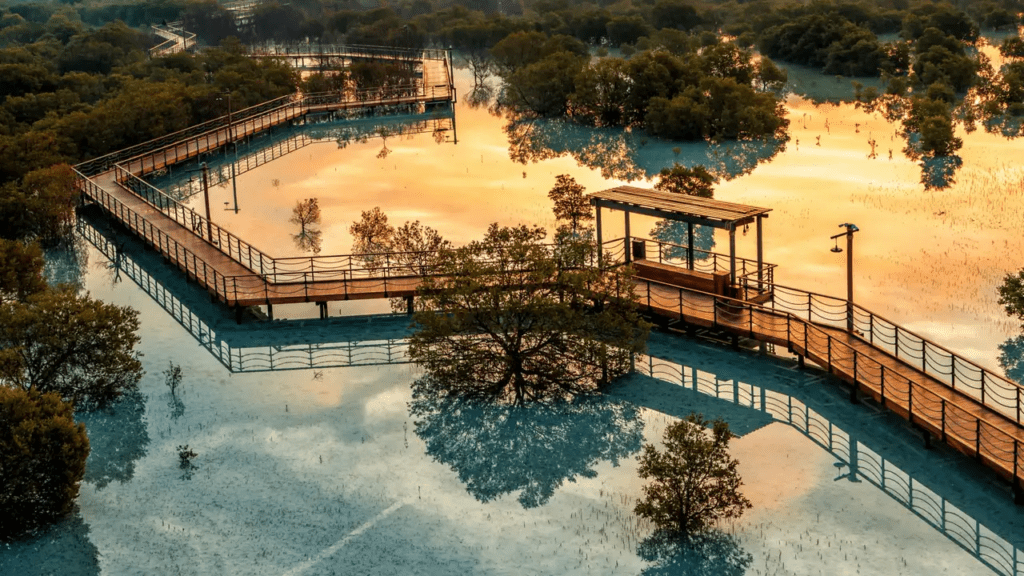
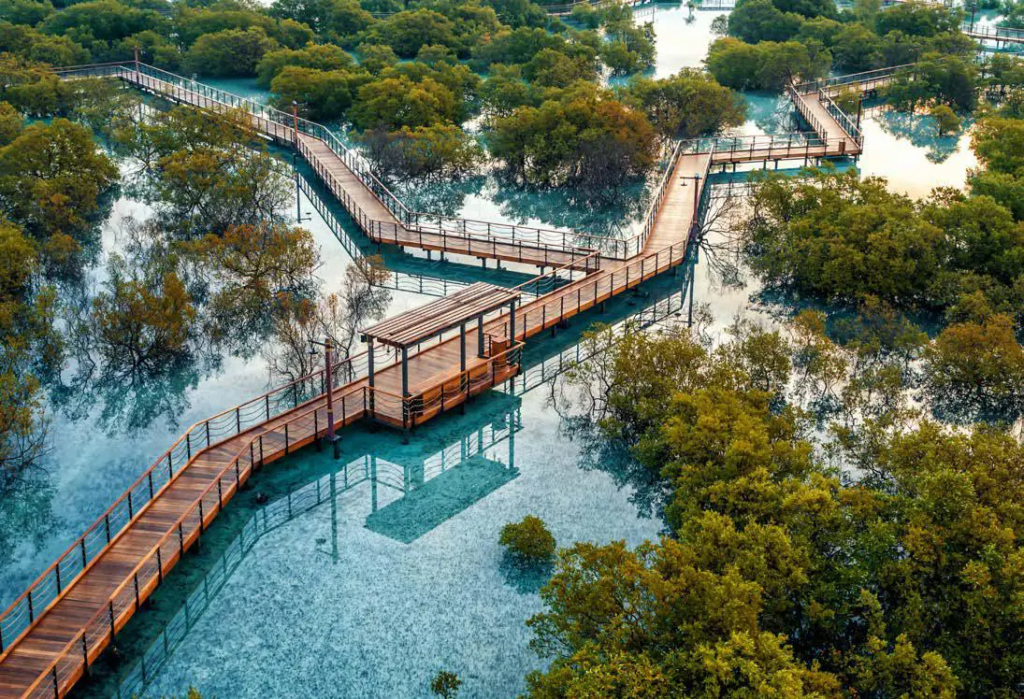
The concept of Jubail Mangrove Park was shaped as part of Abu Dhabi’s wider sustainability goals under the UAE’s national environmental strategies. Planning and construction were completed with minimal ecological disruption, using elevated wooden boardwalks that allow tidal flow and wildlife movement beneath them. The park officially opened to visitors in January 2022, marking a milestone in eco-tourism for the capital. From its earliest planning stages, the focus remained on preservation first, ensuring that public access would enhance awareness rather than harm the ecosystem.

Design and Visitor Experience
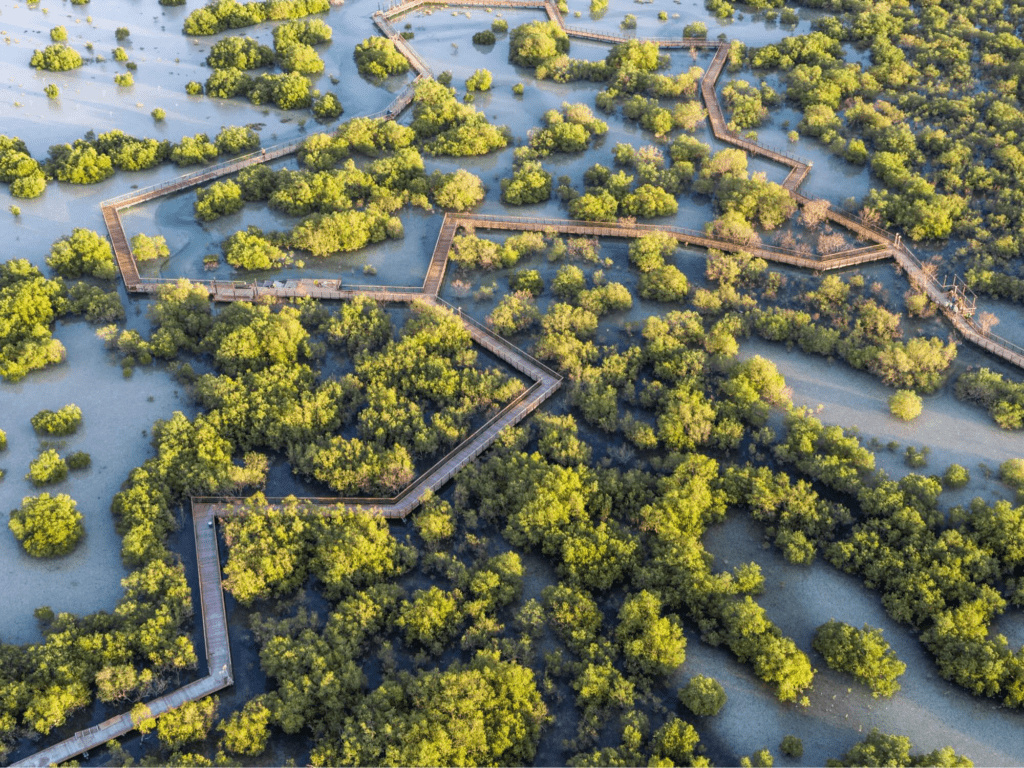
Stretching over several kilometers, the boardwalk network guides visitors through dense mangrove forests and open lagoons. The design encourages slow exploration, allowing guests to observe the natural rhythm of tides, roots, and wildlife. Viewing platforms and shaded rest areas are strategically placed to offer panoramic perspectives without intruding on sensitive zones. Interpretive signage throughout the park explains how mangroves survive in saline environments and why they are essential to coastal health, making every walk both calming and educational.
Wildlife and Biodiversity
Jubail Mangrove Park is home to an impressive range of species, many of which are rarely seen in urban settings. Flamingos, herons, egrets, and ospreys are frequent visitors, especially during migratory seasons. Beneath the water’s surface, crabs, fish, and mollusks thrive among the tangled roots, using them as shelter and feeding grounds. The park’s biodiversity reflects years of conservation work and careful monitoring, proving that protected spaces can flourish even near major cities.

Educational and Community Role
Education is a central pillar of Jubail Mangrove Park’s mission. Guided tours, school programs, and interactive exhibits introduce visitors to the science of mangroves and the broader challenges facing coastal ecosystems. These initiatives help build environmental responsibility, especially among younger generations. By turning scientific knowledge into engaging experiences, the park bridges the gap between research and public understanding, ensuring that conservation values extend beyond its boundaries.
Sustainability and Conservation Efforts
Every element of the park reflects a commitment to sustainability. Construction materials were selected for durability and low environmental impact, while energy-efficient lighting minimizes disturbance to nocturnal wildlife. Continuous conservation programs monitor water quality, plant health, and animal populations. Since its opening, the park has also supported mangrove restoration projects, reinforcing Abu Dhabi’s goal to expand mangrove coverage and enhance natural carbon sinks across the emirate.
Tourism with a Purpose
Unlike traditional tourist attractions, Jubail Mangrove Park offers purposeful tourism. Visitors are encouraged to connect with nature, slow down, and reflect on the importance of environmental stewardship. Kayaking routes were introduced after the park’s opening, allowing guided access to deeper mangrove channels while maintaining strict environmental guidelines. This balance between recreation and responsibility has positioned the park as a model for eco-friendly tourism in the region.
Cultural and National Significance
Mangroves have long held cultural value in the UAE, historically supporting fishing communities and protecting coastlines. Jubail Mangrove Park celebrates this heritage by preserving landscapes that once sustained earlier generations. Its establishment aligns with national initiatives focused on sustainability, biodiversity protection, and climate resilience. By safeguarding these forests, the park contributes to a living legacy that connects the past, present, and future of the Emirates.
Future Outlook
Since welcoming its first visitors in 2022, Jubail Mangrove Park has continued to evolve. Future plans include expanded educational programs, enhanced research collaborations, and further habitat restoration. As environmental awareness grows, the park is expected to play an even greater role in shaping public attitudes toward conservation. Its success demonstrates that protecting nature is not a limitation on progress, but a foundation for sustainable growth.
Conclusion
Jubail Mangrove Park stands as a powerful example of how thoughtful design, conservation, and community engagement can protect fragile ecosystems while enriching human experience. From its carefully planned opening in January 2022 to its ongoing environmental initiatives, the park represents Abu Dhabi’s commitment to a greener future. It is not just a place to visit, but a place to learn, reflect, and reconnect with nature in its purest form.
Do follow UAE Stories on Instagram
Read Next – Al Qana: Abu Dhabi’s Visionary Waterfront Destination