The story of Guggenheim Abu Dhabi is one of ambition, vision, and cultural confidence. Rising on Saadiyat Island, this long-anticipated museum represents far more than an architectural marvel. It symbolizes Abu Dhabi’s commitment to shaping global conversations around contemporary art while creating a powerful bridge between East and West. Designed to be the largest Guggenheim museum in the world, Guggenheim Abu Dhabi is positioned to transform how art is experienced, collected, and interpreted across cultures.
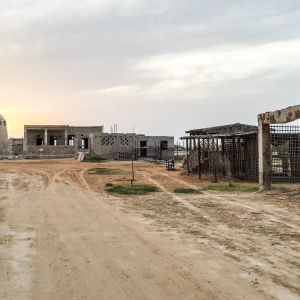
Announced as part of a broader cultural strategy, the museum has steadily evolved from concept to reality. With construction progressing and clear timelines in place, Guggenheim Abu Dhabi is now firmly on the path toward opening its doors to the world, marking a defining moment in the cultural history of the region.
The Vision Behind Guggenheim Abu Dhabi
At its core, Guggenheim Abu Dhabi is driven by a bold idea: contemporary art should reflect a truly global narrative. Unlike traditional Western-centric museums, this institution aims to showcase voices from the Middle East, North Africa, South Asia, and beyond, alongside established international artists.

This vision aligns closely with Abu Dhabi’s wider cultural ambitions. The city has invested heavily in becoming a global arts hub, using museums and cultural institutions as platforms for dialogue, education, and innovation. Guggenheim Abu Dhabi stands as a flagship of this vision, designed not only to display art but also to inspire critical thinking and cross-cultural understanding.
A Masterpiece by Frank Gehry
The architectural design of Guggenheim Abu Dhabi is entrusted to Frank Gehry, one of the most influential architects of modern times. Known for his sculptural and unconventional forms, Gehry has approached this project with sensitivity to both environment and culture.

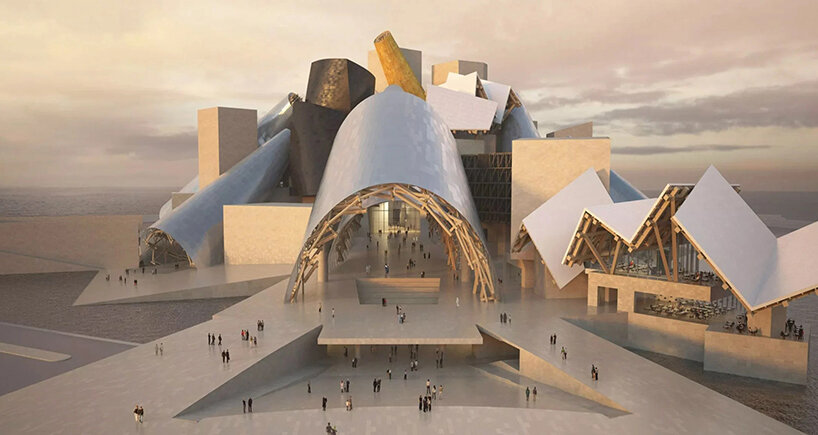
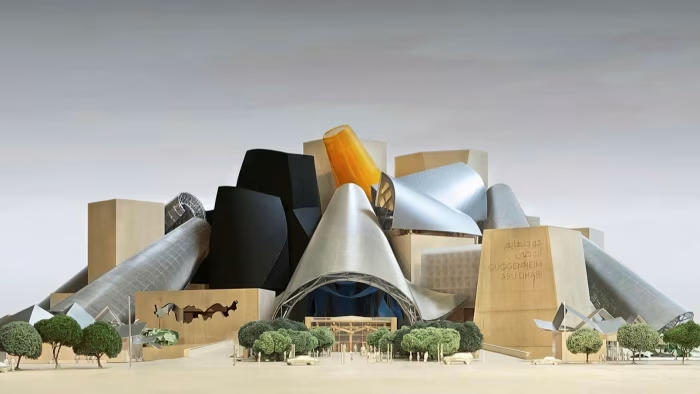
The museum’s design features a dynamic cluster of cones and galleries arranged to maximize natural light while protecting artworks from the harsh desert climate. Industrial materials, combined with innovative cooling strategies, reflect a thoughtful response to the local environment. Gehry’s design is not just visually striking; it is functional, sustainable, and deeply connected to its surroundings.
Set against the coastline of Abu Dhabi, the building itself becomes a piece of art, seamlessly blending contemporary design with regional context.
Saadiyat Island: A Cultural Powerhouse
Guggenheim Abu Dhabi is located within the Saadiyat Island Cultural District, a carefully curated destination dedicated to art, heritage, and education. Saadiyat Island has been envisioned as a global center where some of the world’s most important cultural institutions coexist.
This setting enhances the museum’s impact. Visitors will experience Guggenheim Abu Dhabi not in isolation, but as part of a wider cultural journey. The proximity to other major institutions reinforces the island’s role as a meeting point for global creativity, scholarship, and tourism.
Collection and Curatorial Approach
What truly sets Guggenheim Abu Dhabi apart is its collection strategy. From the outset, the museum has focused on acquiring and commissioning works that reflect diverse modern and contemporary experiences. Rather than retrofitting a global collection to a regional space, the museum has built its identity organically, with an emphasis on inclusivity and representation.
The curatorial approach prioritizes thematic storytelling over rigid chronological displays. This allows artworks from different geographies and eras to engage in meaningful dialogue. Visitors can expect exhibitions that explore shared human experiences such as identity, migration, technology, and social change, presented through a global lens.
Dates, Development, and Opening Timeline
The Guggenheim Abu Dhabi project was first announced in 2006 as part of Abu Dhabi’s long-term cultural development plan. After several phases of redesign and strategic reassessment, construction officially began in 2011. Over the years, the project has evolved to better align with curatorial goals and sustainability standards.
As of recent updates, Guggenheim Abu Dhabi is scheduled to open to the public in 2025. This opening date marks the culmination of nearly two decades of planning, design, and development. The museum’s debut is expected to be one of the most significant cultural events in the region, attracting international attention from artists, collectors, scholars, and travelers alike.
Impact on the Global Art World
The arrival of Guggenheim Abu Dhabi is poised to reshape the global art landscape. By placing a major contemporary art institution in the Middle East, the museum challenges traditional centers of cultural authority. It expands the geography of art history and creates new opportunities for artists and audiences who have often been underrepresented.
For emerging artists from the region, the museum provides unprecedented visibility and institutional support. For international artists, it offers a platform to engage with new audiences and cultural contexts. This two-way exchange strengthens global artistic networks and fosters collaboration across borders.
Education, Community, and Cultural Exchange
Beyond exhibitions, Guggenheim Abu Dhabi places strong emphasis on education and public engagement. The museum is designed as a living institution, offering workshops, lectures, artist residencies, and academic programs aimed at nurturing creativity and critical inquiry.
Local communities are central to this mission. By engaging students, educators, and families, the museum seeks to cultivate a lasting relationship with its audience. This human-centered approach ensures that Guggenheim Abu Dhabi is not just a destination for tourists, but a meaningful cultural space for residents.
A Symbol of the Future
Guggenheim Abu Dhabi stands as a symbol of what the future of museums can be: inclusive, global, and deeply connected to place. It reflects a world where cultural leadership is shared, narratives are diverse, and creativity knows no borders.
As the opening year approaches, anticipation continues to grow. Guggenheim Abu Dhabi is more than a museum in waiting; it is a statement of intent. When its doors open in 2025, it will not simply add another landmark to Abu Dhabi’s skyline. It will redefine how the world experiences contemporary art, setting a new standard for cultural institutions worldwide.
Do follow UAE Stories on Instagram
Read Next – Aljada: A New Standard for Urban Living in Sharjah