Rising quietly from the inland plains of Umm Al Quwain, Falaj Al Mualla Fort stands as a powerful reminder of the United Arab Emirates’ deep-rooted history. Far from the glittering coastlines and modern skylines, this historic fort reflects a time when survival depended on water, agriculture, and strategic defense. Built to protect precious resources and tribal settlements, the fort remains one of the most important heritage landmarks in the emirate. Its preserved walls, towers, and inner chambers tell a human story of leadership, resilience, and adaptation in a harsh desert environment.
Historical Background and Construction
Falaj Al Mualla Fort was constructed in the 19th century, with most historical records placing its completion around 1825. The fort was built during a period when tribal communities in the region were strengthening their settlements to protect water sources and agricultural lands. The name “Falaj” refers to the ancient irrigation channels that carried water from underground sources to farms and homes, making the location vital for sustaining life.
The fort served as the residence of the ruling family of Falaj Al Mualla and acted as the administrative center of the area. Its strategic inland position helped safeguard the falaj system, which was essential for cultivating date palms, grains, and vegetables. Over time, the fort became a symbol of authority and stability for the surrounding communities.

Architectural Design and Defensive Features
The architecture of Falaj Al Mualla Fort reflects traditional Emirati military design, combining functionality with simplicity. Built primarily from coral stone, mud brick, and palm trunks, the structure was designed to withstand extreme temperatures while remaining defensible.
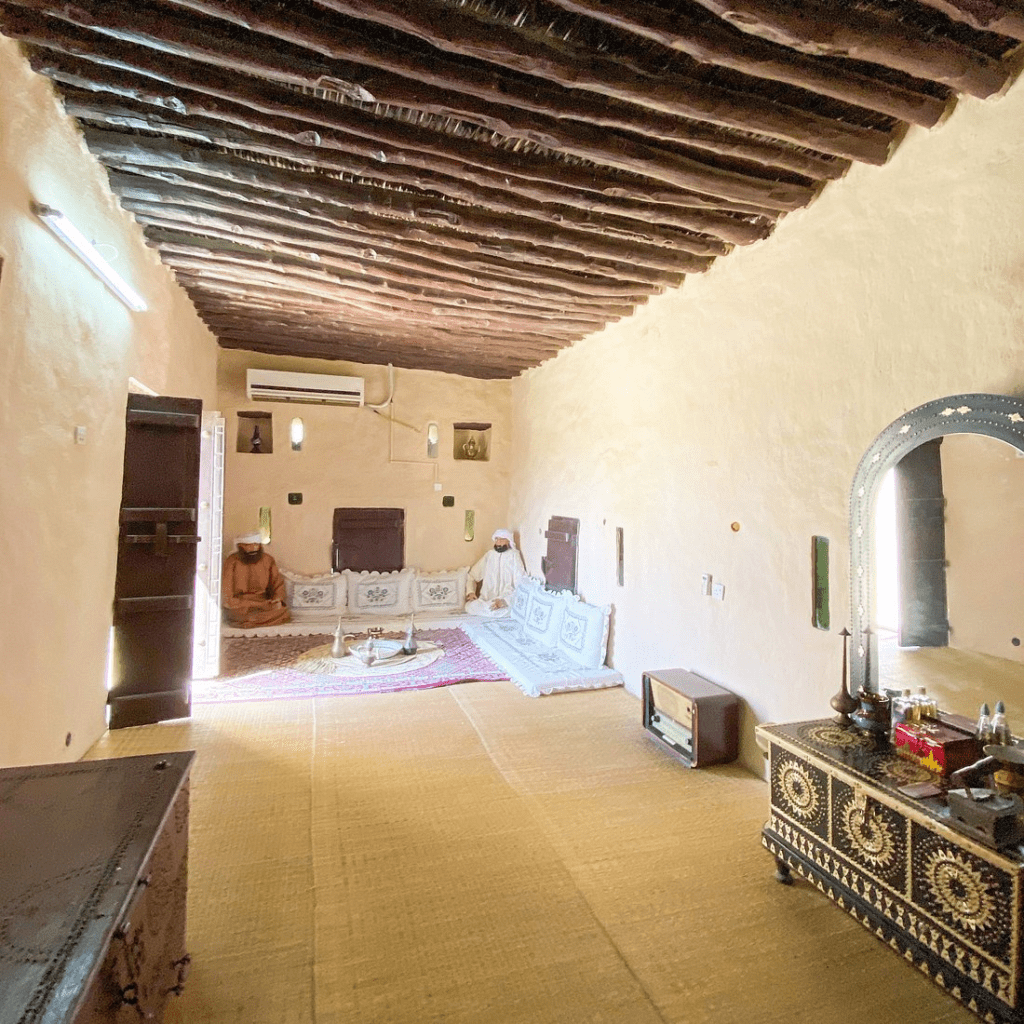
The fort features thick perimeter walls reinforced by watchtowers positioned at key corners. These towers allowed guards to monitor approaching threats and protect the settlement from raids. Narrow slit windows were strategically placed to provide ventilation while also serving as defensive openings. Inside, the layout includes living quarters, storage rooms, and spaces used for meetings and decision-making.

One of the most distinctive features of the fort is its central courtyard, which acted as a communal space and improved airflow within the structure. This design highlights how architecture in the region was closely tied to climate awareness and daily life needs.
Role in Governance and Community Life
Beyond its military purpose, Falaj Al Mualla Fort played a significant role in governance and social organization. It was from here that local rulers managed agricultural distribution, resolved disputes, and coordinated defense efforts. Important gatherings, tribal discussions, and ceremonial occasions often took place within its walls.
The fort also functioned as a refuge during times of conflict. Families from nearby farms would seek protection inside the fort, bringing livestock and supplies with them. This dual role as both a governing center and a safe haven strengthened its importance within the community and ensured its continuous use for decades.
Relationship with the Falaj Irrigation System
The survival of Falaj Al Mualla as a settlement was directly connected to its falaj irrigation system. These underground channels, some of which predate the fort itself, supplied a steady flow of water to the area. Protecting this water source was a top priority, and the fort’s location was carefully chosen for this reason.
By guarding the falaj, the fort ensured agricultural productivity and economic stability. Date palms, which were a primary source of food and trade, flourished due to this reliable irrigation. The fort thus symbolized not only military strength but also prosperity and sustainable living in an arid landscape.
Decline, Restoration, and Preservation
With the formation of the United Arab Emirates in 1971 and the modernization of governance and defense systems, Falaj Al Mualla Fort gradually lost its administrative role. By the mid-20th century, it was no longer used as a residence or military structure. Natural weathering and time began to affect its walls and interior spaces.
Recognizing its cultural and historical value, restoration efforts were undertaken by local authorities in the late 20th century. These efforts focused on preserving original materials and maintaining architectural authenticity. The restoration transformed the fort into a heritage site, allowing visitors to experience a tangible connection to the region’s past.
Cultural Significance Today
Today, Falaj Al Mualla Fort stands as a cultural landmark that educates visitors about traditional Emirati life away from the coast. It highlights the importance of inland settlements in shaping the nation’s history and reminds younger generations of the ingenuity required to thrive in the desert.
The fort is often included in heritage tours and educational programs, helping to preserve oral histories and traditional knowledge. Its calm surroundings and authentic design offer a reflective experience, making it a valuable counterpoint to the UAE’s modern urban identity.

Visitor Experience and Educational Value
Visitors to Falaj Al Mualla Fort can explore its towers, walk through restored rooms, and observe exhibits that explain traditional farming, governance, and daily life. Informational displays provide historical context, while the physical structure itself serves as the most powerful storyteller.
The fort’s location also allows visitors to appreciate the surrounding agricultural landscape, reinforcing the connection between water, land, and survival. This immersive experience makes the site particularly meaningful for those interested in history, architecture, and cultural preservation.
Legacy of Falaj Al Mualla Fort
Falaj Al Mualla Fort is more than a preserved building; it is a legacy of human determination and leadership. Its walls reflect generations of adaptation, protection, and community building. As the UAE continues to move forward, the fort remains a reminder that modern success is rooted in a deep respect for heritage and tradition.
By preserving sites like this, the nation ensures that future generations understand the sacrifices and wisdom of those who came before them. Falaj Al Mualla Fort continues to stand proudly, bridging the past and present with quiet strength.
Do follow UAE Stories on Instagram
Read Next – Infinity des Lumières Dubai: Where Art Comes Alive