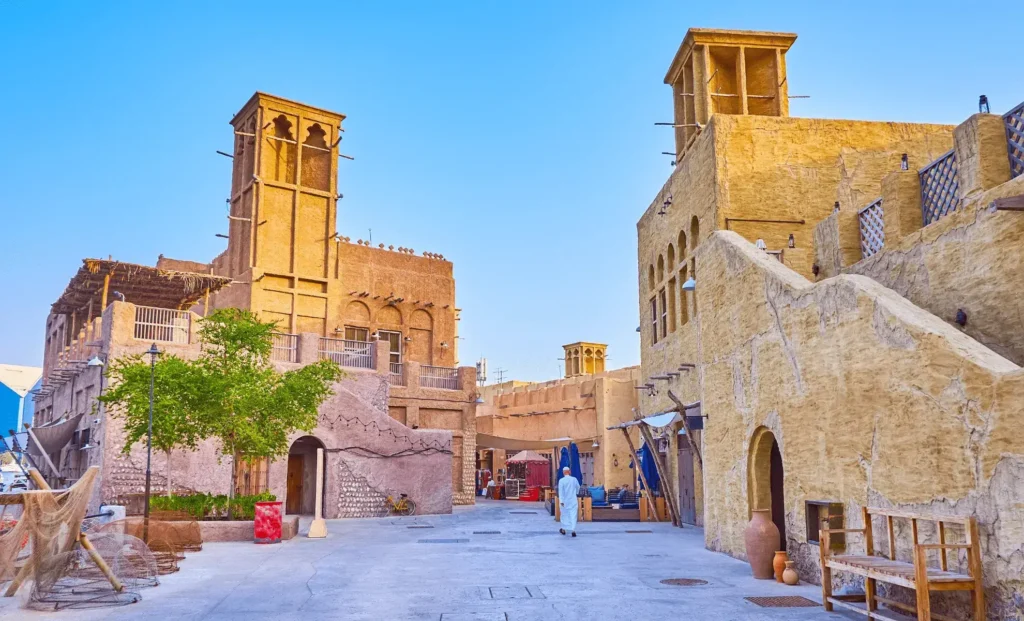
Al Fahidi Historical District is one of Dubai’s oldest and most culturally rich neighborhoods. Located along the Dubai Creek in the heart of Bur Dubai, this historic area offers a glimpse into what life in Dubai was like before the skyscrapers and modern developments took over.
With its narrow lanes, traditional wind towers, and preserved heritage buildings, Al Fahidi Historical District is a true symbol of the city’s cultural roots. Today, it stands as a charming contrast to the glitzy side of Dubai, attracting tourists, artists, and history enthusiasts from all over the world.
The History Behind Al Fahidi Historical District
How It All Began
Al Fahidi was built in the late 19th century and was originally home to wealthy Persian merchants who came to Dubai to trade pearls and textiles. The area was chosen for its strategic location along the Dubai Creek, which served as the main port for trade and transport. Over time, it grew into a bustling community with homes, schools, and marketplaces.

Architectural Significance
One of the most iconic features of Al Fahidi is its traditional architecture. The buildings are made of coral, stone, gypsum, and teak, showcasing how people in the past adapted to the harsh desert climate. The most notable architectural element is the barjeel or wind tower—a type of natural air conditioner that catches wind and directs it into the homes to cool them down.
These wind towers are not only functional but also beautiful, giving the district its unique look and feel.

Why You Should Visit Al Fahidi Historical District
1. Experience Authentic Emirati Culture
A visit to Al Fahidi is like stepping into a living museum. Every street, courtyard, and alley tells a story. Unlike modern Dubai, where glass towers dominate the skyline, here you’ll find clay-colored buildings and quiet, shady walkways. It’s a peaceful escape and a place to truly connect with Dubai’s roots.
2. Museums and Art Galleries
The district is home to several small museums and art spaces that focus on various aspects of Emirati life and heritage:
- Dubai Museum (Al Fahidi Fort) – Currently under renovation, this museum is located nearby and offers insights into Dubai’s transformation from a fishing village to a global city.
- Coffee Museum – Discover the global history of coffee, with a special focus on Arabic traditions. Sample different types of coffee and see antique coffee equipment from around the world.
- Coins Museum – A hidden gem for collectors and history buffs, this museum features coins from different Islamic dynasties and countries.
- Calligraphy House (Dar Al Khatt) – Showcasing the beauty of Arabic calligraphy through exhibitions and workshops.
3. Cultural Events and Workshops
Al Fahidi regularly hosts cultural events and festivals such as:
- Sikka Art Fair – A yearly celebration of visual and performing arts, showcasing works from emerging Emirati and UAE-based artists.
- Heritage Week – Features traditional music, dance, food, and crafts.
- Workshops – Learn traditional skills like henna painting, Arabic calligraphy, pottery, and textile weaving.
These experiences allow visitors to engage directly with Emirati traditions and interact with local artisans and experts.
Walking Through the District: What to See
Here’s a list of must-see spots and things to do while walking through Al Fahidi Historical District:
Bastakiya Quarter
This is the heart of Al Fahidi, where restored buildings line the maze-like pathways. Many of these homes have been turned into cafés, boutique hotels, or art galleries. The neighborhood retains its quiet charm and is best explored on foot.
Sheikh Mohammed Centre for Cultural Understanding (SMCCU)
This is one of the most important cultural landmarks in the district. The center offers a range of programs designed to promote cross-cultural understanding, including:
- Traditional Emirati meals with Q&A sessions.
- Walking tours of the district.
- Cultural lectures and school programs.
Their motto, “Open Doors, Open Minds,” truly comes to life here. It’s a must-visit for anyone interested in gaining a deeper understanding of Emirati culture.
XVA Art Hotel & Café
A boutique hotel, art gallery, and vegetarian café all in one. The XVA is a favorite among artists and travelers who appreciate creative expression and quiet spaces. Its central courtyard is perfect for sipping Arabic coffee and soaking in the surroundings.
Shopping and Souvenirs: Traditional Markets Nearby
Though Al Fahidi itself is more focused on heritage than shopping, it’s just a short walk from some of Dubai’s most famous traditional markets, or souks:
- Textile Souk – Full of colorful fabrics, scarves, and traditional attire. Great for finding souvenirs or materials for custom-made garments.
- Spice Souk – Located across the creek in Deira, reachable by abra (traditional boat). This market is a feast for the senses.
- Gold Souk – Also in Deira, this world-famous market features dazzling displays of gold jewelry at competitive prices.
The contrast between the calm of Al Fahidi and the hustle of the souks gives visitors a complete cultural experience.
Cafés and Dining: Where to Eat
Food is a big part of any cultural journey, and Al Fahidi offers several delightful spots to relax and enjoy traditional Emirati or Middle Eastern cuisine.
Recommended Places:
- Arabian Tea House – Perhaps the most famous café in the district. With its whitewashed walls, turquoise benches, and shaded courtyard, it feels like a serene oasis. Try their Emirati breakfast or the chicken biryani.
- Make Art Café – Located inside one of the old houses, this café is quiet and artsy, perfect for a relaxing lunch.
- Local Bites Café – Serves a mix of Emirati and international dishes, often with modern twists.
When to Visit and How to Get There
Best Time to Visit
The best time to explore Al Fahidi Historical District is during the cooler months, from November to March. This is also when most cultural events and art fairs are held. Early mornings and late afternoons are ideal to avoid the midday sun.
How to Get There
- By Metro: Take the Green Line to Al Fahidi Station. The district is a short walk away.
- By Bus: Several public buses stop near Al Fahidi.
- By Taxi or Car: Taxis are readily available throughout Dubai. There is limited parking near the district.
- By Abra: From the Deira side of the creek, take a traditional boat ride (abra) to Bur Dubai – a scenic and inexpensive way to arrive.
Tips for Visitors
- Wear comfortable shoes – You’ll be walking on stone pavements and cobbled streets.
- Dress modestly – Respect local customs, especially when entering cultural centers.
- Bring a camera – The area is full of photo-worthy spots, especially during golden hour.
- Join a guided tour – To get the most out of your visit, consider taking a guided walking tour with a local expert.
The Importance of Al Fahidi in Modern Dubai
While Dubai is often seen as a city of the future, places like Al Fahidi remind us of its deep roots and traditions. The government’s efforts to preserve and restore the district show a strong commitment to cultural identity.
Al Fahidi Historical District is not just a tourist attraction; it’s a vital piece of the city’s soul. It stands as a living reminder that progress and tradition can coexist, and that history should always have a place in the future.
Conclusion: Step into the Past, in the Heart of Dubai
Visiting Al Fahidi Historical District is more than just a sightseeing activity—it’s a cultural journey. Whether you’re a tourist discovering Dubai for the first time or a resident looking to reconnect with the city’s heritage, Al Fahidi offers a rich, immersive experience.
From its timeless architecture and engaging museums to vibrant cultural events and authentic cuisine, every corner of this district tells a story. Make sure to include it in your Dubai itinerary—you won’t regret stepping back in time to explore this unforgettable piece of history.
Do follow UAE Stories on Instagram
Read More: Top Costume Store in Dubai for All Your Dress Up Needs