
Unless you have truly switched off from UAE developments over the last few years, you will have heard the growing buzz around Etihad Rail. The long-awaited national railway is no longer just an ambitious idea on paper. Freight trains are already moving across the country, and passenger services are firmly on the horizon.
Set to transform how people travel across the Emirates, Etihad Rail promises faster journeys, reduced road congestion, and a more sustainable way to move between cities. From daily commuting to weekend escapes, the network is expected to change the rhythm of life in the UAE.
Here is everything you need to know about Etihad Rail, from routes and travel times to stations, amenities, and what to expect when passenger services finally begin.

When Will Etihad Rail Open for Passengers?
The most common question surrounding Etihad Rail is also the simplest: when can people start using it?
Passenger services are officially expected to launch in 2026. While the railway is currently fully operational for freight, the passenger phase represents the next major milestone in the UAE’s transport vision.

Once open, the network is projected to carry up to 36.5 million passengers annually. It will connect 11 cities and regions across the country, offering a reliable alternative to driving and domestic flights. It is worth noting that not all stations may open simultaneously, with some routes likely to roll out in phases.
The Cities Etihad Rail Will Connect
Etihad Rail’s passenger network has been designed to link key urban, industrial, and coastal areas across the Emirates. The full route will stretch from Al Sila in the west to Fujairah on the east coast.
Cities and regions on the planned passenger network include Abu Dhabi, Dubai, Sharjah, Fujairah, Al Ruwais, Al Mirfa, Al Dhaid, and Al Sila. The result is a truly national system that ties together economic hubs, residential areas, and ports under one seamless rail network.
For residents, this means less time on highways and more time at home, at work, or exploring the country.
Etihad Rail Journey Times Explained
Speed is one of the biggest advantages of the Etihad Rail passenger service. Official journey times reveal just how competitive rail travel will be compared to driving.
Travel between Abu Dhabi and Dubai on the standard passenger train will take around 57 minutes. A separate high-speed service is also planned for this route, cutting the journey down to just 30 minutes, a major breakthrough for daily commuters.
Other estimated journey times include approximately 1 hour and 10 minutes from Abu Dhabi to Ruwais, 1 hour and 45 minutes from Abu Dhabi to Fujairah, and 1 hour and 40 minutes between Abu Dhabi and Sohar in Oman. A shorter cross-border journey from Al Ain to Sohar is expected to take just 47 minutes.
These timings position Etihad Rail as one of the most efficient ways to travel across the UAE once fully operational.
Understanding the Etihad Rail Route Map

The Etihad Rail passenger route spans the length of the UAE, connecting inland cities with coastal destinations. Starting at Al Sila near the Saudi border, the railway runs through Al Ruwais and Al Mirfa before reaching Abu Dhabi. From there, it continues toward Dubai and Sharjah, then inland through Al Dhaid before ending in Fujairah on the east coast.
This strategic layout supports both passenger mobility and economic development, linking ports, industrial zones, and population centres through a single, unified system.
Where Will the First Passenger Stations Be?
Initial passenger stations have already been announced, giving a clearer picture of how people will access the network.
In Abu Dhabi, stations are planned around Reem Island, Saadiyat Island, Yas Island, and near Mussafah and Mohammed Bin Zayed City. These locations are designed to serve both residential communities and commercial districts.
Dubai will feature a main station near Jumeirah Golf Estates Metro Station, with additional stations planned near Al Jaddaf and Al Maktoum International Airport. Sharjah’s station will be located close to University City, while Fujairah’s station will be in the Sakamkam neighbourhood near the Al Hilal City development.
Together, these stations aim to integrate rail travel smoothly into existing urban transport networks.
How Much Will Etihad Rail Tickets Cost?
Ticket prices for Etihad Rail passenger services have not yet been announced. However, there is a strong indication of how payments may work.
Dubai’s Roads and Transport Authority has been confirmed as the ticketing and payment partner for Etihad Rail. This opens the door to integrated payment options, potentially including the use of Dubai’s nol card alongside other digital ticketing solutions.
More details on pricing and fare structures are expected closer to the launch date.
What Will It Be Like Onboard?
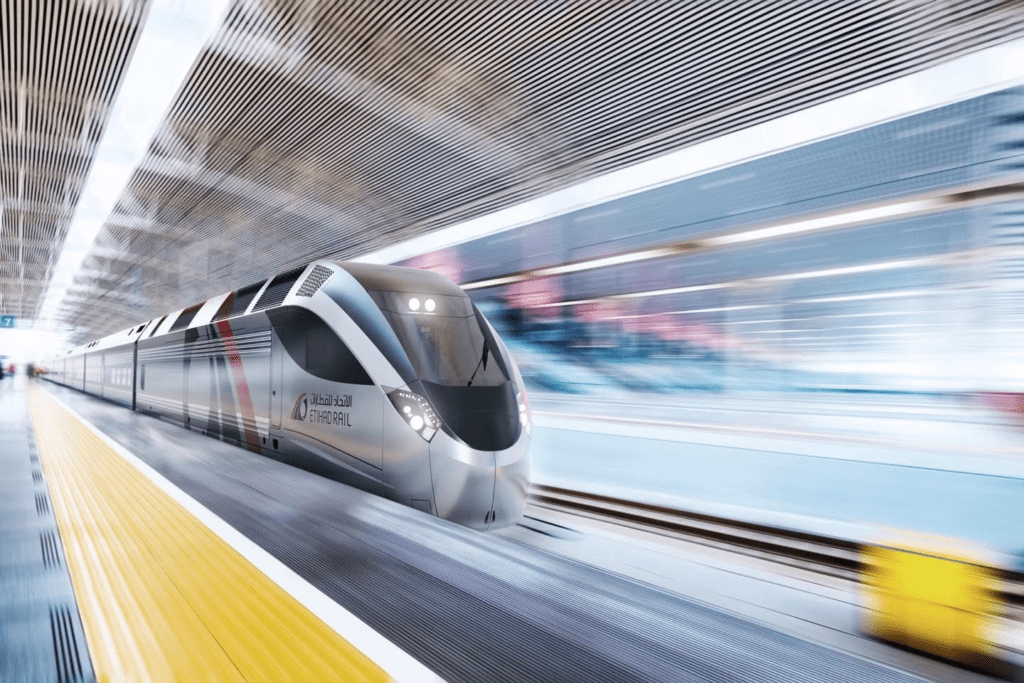
Passenger comfort is a central part of the Etihad Rail experience. Trains are being designed with modern travellers in mind, combining efficiency with a premium feel.
Each train will accommodate around 400 passengers across three classes: economy, family, and first class. Economy carriages will typically seat 56 passengers, while first class will offer a more spacious layout with just 16 seats per carriage.
Onboard amenities are expected to include infotainment systems, charging points, food and beverage services, generous legroom, and advanced air-conditioning systems. Safety and security features will meet international rail standards.
Adding to the sense of luxury, Etihad Rail has partnered with Italian hospitality company Arsenale to help shape the passenger experience. Early previews suggest a refined, almost Orient Express–inspired design for first class.
Who Is Designing the Trains?
The passenger trains are being designed and manufactured by CAF, a leading Spanish rail company. CAF is responsible for supplying and maintaining the fleet in line with European safety and performance standards.
This partnership ensures that Etihad Rail trains will combine modern engineering with proven rail technology, offering reliability from day one.
Jobs and Opportunities Created by Etihad Rail
Beyond transport, Etihad Rail is also a major employment generator. The National Railway Program is expected to create more than 9,000 jobs by 2030 across engineering, construction, operations, maintenance, safety, and technology.
A strong emphasis is being placed on training and development, particularly for Emirati talent. Partnerships with institutions such as the Abu Dhabi Vocational Education and Training Institute aim to build long-term expertise within the UAE rail sector.
What Is Etihad Rail Used for Right Now?
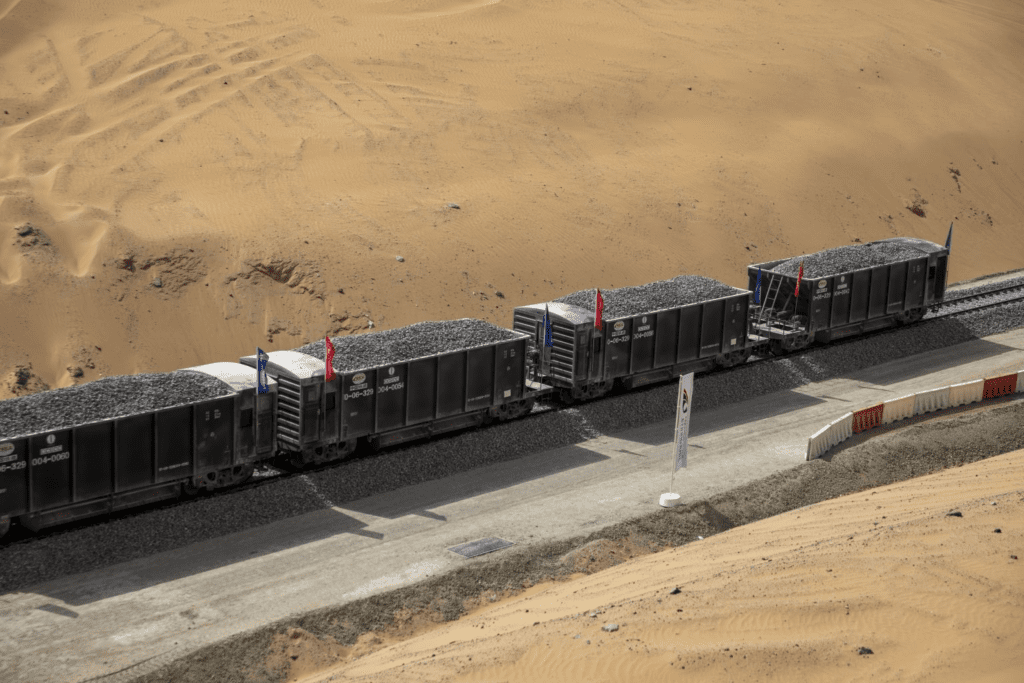
While passengers wait for the launch, Etihad Rail is already playing a critical role in freight transport. The freight network operates across the UAE with a fleet of 38 locomotives and more than 1,000 wagons.
These trains move raw materials, industrial goods, and other cargo across the country, significantly reducing the number of heavy trucks on roads and supporting sustainability goals.
Hafeet Rail and the UAE–Oman Connection
Etihad Rail is also extending beyond UAE borders. The cross-border project linking Abu Dhabi with Sohar in Oman is known as Hafeet Rail. Construction began recently, marking a major step toward regional rail connectivity.
Passenger trains on this route will travel at speeds of up to 200 km/h, dramatically reducing travel times between the two countries. This connection is expected to boost tourism, trade, and business travel between the UAE and Oman.
Why Etihad Rail Matters
Etihad Rail is more than just a train network. It represents a shift in how people move, work, and connect across the UAE. Faster journeys, reduced emissions, and improved quality of life are all part of the vision.
As the passenger launch approaches, anticipation continues to build. When the first trains depart, they will not just carry passengers, but also the future of travel in the UAE.
Do follow UAE Stories on Instagram
Read Next – Abu Dhabi Shares What to Expect From New Year’s Eve Traffic Changes