
A New Era in Urban Mobility
Dubai is on the cusp of revolutionizing urban transportation with its ambitious flying taxi initiative. In a groundbreaking development, successful piloted test flights have been conducted between two airports in the United States, marking a significant milestone in the journey toward commercial aerial mobility. This achievement not only showcases the technological prowess behind Dubai’s flying taxis but also sets the stage for their imminent introduction in the UAE.
The Vision Behind Dubai’s Flying Taxis
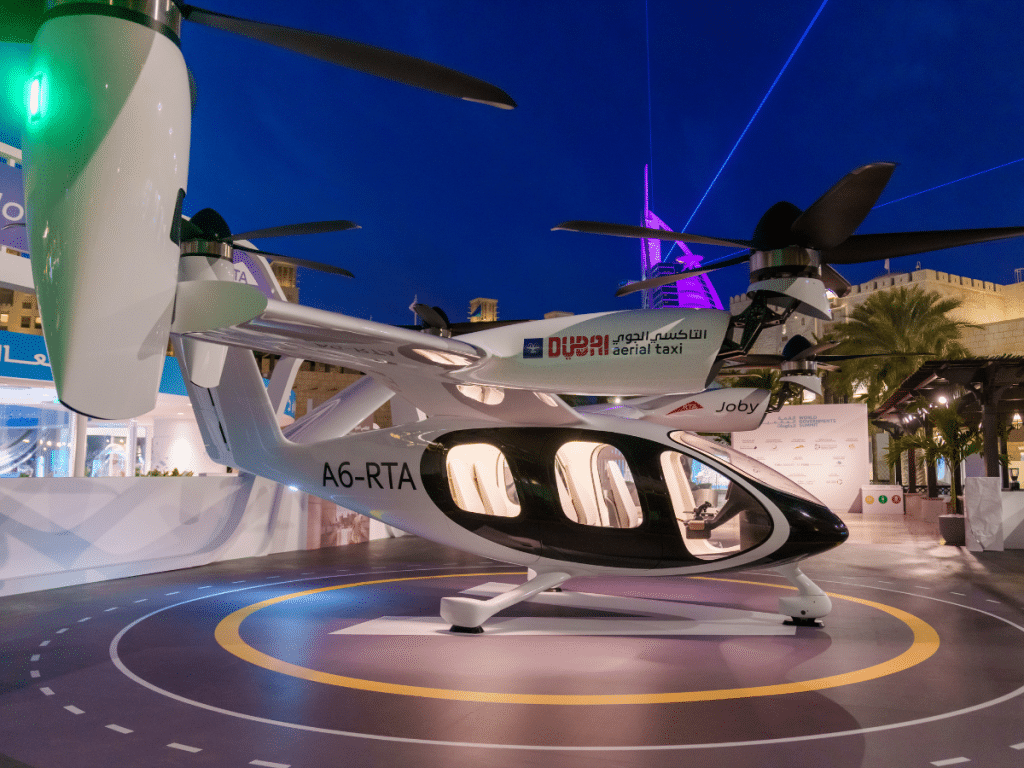
Dubai’s Roads and Transport Authority (RTA) has partnered with Joby Aviation, a California-based company specializing in electric vertical takeoff and landing (eVTOL) aircraft, to bring flying taxis to the city. The goal is to alleviate traffic congestion, reduce travel times, and provide a sustainable transportation alternative. With a range of 160 kilometers and speeds up to 320 km/h, these eVTOLs are designed to transform urban commuting.
Successful Test Flights in the United States
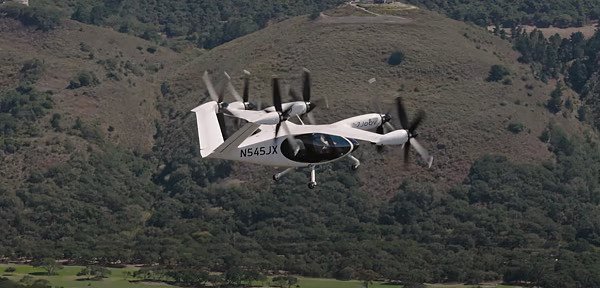
In a significant development, Joby Aviation has completed its first piloted eVTOL test flight between two public airports in California. The aircraft flew 11.5 miles from Marina to Monterey in just 12 minutes, demonstrating its ability to navigate controlled airspace and operate alongside other aircraft. This achievement underscores the readiness of the technology for commercial applications and provides valuable data for further development.

Dubai’s Strategic Infrastructure Plans
To support the upcoming flying taxi services, Dubai is developing a network of vertiports—designated takeoff and landing zones for eVTOLs. The first four vertiports will be located at key points: Dubai International Airport, Dubai Downtown, Dubai Marina, and Palm Jumeirah. These locations are strategically chosen to connect major landmarks and reduce travel times significantly. For instance, a trip from Dubai International Airport to Palm Jumeirah is expected to take just 10 to 12 minutes by aerial taxi, compared to approximately 45 minutes by car.
Integration with Existing Transportation Networks
The flying taxi service aims to seamlessly integrate with Dubai’s existing transportation infrastructure. Plans are underway to develop parking facilities at vertiports, allowing passengers to park and ride. Additionally, partnerships with ride-hailing services like Uber are being explored to facilitate easy booking and enhance the overall user experience. This integration ensures that flying taxis become a convenient and accessible mode of transport for residents and visitors alike.

Environmental and Economic Benefits
Dubai’s flying taxis are designed with sustainability in mind. Being fully electric, they produce zero emissions, contributing to the city’s efforts to reduce its carbon footprint. The introduction of aerial taxis is also expected to have a positive economic impact by creating new jobs in the aviation and technology sectors and attracting investment in infrastructure development.

Challenges and Future Outlook
While the prospects of flying taxis are promising, several challenges remain. Regulatory approvals, safety certifications, and public acceptance are critical factors that will influence the successful deployment of these services. However, with the successful test flights and ongoing infrastructure development, Dubai is poised to become the world’s first city to launch a commercial air taxi service in 2026.
Conclusion: Dubai’s Commitment to Innovation
Dubai’s flying taxi initiative represents a bold step toward the future of urban mobility. The successful piloted test flights in the United States serve as a testament to the viability of this technology and its potential to transform transportation in the UAE. With continued investment in infrastructure, regulatory frameworks, and public engagement, Dubai is set to lead the way in the evolution of urban air mobility.
Do follow UAE Stories on Instagram
16 Most Aesthetic Cafés to Visit for the Best Iced Coffees in Dubai