Dubai has always been a city that embraces innovation, from its skyline-defining towers to its world-class metro system. Now, the emirate is preparing to take another bold step forward with the introduction of a trackless tram, a new generation of public transport designed to move like a train but operate without physical rails.
This development is more than just a technological experiment. It reflects Dubai’s ambition to make urban transport smarter, greener, and more adaptable to the changing needs of residents and visitors. The trackless tram promises to combine the efficiency of rail systems with the flexibility of road vehicles, offering a solution that fits perfectly with a fast-evolving city.
Unlike traditional trams that require expensive tracks and long construction periods, this system relies on advanced sensors and digital guidance. It can follow virtual routes painted on roads, reducing infrastructure costs and enabling faster deployment across key districts.

What Exactly Is a Trackless Tram?
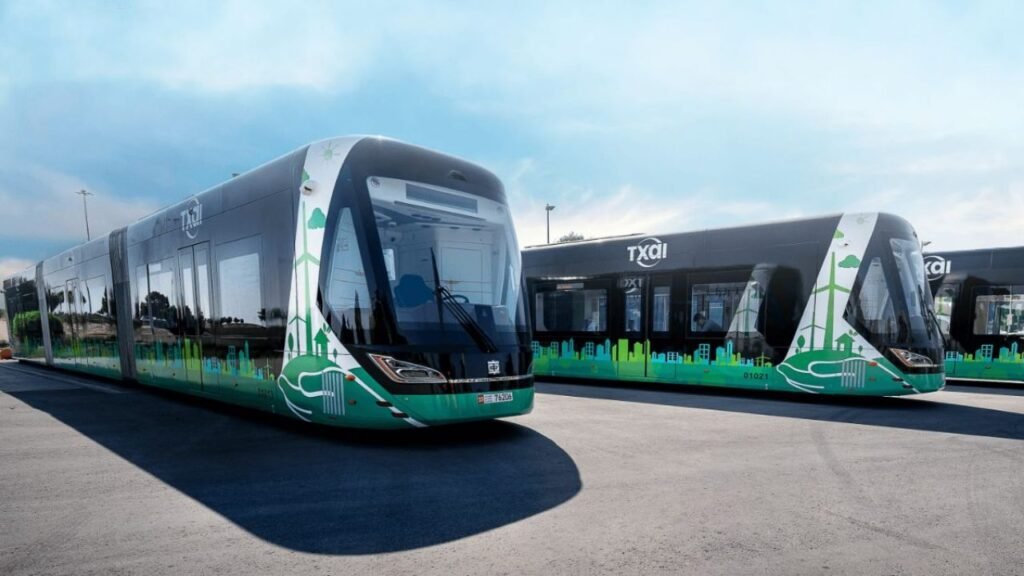
A trackless tram is essentially a tram-like electric vehicle that runs on normal roads rather than fixed rails. It uses technologies such as GPS, lidar sensors, cameras, and magnetic markers to navigate precisely along designated lanes.
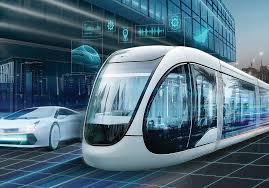
From the outside, it looks like a modern tram or light rail vehicle, often with multiple carriages connected together. Inside, it feels just as smooth and comfortable, with wide doors, spacious seating, and standing areas designed for high passenger volumes.

The main difference lies beneath the wheels. Instead of steel tracks, the tram operates on rubber tyres, allowing it to move more freely, change routes when necessary, and integrate seamlessly with existing road networks.
How the Dubai Trackless Tram Will Work
The Dubai trackless tram will operate on specially marked lanes that act as virtual tracks. These lanes guide the tram through a combination of digital mapping and real-time sensor input.
The system constantly scans the environment to stay aligned with its route. If obstacles appear, the tram can adjust its path or slow down automatically. This makes it both safe and responsive in busy urban environments.
Stations will be designed much like traditional tram stops, with raised platforms for easy boarding, digital screens for schedules, and accessibility features for all passengers. Charging points will be integrated at terminals or key stops, ensuring continuous operation throughout the day.
A Flexible Alternative to Traditional Rail
One of the biggest advantages of trackless trams is flexibility. Traditional rail projects require years of planning, heavy construction, and significant disruption to traffic and businesses. Trackless systems, by contrast, can be introduced much faster.
In Dubai’s case, this means new transport corridors can be launched in emerging districts without waiting for major infrastructure projects. Routes can be adjusted as urban development evolves, ensuring transport keeps pace with growth.
This flexibility is especially valuable for a city that is constantly expanding and experimenting with new urban concepts.
Sustainability at the Core
Sustainability is a major focus of Dubai’s long-term development strategy, and the trackless tram fits perfectly into this vision.
The system runs entirely on electric power, producing zero tailpipe emissions. Compared to diesel buses or petrol cars, it significantly reduces carbon output and improves air quality.
Because it requires less heavy infrastructure, the environmental impact of construction is also much lower. Fewer materials, less excavation, and reduced disruption mean a smaller overall carbon footprint.
Over time, widespread use of such systems could play a key role in reducing traffic congestion and encouraging people to shift from private cars to public transport.
Passenger Experience: Comfort Meets Technology
For commuters, the experience of using a trackless tram will feel modern and intuitive.
The interiors are expected to feature:
Spacious seating with ergonomic design
Air-conditioned cabins for hot climates
Wide doors for quick boarding and alighting
Digital displays for route and travel information
Quiet operation for a more relaxing journey
The smooth ride quality, combined with low noise levels, makes the system ideal for dense urban areas where comfort and minimal disturbance are priorities.
For tourists, the tram also offers a convenient way to explore different parts of the city without worrying about navigation or parking.
Safety and Reliability
Safety is built into every layer of the trackless tram system.
Advanced sensors continuously monitor surroundings, detecting pedestrians, vehicles, and obstacles. Automatic braking systems respond instantly if something unexpected appears in the tram’s path.
The digital guidance ensures consistent alignment with routes, reducing the risk of human error. Drivers, where present, act more as supervisors than operators, with most functions handled by intelligent systems.
This combination of automation and human oversight creates a highly reliable transport solution suited for busy metropolitan environments.
Cost Efficiency for Cities
One of the strongest arguments in favour of trackless trams is cost.
Building traditional tram or metro systems requires billions in investment. Trackless systems, however, eliminate the need for rails, tunnels, and complex signalling infrastructure.
This makes them significantly cheaper to implement and maintain. Cities can deploy high-capacity transport without stretching budgets or delaying projects for years.
For Dubai, this means faster expansion of public transport coverage while maintaining financial sustainability.
Integration with Existing Transport Networks
Dubai already has an extensive transport ecosystem, including metro lines, buses, taxis, and water transport. The trackless tram will complement these systems rather than replace them.
Interchange stations will allow passengers to move seamlessly between trams, metro, and buses. Unified ticketing systems are expected to make travel simple and efficient.
This integrated approach ensures that the new system enhances overall mobility rather than creating isolated routes.
Supporting Smart City Goals
Dubai’s trackless tram is not just about moving people from one place to another. It is also a key component of the city’s smart mobility vision.
Real-time data collection will allow authorities to monitor passenger flows, optimise routes, and respond quickly to changing demand. Artificial intelligence can predict peak times and adjust service frequency accordingly.
This data-driven approach leads to more efficient operations, reduced waiting times, and better overall service quality.
Economic and Social Impact
Beyond transport, the trackless tram has the potential to influence economic and social development.
Improved connectivity makes neighbourhoods more attractive for businesses and residents. Property values often increase near reliable public transport routes, encouraging urban regeneration.
For workers, easier commuting reduces stress and saves time. For students, it offers safe and affordable access to educational institutions. For families, it provides a convenient alternative to driving.
In the long run, such systems help build more inclusive cities where mobility is accessible to everyone.
A Model for Other Cities
Dubai’s adoption of trackless tram technology could inspire other cities around the world.
Many urban areas struggle with congestion, pollution, and limited budgets for infrastructure. Trackless trams offer a middle ground between buses and heavy rail, combining capacity with affordability.
If successful, Dubai’s model could be replicated in rapidly growing cities across Asia, Africa, and the Middle East.
This positions Dubai not only as a user of innovation but also as a global reference point for future urban transport solutions.
Challenges and Considerations
Despite its advantages, the trackless tram is not without challenges.
Dedicated lanes are still required to avoid interference from regular traffic. Without proper enforcement, delays and safety risks could arise.
Weather conditions, particularly extreme heat, must be carefully managed to ensure system reliability. Maintenance of digital guidance systems also requires skilled technicians and continuous monitoring.
However, with Dubai’s strong technological infrastructure and experience in large-scale projects, these challenges are likely to be addressed effectively.
The Future of Mobility in Dubai
The introduction of the trackless tram signals a broader shift in how Dubai approaches mobility.
Rather than relying solely on massive infrastructure projects, the city is exploring adaptive, technology-driven solutions that can evolve over time.
This approach aligns with global trends in smart cities, where flexibility, sustainability, and user experience take priority.
In the coming years, we may see more autonomous systems, shared mobility platforms, and integrated transport networks reshaping how people move through the city.
Why the Trackless Tram Matters
At its core, the trackless tram represents a new philosophy of urban transport.
It proves that high-quality public mobility does not always require heavy construction or rigid systems. With the right technology, cities can create efficient, comfortable, and sustainable solutions that adapt to real-world needs.
For Dubai, it reinforces the city’s reputation as a living laboratory for innovation, where bold ideas are tested and refined in real urban environments.
The trackless tram is not just another vehicle on the road. It is a symbol of how cities can rethink mobility for a smarter, cleaner, and more connected future.
Do follow UAE Stories on Instagram
Read Next – Beirut Sur Mer Abu Dhabi: A Mediterranean Dream by the Sea