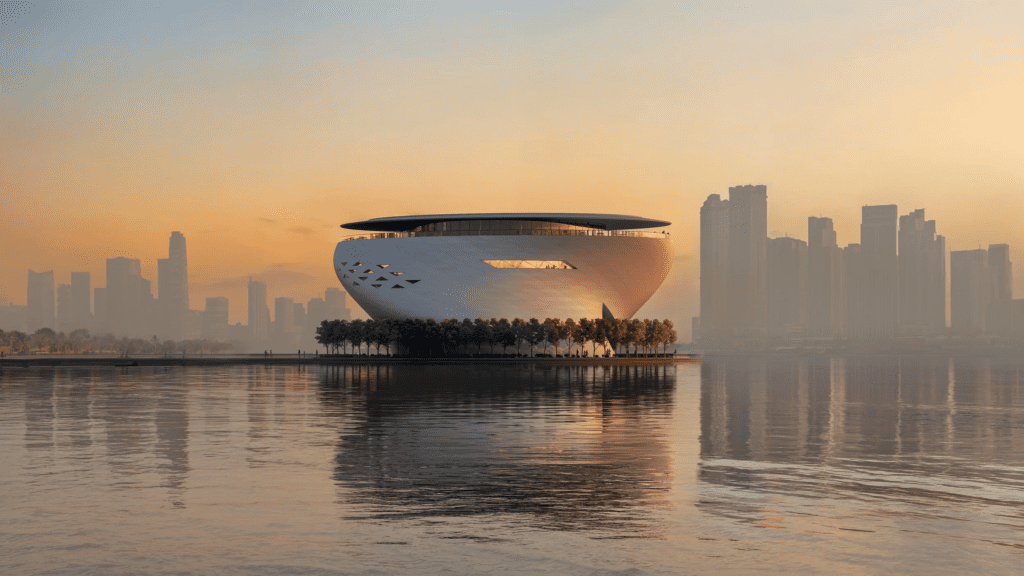
Dubai has never been a city to follow conventional paths, especially when it comes to architecture and cultural ambition. From record-breaking towers to man-made islands, the emirate has consistently transformed bold ideas into physical landmarks. The Dubai Museum of Art, known as DUMA, continues this legacy with a concept that feels both futuristic and deeply poetic. Designed to float on water, the museum represents a new chapter in how art, architecture, and environment can coexist in harmony.
DUMA is envisioned as more than a building that houses artworks. It is designed to be an artwork in itself, a cultural statement that reflects Dubai’s evolving identity as a global capital for creativity, dialogue, and innovation. Set on the historic waters of Dubai Creek, the museum bridges the city’s rich heritage with its forward-looking cultural vision.
The Vision Behind the Floating Museum
The idea of a floating museum is as symbolic as it is functional. Water has always played a central role in Dubai’s story, from early trade routes to the city’s modern transformation. By placing DUMA on water, the project reconnects contemporary culture with the natural and historical rhythms of the city.

The museum was unveiled under the patronage of Sheikh Mohammed bin Rashid Al Maktoum, whose vision has long emphasized culture as a pillar of national development. The announcement positioned DUMA as a landmark that celebrates artistic expression while reinforcing Dubai’s role as a meeting point for global ideas.
Rather than competing with the skyline, the museum rises gently from the creek, creating a visual dialogue between land, water, and sky. This deliberate restraint sets DUMA apart from more imposing structures, offering a calm yet powerful presence in the cityscape.

Architecture by Tadao Ando: Minimalism Meets Meaning
The architectural design of DUMA is led by world-renowned Japanese architect Tadao Ando, whose work is celebrated for its masterful use of concrete, light, and space. Known for creating deeply emotional architectural experiences, Ando’s approach aligns perfectly with the museum’s conceptual goals.
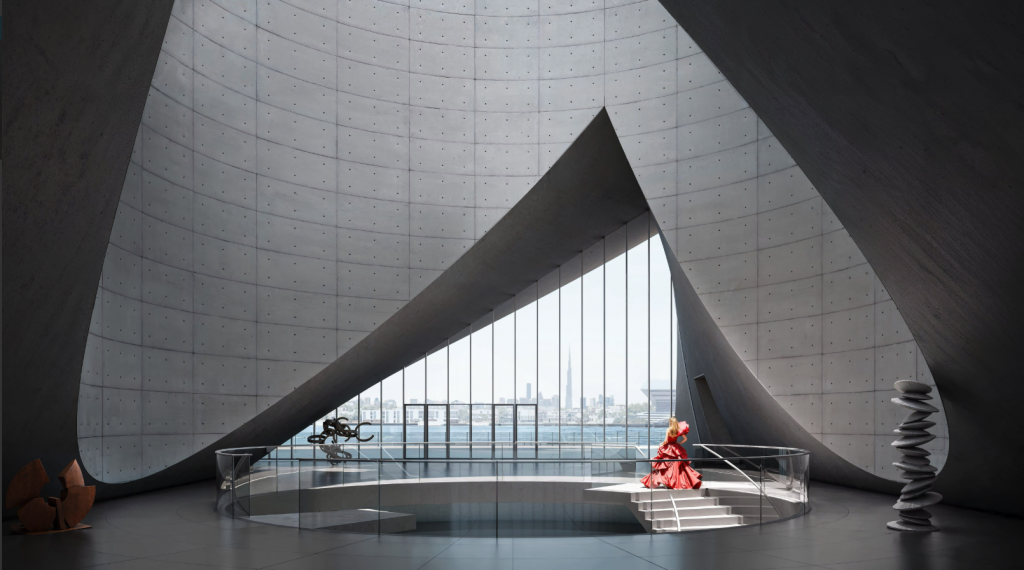
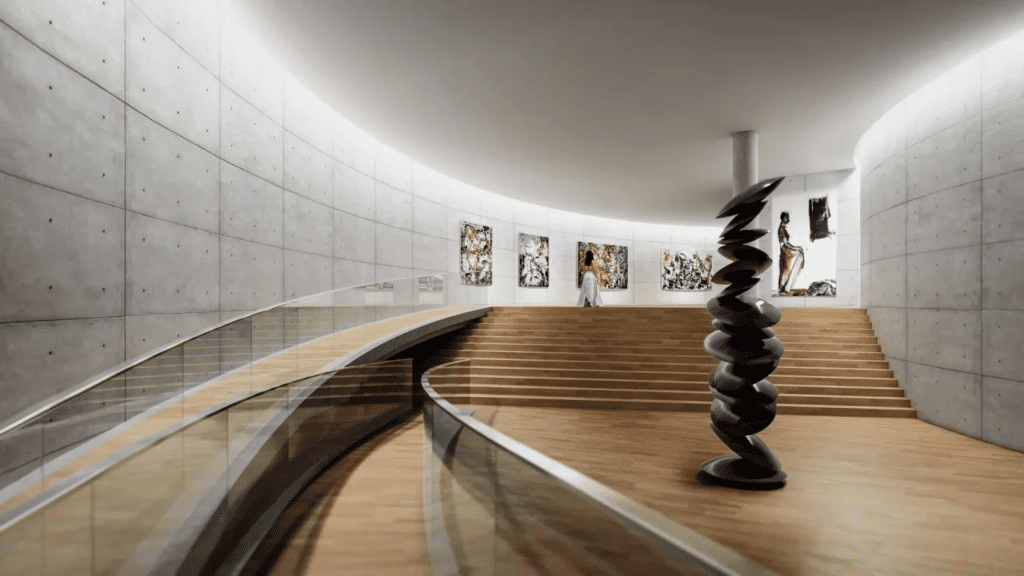
DUMA reflects Ando’s signature minimalism, where simplicity becomes a medium for contemplation. Clean lines, exposed concrete surfaces, and carefully orchestrated natural light define the structure. The floating design enhances this philosophy, allowing reflections of water and sky to become part of the visitor’s visual experience.
Rather than overwhelming visitors, the architecture encourages stillness and reflection. Each space within the museum is designed to guide movement naturally, allowing art to unfold gradually rather than demand immediate attention. The result is an environment where architecture supports art without overshadowing it.
A Museum That Lives and Breathes Art
DUMA is not limited to traditional gallery functions. While it will host rotating exhibitions featuring regional and international artists, the museum is also designed as a multidisciplinary cultural hub. Spaces within the structure are dedicated to installations, performances, talks, and educational programs.
This approach reflects a broader understanding of art as a living practice rather than a static display. By incorporating flexible exhibition areas, DUMA can adapt to different artistic disciplines and emerging forms of expression. Digital art, immersive installations, and site-specific works are expected to play a key role in the museum’s programming.
The museum’s relationship with water further expands creative possibilities. Outdoor platforms and viewing decks allow for art experiences that extend beyond interior walls, blurring the boundary between curated space and natural surroundings.
Sustainability and Engineering Innovation
Creating a floating museum requires advanced engineering and a strong commitment to sustainability. DUMA is designed to remain stable on water while accommodating large visitor numbers and sensitive artworks. The structure integrates modern marine engineering techniques that ensure durability and safety without compromising aesthetics.
Environmental considerations are central to the project. The floating design minimizes impact on the surrounding ecosystem, while passive cooling strategies and natural ventilation reduce energy consumption. Materials are selected not only for their visual qualities but also for longevity and environmental performance.
By embracing sustainable design, DUMA reinforces the idea that cultural progress and environmental responsibility can advance together. The museum becomes a model for future waterfront developments that prioritize balance over excess.
Cultural Impact on Dubai and Beyond
The Dubai Museum of Art represents a significant step in the city’s cultural evolution. While Dubai is globally known for commerce and tourism, DUMA strengthens its identity as a serious cultural destination. The museum adds depth to the city’s creative landscape, offering a platform for dialogue between artists, thinkers, and audiences from around the world.
Its location on Dubai Creek is particularly meaningful. As one of the city’s most historic areas, the creek symbolizes exchange, movement, and connection. DUMA builds on this legacy by becoming a contemporary crossroads for artistic ideas.
Internationally, the museum positions Dubai within the global conversation on innovative museum design. Floating cultural institutions remain rare, and DUMA’s scale and ambition set a new benchmark for how museums can engage with their environment.
An Experience Designed for Visitors
Visiting DUMA is intended to be a journey rather than a simple walkthrough. From arrival by land or water, visitors gradually transition from the city’s energy into a quieter, more contemplative atmosphere. The movement across water heightens anticipation, preparing the mind for artistic engagement.
Inside, galleries are arranged to encourage exploration without rigid pathways. Natural light shifts throughout the day, subtly changing how artworks are perceived. Views of the creek provide moments of pause, allowing visitors to reflect between exhibitions.
Public spaces such as cafés, reading areas, and gathering zones foster social interaction, reinforcing the museum’s role as a community space rather than an exclusive institution.
A Floating Symbol of Artistic Ambition
DUMA stands as a powerful symbol of Dubai’s commitment to culture, creativity, and innovation. By combining visionary leadership, masterful architecture, and thoughtful urban placement, the museum transcends its function to become a statement of intent.
It demonstrates that art does not need to be confined by walls or tradition. Instead, it can float, adapt, and engage with the world around it. As Dubai continues to shape its cultural future, the Dubai Museum of Art promises to be a defining landmark, inspiring visitors and creators alike through its bold yet serene presence.
Do follow UAE Stories on Instagram
Read Next – Dubai Loop: A Bold Vision for Underground Mobility