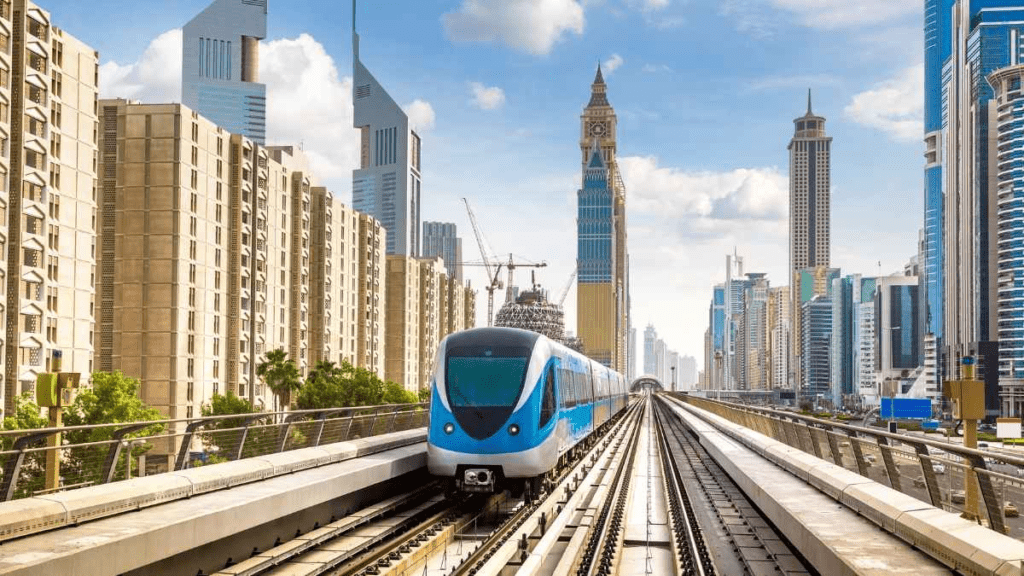
Dubai’s transport future is moving fast, and the Roads and Transport Authority has shared exciting new updates about the upcoming Dubai Metro Blue Line. Scheduled to launch in 2029, this new metro line is designed to significantly improve public transport across key residential, business, and educational areas of the city.
With two routes, 14 stations, and a mix of elevated and underground infrastructure, the Blue Line is expected to become a major pillar of Dubai’s growing metro network. The project reflects the city’s long-term vision to reduce congestion, improve sustainability, and offer residents a smoother daily commute.
Dubai Metro Blue Line Overview
The Dubai Metro Blue Line is planned as a 30-kilometre-long route, combining modern engineering with smart urban planning. According to RTA updates, the line will be capable of carrying more than 320,000 passengers daily, easing pressure on roads and existing metro lines.

Out of the total length, 15.5 kilometres will run underground, while 14.5 kilometres will be elevated. This balanced design allows the metro to pass efficiently through dense urban areas while remaining cost-effective and visually integrated with the city.
Two Routes Designed for Better Connectivity
One of the most important features of the Dubai Metro Blue Line is its two-route structure. This approach ensures seamless integration with the existing Red and Green Lines while improving connectivity across north-east Dubai.

RTA officials have confirmed that the two routes were carefully planned to keep the current metro network well-connected and to avoid overloading any single line. This smart routing will make daily travel faster and more reliable for thousands of commuters.
First Route: Al Jaddaf to International City
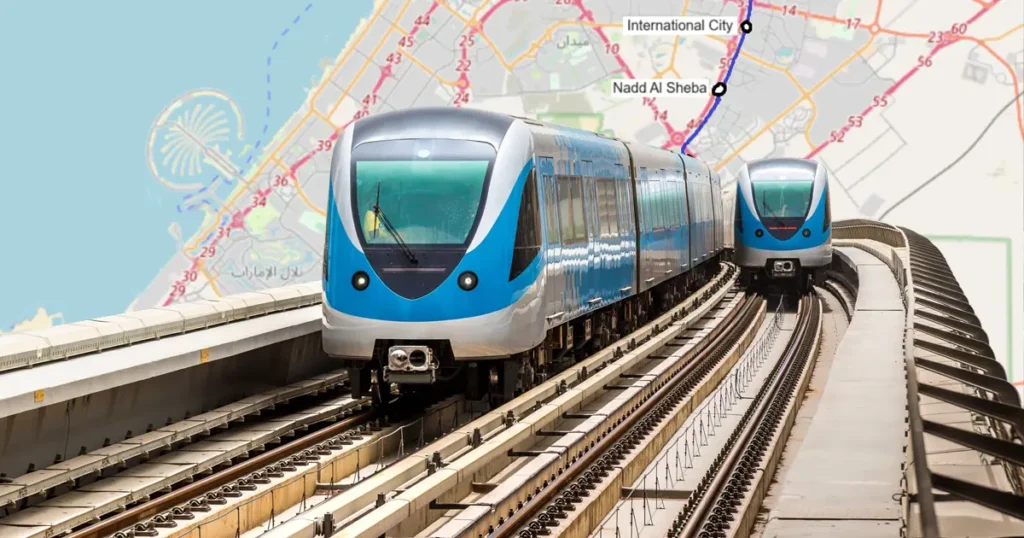
The first route begins at Al Khor Interchange in Al Jaddaf, connecting directly with the Green Line. From there, it passes through Dubai Festival City, Dubai Creek Harbour, and Ras Al Khor before reaching International City One, which will serve as an interchange station.
This route plays a key role in linking waterfront developments, commercial hubs, and residential communities that are rapidly expanding.
Second Route: Strengthening North-East Dubai Travel
The second route complements the first by extending connectivity deeper into north-east Dubai. Together, the two routes are divided into sections of 21 kilometres and 9 kilometres, ensuring smoother travel between older neighbourhoods and newly developed zones.
This setup significantly cuts travel time and reduces dependence on private vehicles in areas that previously had limited metro access.
Dubai Metro Blue Line Stations Breakdown
The Blue Line will include a total of 14 stations, designed to handle high passenger volumes while offering comfort and accessibility.
Types of Stations on the Blue Line
The stations will be a mix of above-ground and underground facilities, carefully placed to suit the surrounding environment.
Five stations will be above ground, allowing easy access in open areas and suburban zones. Four stations will be fully underground, ideal for dense urban locations. One underground interchange station will play a crucial role in connecting different metro lines smoothly.
RTA has also indicated that additional elevated stations may be added in future development phases, allowing the line to expand as the city grows.
First-Ever Dubai Metro Bridge Across Dubai Creek
A standout highlight of the Dubai Metro Blue Line is its historic crossing over Dubai Creek. For the first time, a metro line will pass over the creek using a dedicated bridge.
The bridge will stretch approximately 1,300 metres and represents a major engineering achievement. Beyond its functional role, the structure is expected to become a visual landmark, blending modern design with Dubai’s iconic waterfront views.
This crossing will make commuting between key districts faster while showcasing Dubai’s ability to deliver large-scale infrastructure projects.
Areas Covered by the Dubai Metro Blue Line
The Blue Line has been planned to serve a wide range of important locations across the city. These areas include major residential communities, business districts, and education hubs.
Key locations along the route include Marsa, Dubai Creek, Dubai Festival City, three stations in International City, Al Rashidiya, Al Warqa, Mirdif, Dubai Silicon Oasis, and Academic City.
By connecting these areas, the metro line supports both daily commuters and students, while also boosting accessibility for businesses and visitors.
Interchange Stations With Red and Green Lines
To ensure smooth integration with the existing network, the Dubai Metro Blue Line will feature three major interchange stations.
Al Khor Interchange will link the Blue Line with the Green Line, offering easy access to older parts of the city. Centrepoint Station will connect it to the Red Line, providing direct routes to major commercial and tourist areas. An additional interchange station in International City will further strengthen connectivity.
These interchanges are designed to minimize transfer time and improve the overall passenger experience.
What the Dubai Metro Blue Line Means for Commuters
For residents and workers across Dubai, the Blue Line promises shorter travel times, fewer road delays, and better access to key destinations. By linking underserved areas to the wider metro network, it creates new travel options that are both affordable and efficient.
The project also supports Dubai’s sustainability goals by encouraging public transport use and reducing traffic congestion and emissions.
Looking Ahead to 2029
As Dubai continues to expand, the Dubai Metro Blue Line stands out as a forward-looking investment in the city’s future. With two smartly designed routes, 14 modern stations, and landmark infrastructure like the Dubai Creek bridge, the line is set to redefine urban mobility.
When it becomes operational in 2029, the Blue Line will not just be another metro route. It will be a vital connection that brings communities closer, supports economic growth, and makes everyday travel across Dubai simpler and smarter.
Do follow UAE Stories on Instagram
Read Next – Abu Dhabi Marathon Unites 37,000 Runners in Powerful Display