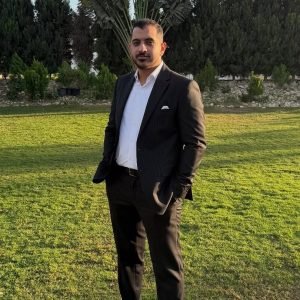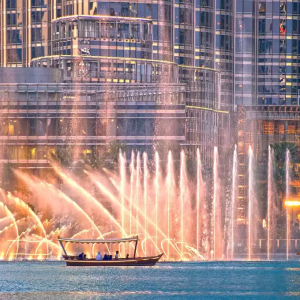

In a city that celebrates big dreams and even bigger achievements, a Dubai expat is about to carve his name into the hearts of residents and tourists alike — using something as simple as wooden chopsticks. Meet Ahmed Bilal, a passionate artist with an extraordinary vision: to recreate Dubai’s iconic Burj Khalifa entirely out of two million chopsticks.
This awe-inspiring project isn’t just a work of art; it’s a story of ambition, resilience, and the magic of turning everyday objects into something monumental. And true to Dubai’s spirit of grand ideas and record-breaking landmarks, this one-of-a-kind structure is already capturing imaginations long before its completion.
The Spark Behind the Vision
Every great idea begins with a spark — and for Ahmed, it came during a casual dinner with friends at a Chinese restaurant in Dubai Marina. While everyone else was engrossed in their meal, Ahmed found himself fiddling with the pair of wooden chopsticks in his hand. An idea struck him: what if these simple sticks could be transformed into something much larger than life?

“I looked at the chopsticks and thought — why not build something meaningful? And when you’re in Dubai, what could be more meaningful than Burj Khalifa?” says Ahmed with a warm smile.
That night, he went home with a head full of ideas and a heart bursting with excitement. The next morning, the vision of a chopstick Burj Khalifa had taken root in his mind, refusing to leave. It wasn’t long before sketches and miniature prototypes filled his apartment.

From Chopsticks to a Masterpiece
Turning an idea into reality is no small feat, especially when it involves two million pieces of wood and a towering ambition. Ahmed, originally from Pakistan, moved to Dubai eight years ago in search of opportunities and has since worked as an interior designer. Art has always been his side passion, with a flair for unconventional materials — from recycled bottle caps to broken glass mosaics.
But this project is by far his most ambitious yet. Standing at an estimated height of 16 feet upon completion, the chopstick Burj Khalifa will be a stunning miniature tribute to the world’s tallest building. Using precision, patience, and an artist’s eye for detail, Ahmed has already constructed the foundation and lower levels of the structure, which is housed in a specially built studio warehouse in Al Quoz.
He’s sourcing the chopsticks through restaurant partnerships, donations, and personal purchases. Some have even started arriving from other emirates after word spread about his extraordinary mission.

A Dream Driven by Community
What started as a personal passion project has quickly turned into a community-driven initiative. Ahmed regularly shares updates, time-lapse videos, and behind-the-scenes clips on his social media, attracting followers not just from Dubai but across the globe.
Many restaurants and café owners have reached out to donate unused chopsticks, while volunteers have stepped forward to help sort, clean, and prepare them for construction. Ahmed says the real joy lies in seeing how something so simple can bring people together for a creative cause.
“I didn’t expect people to be so interested, honestly. But it feels amazing to see families, students, and strangers offering to help. It’s not just my project anymore — it’s ours,” he adds.
The Technical Challenge
While it may look like a fun hobby from the outside, constructing a 16-foot-tall structure from slender sticks requires immense technical planning. The weight distribution, balancing technique, and the alignment of each layer of chopsticks have to be meticulously calculated. Ahmed spends hours mapping out the measurements, ensuring every tier mirrors the actual design of the Burj Khalifa.
He’s incorporated thin wooden beams for internal support and uses eco-friendly adhesive solutions to bind the chopsticks without damaging their texture or natural look. Some of the chopsticks are specially treated to withstand the heat and humidity of the UAE’s weather conditions, as the final structure might eventually be displayed outdoors for public viewing.
An Ode to Dubai’s Spirit
For Ahmed, this isn’t just about constructing a miniature version of a famous skyscraper. It’s a heartfelt tribute to Dubai — a city that embraced him, fueled his creative spirit, and taught him that no dream is too big or too strange.
“I came here with nothing but a suitcase and a sketchbook. Today, I’m building a symbol of this city’s ambition out of millions of tiny sticks. That’s what Dubai is about — daring to think differently and chasing the impossible,” he reflects.
He hopes that his creation will inspire others to pursue their unconventional ideas, no matter how impractical they may seem at first. In a world that often dismisses art made from non-traditional materials, Ahmed’s project stands tall — literally and metaphorically.
The Road Ahead
While a significant part of the structure has already been completed, there’s still a long way to go. Ahmed estimates another eight to ten months before the final piece is ready. Each day involves painstaking work — sorting, measuring, and fitting hundreds of chopsticks into place with surgical precision.
He plans to unveil the completed masterpiece in a grand public exhibition in Dubai next year, possibly coinciding with UAE National Day celebrations. Talks are underway with art galleries and city authorities to secure a suitable venue.
Ahmed’s ultimate wish is for the chopstick Burj Khalifa to find a permanent home at one of the city’s cultural hubs or museums, where future generations can admire it as a testament to creativity, resourcefulness, and the indomitable human spirit.
Breaking Records and Winning Hearts
While Ahmed modestly claims he isn’t chasing world records, it’s hard to ignore the scale and uniqueness of his project. If successful, the sculpture might set a new global record for the largest chopstick sculpture or the tallest chopstick-built replica of a building.
But for Ahmed, the greatest reward is not in titles or certificates but in the smiles of people who visit his studio, fascinated by how something so ordinary can be transformed into a piece of art. He believes it’s a reminder that beauty can be found in the most unexpected places — even in a pile of disposable chopsticks.

More Than Just Art
There’s also a deeper message woven into the structure. Through his project, Ahmed hopes to spark conversations around sustainability and the responsible use of single-use items. By turning what is typically discarded into something valuable, he wants to inspire others to rethink their relationship with everyday objects.
“Chopsticks are usually used once and thrown away. But when you look at this project, you’ll realise that waste can be beautiful too — it just depends on how you see it,” he says.
This philosophy resonates deeply with many of his followers, particularly in a region where conversations around sustainability are gaining momentum.
A New Chapter in His Story
As the project gathers attention, Ahmed’s life has taken an exciting turn. Art collectors and gallery owners have started showing interest in his work, and he’s received invitations to showcase his creations in exhibitions across the UAE and beyond.
While he remains focused on completing his towering tribute to Dubai, he’s also sketching out ideas for future projects — including a series of sculptures made entirely from recycled materials native to the region, like palm fronds and seashells.
He believes that this is just the beginning of a journey that combines his passion for design, love for the environment, and desire to create art that tells a meaningful story.
A Dream Built Stick by Stick
In a world where we’re constantly told to think big, Ahmed Bilal’s story is a beautiful reminder that sometimes the smallest things can hold the most extraordinary potential. His journey, from fiddling with a pair of chopsticks to building a monumental masterpiece, is as inspiring as it is heartwarming.
As Dubai continues to be a land where innovation and imagination know no limits, Ahmed’s chopstick Burj Khalifa stands as a fitting metaphor for the city itself — built on dreams, supported by a community, and destined to leave a lasting impression.
For now, Ahmed’s studio remains a hive of activity, buzzing with volunteers, curious visitors, and thousands upon thousands of wooden sticks waiting to take their place in history. And while the project may have started with two hands and a simple idea, it’s grown into a shared dream — one chopstick at a time.
Do follow UAE Stories on Instagram
Why Chasing Dreams in Big Cities Feels So Exhausting