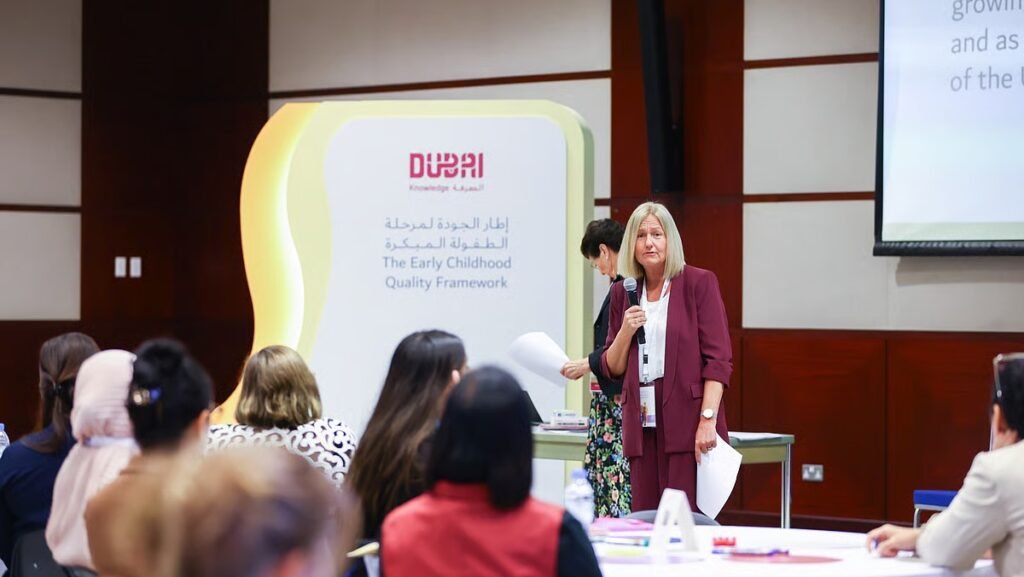
Dubai has unveiled a new Quality Framework for Early Childhood Care and Education (ECCE) aimed at raising standards across nurseries, preschools, and early years departments in schools. The announcement was attended by over 400 educational leaders, teachers, and institutional managers, highlighting its importance to the emirate’s education sector. This framework is part of Dubai’s Education 33 Strategy and the broader Dubai Social Agenda, demonstrating the city’s commitment to ensuring that young learners receive high-quality education from the very beginning of their learning journey.
The framework is designed to serve as a unified reference for quality early childhood education. It combines global best practices with Dubai’s local culture and values, ensuring that children are not only academically prepared but also socially, emotionally, and culturally grounded. At the heart of the framework is the concept of the Dubai Child, described as an active, capable, curious, happy, and inquisitive learner who grows in identity, language, and culture while contributing to the wider UAE society.
A Foundation for Lifelong Learning
Aisha Miran, Director General of KHDA, emphasized that the foundation of a strong education system begins in the early years. She noted that the framework aligns with the Education 33 objectives, providing inclusive and confidence-building education for every child. The framework is intended to ensure that all children in Dubai have access to learning environments that nurture curiosity, wellbeing, and a lifelong love of learning.

By setting clear expectations and high standards from the start, Dubai is supporting the creation of environments that inspire confidence, inclusion, and joy. This approach helps children develop not only academically but also emotionally and socially, laying the groundwork for future success and overall wellbeing.
The Five Key Domains of the Framework
The ECCE framework is structured around five principal domains, each of which defines clear expectations for early childhood education settings and guides institutions toward excellence.

Learning and Curriculum
This domain focuses on creating age-appropriate, inclusive, and stimulating learning experiences. It encourages educators to foster creativity, critical thinking, and problem-solving while catering to the individual needs and abilities of each child. The aim is to build strong foundations for lifelong learning through meaningful and engaging activities.
Partnership With Families
Family engagement is recognized as a vital part of early childhood education. This domain emphasizes collaboration between educators and parents, promoting open communication and active participation in children’s learning. Strengthening family partnerships helps ensure that children receive consistent support both at school and at home.
Learning Environment
A safe, inclusive, and stimulating environment is essential for effective early learning. This domain sets standards for classroom organization, learning resources, and opportunities for exploration, allowing children to thrive in spaces designed to support their holistic growth.
Health and Safeguarding
The wellbeing of young learners is a top priority. This domain provides guidelines for safety, hygiene, and emotional and physical health. By ensuring secure and nurturing environments, children can develop confidence and resilience while exploring and learning.
System Leadership
Strong leadership is crucial to sustaining quality improvements in early childhood education. This domain focuses on professional development, continuous improvement, and evidence-based practices, helping early childhood institutions maintain high standards and foster a culture of excellence.
Supporting Educators and Institutions
Fatma Belrehif, CEO of the Quality Assurance and Compliance Agency, described the framework as a key step toward establishing a transparent and robust quality assurance system for early childhood education. She explained that the framework provides an evidence-based structure to guide institutions while giving parents confidence that their children are receiving high-quality care and education from the start.
Early childhood centers, schools, and educators are encouraged to use the framework as a tool for reviewing their practices, identifying areas for improvement, and implementing strategies for continuous advancement. This approach fosters a culture of accountability, innovation, and collaboration across the sector.

Creating a Vision for the Future
Dubai’s commitment to early childhood care is linked to broader goals in talent development, innovation, and quality of life. By setting high standards in the early years, the city is preparing future generations for academic success, social responsibility, and personal growth.
The framework emphasizes inclusion and equity, ensuring that every child, regardless of background, has access to learning environments that encourage curiosity, creativity, and confidence. This holistic approach supports the development of well-rounded children who are equipped to thrive in a rapidly changing world.
Continuous Improvement and Lasting Impact
The introduction of the ECCE framework represents the beginning of a journey toward continuous improvement. By establishing clear benchmarks and promoting accountability, Dubai is fostering an early childhood education system where excellence is the standard. Educators are empowered to innovate, collaborate, and refine their practices, ensuring that children’s formative years are engaging, enriching, and inspiring.
Parents and communities can also be assured that early learning in Dubai is aligned with global best practices while remaining deeply connected to local culture and values. This approach reinforces the vision of the Dubai Child, supporting the development of young learners who are prepared academically, socially, and emotionally for the challenges and opportunities that lie ahead.
Conclusion
Dubai’s new Quality Framework for Early Childhood Care and Education marks a transformative step in the city’s education system. By establishing clear standards, emphasizing inclusion, and integrating global best practices with local culture, Dubai is raising the bar for early childhood education.
The five domains—learning and curriculum, partnership with families, learning environment, health and safeguarding, and system leadership—provide a structured approach that supports children, educators, and institutions. This framework demonstrates Dubai’s commitment to nurturing curiosity, confidence, and lifelong learning from the earliest stages, creating a solid foundation for future generations to thrive.
Do follow UAE Stories on Instagram
Read Next – Mall of The Emirates’ 20th Anniversary Sparks $614K Media Buzz