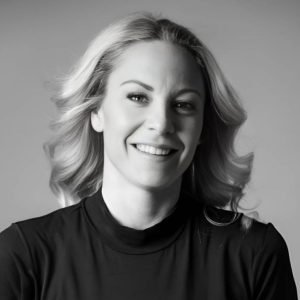
“The legal regulations of Non-Disclosure Agreements are further proof that football in the Arabian Peninsula is entering a new era, an era of professionalism and Western standards.” ~ Dagmara Szlachta
What Exactly Is a Non-Disclosure Agreement in Football?
A Non-Disclosure Agreement, or NDA, is a legal document that obliges the parties involved—usually the player or individuals associated with the player, the club, the agent, or other parties involved in a transfer—to keep certain information confidential. In football, this can include contract details, salaries, bonuses, transfer negotiations, or terms of contract termination.
Why Have These Agreements Become Common in Western Football?
In European and American clubs, NDAs have been standard practice for many years. They protect the financial and reputational interests of clubs and players, preventing leaks to the media or competitors. In the era of social media and instant news, even a minor leak can impact a player’s market value or disrupt negotiations. For many clubs, NDAs are a strategic tool to maintain control over communication and preserve a competitive edge.

Why Are We Increasingly Hearing About NDAs in Football, Especially in the Middle East?
Clubs in Saudi Arabia, Qatar, and the United Arab Emirates are increasingly incorporating these agreements into their contractual frameworks. I will focus specifically on the UAE, part of the Arabian Peninsula, where I currently specialize in drafting NDAs for football.
Football in the UAE has professionalized rapidly in recent years. With the influx of Western coaches, managers, and investors, there arose a need to introduce Western contractual standards—including non-disclosure agreements. Today, confidentiality covers not only financial or transfer matters but also tactics, analytical data, marketing plans, and players’ medical information.

What Are the Benefits of Implementing NDAs in Arabian Football?
The primary benefit is market professionalization. NDAs create information discipline, prevent transfer rumors, and strengthen trust between parties. This allows clubs to compete with Western brands not only financially but also organizationally.
Can We Expect This Trend to Continue?
Absolutely. All indications suggest that the trend of implementing modern confidentiality regulations in sports will become a permanent feature of Arabian football. Clubs want to be perceived as professional and trustworthy, and NDAs, along with the latest regulations, are one of the tools that help achieve this.
What Role Do FIFA or Local Federation Regulations Play in Contract Confidentiality?
This is a crucial aspect. On one hand, clubs want to protect their interests and reputation through confidentiality clauses; on the other hand, they must disclose certain information to federations, leagues, or regulatory bodies (e.g., under Financial Fair Play rules).
Therefore, NDAs must include a “regulatory clause,” stating that confidentiality does not apply to information that must be disclosed by law or under FIFA, AFC, or local federation regulations. Without this clause, conflicts could arise between loyalty to the club and obligations to cooperate with sporting authorities.
What Are the Key Elements of an NDA Signed with a Player, Coach, or Agent?
The main elements include:
- Definition of Confidential Information – Clearly specifying what is considered confidential, such as contract data, salaries, transfer plans, tactical information, and biometric data.
- Duration – Confidentiality applies both during the contract and for a specified period after its termination—typically two years, but in some cases, indefinitely.
- Third Parties – Ensuring that any collaborating parties also commit to maintaining confidentiality.
- Exceptions – Allowing for disclosure when required by law, football federations, FIFA, or a court.
- Sanctions – Defining contractual penalties, termination clauses, or compensation claims in case of unauthorized disclosure of confidential information.
These standards were developed in Western leagues and are increasingly being adopted across the region.
We had the chance to speak before this interview, and I think it’s important to discuss this: you didn’t start your legal career in sports. From your PhD on human trafficking, through NDAs in the private sector, to sports law and a sports startup in Dubai, which stage gave you the most professional growth?
Human trafficking is a topic I never left behind. The media aspect of my doctoral research included a subsection on sports. NDAs in the private sector gave me the opportunity to enter the sports sector because of the people I met while drafting agreements in the private sector.
I started working in sports essentially at the end of my PhD. Looking back, I see a sequence of events that I can only describe as luck -for which I am grateful. At times like these, I say my life is 1% education, 99% luck.
Don’t be so modest. We also spoke with your colleagues; we know you speak Arabic, continuously develop your skills, and your PhD was frequently cited because you dared to present bold, even extreme, theses on 21st-century human trafficking. That can’t be just luck.
I am a very shy person. My Arabic is far from perfect—my European accent is still noticeable. As for education—I don’t judge people by their degrees. I continually improve my knowledge to make it as comprehensive as possible.
Regarding my PhD, it may eventually be published as a book to expand understanding of human trafficking. If that happens, I would consider it a personal success.
Were there dangerous situations while working on such a difficult topic as human trafficking?
Yes. I cannot share the full story, but I can say that I personally met a person who was literally convicted of human trafficking. That encounter has stayed with me permanently.
When a 2024 project emerged in collaboration with Saudi authorities and organizations addressing human trafficking, I didn’t hesitate to join. My decision to travel immediately to Riyadh was made within days, especially since my personal life had drastically changed and nothing was keeping me permanently in Europe.
I want to help victims because these are stories that stay with you for a long time. People go through experiences that can take years—or even a lifetime—to process in therapy. They also need legal support, which is often beyond their means. I’ve read letters from victims of human trafficking, and some of the names were Polish. Poland is my country of birth, so it was especially hard for me to remain indifferent. Of course, every victim, regardless of their country of origin, skin color, or religion, is important, but seeing Polish names affected me particularly deeply.
The scale of this crime is so vast that we cannot pretend it doesn’t exist.
You provide legal, translation, and psychological support for human trafficking victims in the Middle East. Isn’t this exhausting?
Yes, it can be demanding, especially with frequent changes in location. However, I am grateful to be able to use my skills, language abilities, and professional tools to help those in need. During the first contact with victims, I offer not only legal assistance but also language and translation support, often becoming the first person to provide psychological help as well. I am, of course, specially and professionally trained for this role.
Despite the challenges, pro bono work for victims of human trafficking gives me a deep sense of fulfillment and satisfaction, knowing I can make a real difference for those in need.
Behind the scenes, it’s often mentioned that you were in a relationship with one of Dubai’s most influential people. On a personal level, who is Dagmara Szlachta?
Dagmara Szlachta’s private life remains private. I value my personal space and prefer to keep that part of my life away from the public eye.
That’s understandable, but it’s hard not to ask, considering how often this topic comes up in relation to your private life. Thank you so much for the interview.
Thank you.
Read Next – Top Healthcare Options: Clinics in Yas Island Abu Dhabi