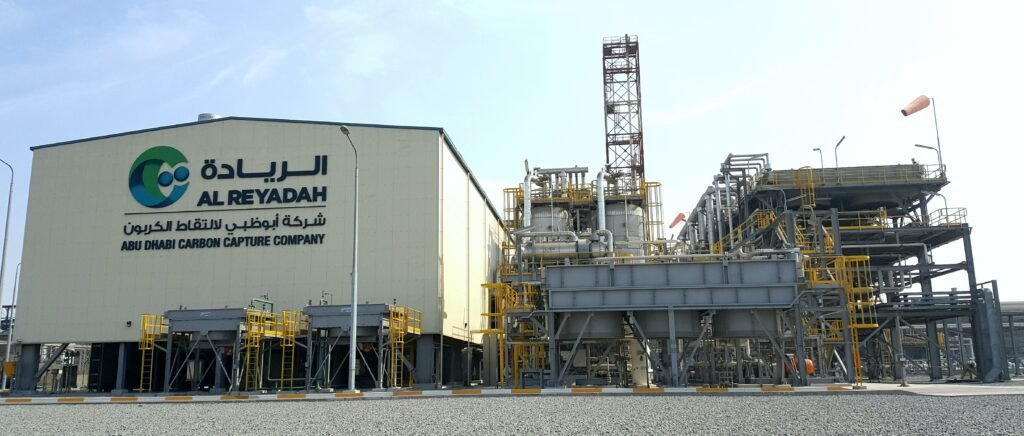
Carbon capture technology in UAE is becoming one of the most important tools in the nation’s fight against climate change. As one of the world’s leading oil and gas producers, the UAE has recognized the need to balance economic growth with environmental responsibility. By investing in innovative carbon capture, utilization, and storage (CCUS) projects, the country is taking bold steps to reduce greenhouse gas emissions, achieve net-zero targets, and lead the region in sustainable energy solutions.
Why Carbon Capture Technology in UAE Matters
The UAE is home to some of the largest energy projects in the world. While these projects fuel economic development, they also contribute to carbon dioxide emissions. Carbon capture technology offers a solution by capturing CO₂ emissions from power plants and industrial facilities before they enter the atmosphere.
Key benefits of adopting carbon capture technology in UAE include:

- Reducing emissions from heavy industries such as steel, cement, and energy.
- Supporting clean energy transitions by complementing renewable sources.
- Meeting global climate commitments, including the UAE Net Zero by 2050 initiative.
- Creating new industries around CO₂ utilization, such as producing fuels or building materials.
By adopting this technology, the UAE is not only safeguarding its environment but also strengthening its position as a global energy innovator.
UAE’s Climate Commitments and Carbon Capture
The UAE has set ambitious sustainability targets, including becoming the first Middle Eastern country to announce a net-zero emissions goal by 2050. Carbon capture plays a vital role in achieving these goals because some industries cannot be fully decarbonized with renewable energy alone.

Government strategies supporting carbon capture include:
- Energy Strategy 2050: Expands renewable energy while reducing reliance on fossil fuels.
- National Climate Change Plan: Encourages adoption of technologies to cut emissions.
- UAE Net Zero 2050 Strategy: Positions carbon capture as a core pathway for climate action.
This policy framework ensures that carbon capture technology in UAE is integrated into the nation’s broader energy and climate strategy.
Pioneering Carbon Capture Projects in UAE
1. Al Reyadah Project
The Al Reyadah project in Abu Dhabi is the first commercial-scale carbon capture facility in the Middle East. Launched in 2016 by ADNOC and Masdar, it captures up to 800,000 tonnes of CO₂ annually from Emirates Steel Industries. The captured carbon is then used in enhanced oil recovery, proving that carbon capture can be both environmentally and economically beneficial.
2. ADNOC’s CCUS Expansion
ADNOC, the UAE’s national oil company, has announced plans to increase its carbon capture capacity to 5 million tonnes per year by 2030. This makes ADNOC one of the world’s leading adopters of CCUS technology.
3. Masdar’s Research in Carbon Capture
Masdar, the UAE’s renewable energy leader, continues to invest in carbon capture innovations. Research focuses on reducing the cost of capture, expanding storage capacity, and exploring new uses for captured carbon, such as synthetic fuels.
These projects highlight how carbon capture technology in UAE is moving from theory to large-scale reality.
How Carbon Capture Works
To understand its importance, it’s essential to see how carbon capture technology functions:
- Capture: CO₂ is separated from industrial emissions using chemical solvents or advanced filters.
- Transport: The captured CO₂ is compressed and transported via pipelines.
- Utilization or Storage: CO₂ can either be used to produce products like fuels or plastics, or stored deep underground in geological formations.
By preventing CO₂ from entering the atmosphere, carbon capture helps slow global warming while giving industries time to adapt to clean energy alternatives.
Benefits of Carbon Capture for the UAE
- Economic Growth with Sustainability: The UAE can maintain its energy sector leadership while lowering emissions.
- Job Creation: New industries around CO₂ utilization and storage will generate employment.
- Global Leadership: The UAE becomes a role model for other oil-producing nations.
- Energy Security: Carbon capture ensures that fossil fuels can be used in a cleaner way during the transition to renewables.

Challenges Facing Carbon Capture in UAE
While progress is strong, challenges remain:
- High Costs: Carbon capture technologies are still expensive to build and operate.
- Storage Limitations: Safe long-term storage sites must be identified and managed.
- Public Awareness: Many people are unfamiliar with carbon capture’s role in climate action.
- Scalability: Expanding from pilot projects to nationwide adoption requires massive investment.
Despite these challenges, the UAE’s government and private sector are committed to scaling solutions.
Future of Carbon Capture Technology in UAE
The next decade is expected to see significant growth in CCUS projects across the country. Upcoming developments include:
- More industrial CCUS hubs to capture emissions from multiple plants.
- Integration with hydrogen production, where captured CO₂ supports green and blue hydrogen growth.
- Global partnerships, with UAE companies collaborating with international technology providers.
- Innovation in utilization, turning CO₂ into valuable products for construction, fuel, and chemicals.
With COP28 hosted in Dubai in 2023, the UAE showcased its climate leadership, emphasizing carbon capture as a critical pillar of future energy systems.
Carbon Capture and the Path to Net Zero
Reaching net-zero emissions by 2050 is a bold goal. Renewable energy alone cannot achieve it, especially in industries that rely on fossil fuels. Carbon capture bridges this gap by allowing the UAE to continue industrial growth while cutting emissions.
As more CCUS projects are deployed, carbon capture technology in UAE will evolve from being a supporting solution to a central driver of sustainability.
Conclusion
Carbon capture technology in UAE is more than a climate solution—it is a cornerstone of the country’s sustainable future. With pioneering projects like Al Reyadah, bold government strategies, and investments from ADNOC and Masdar, the UAE is proving that carbon capture can be both practical and profitable.
As global demand for cleaner energy grows, the UAE’s leadership in carbon capture will not only help it achieve Net Zero 2050 but also inspire other nations to follow its path. By combining innovation, investment, and vision, the UAE is positioning itself as a global hub for carbon capture technology and climate action.
Do follow UAE Stories on Instagram
Dubai Family Travelogue: A Vacation to Remember