How a Moroccan Fencer Architect Is Redefining Cultural Curation
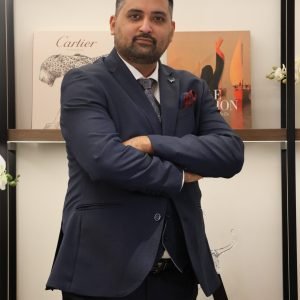
Elie Khouri, founder of Vivium Holding, has appointed architect and curator Amine Amharech as artistic director of The AP Room, a new gallery focused on collectible design Cofounded with C. Bassila.
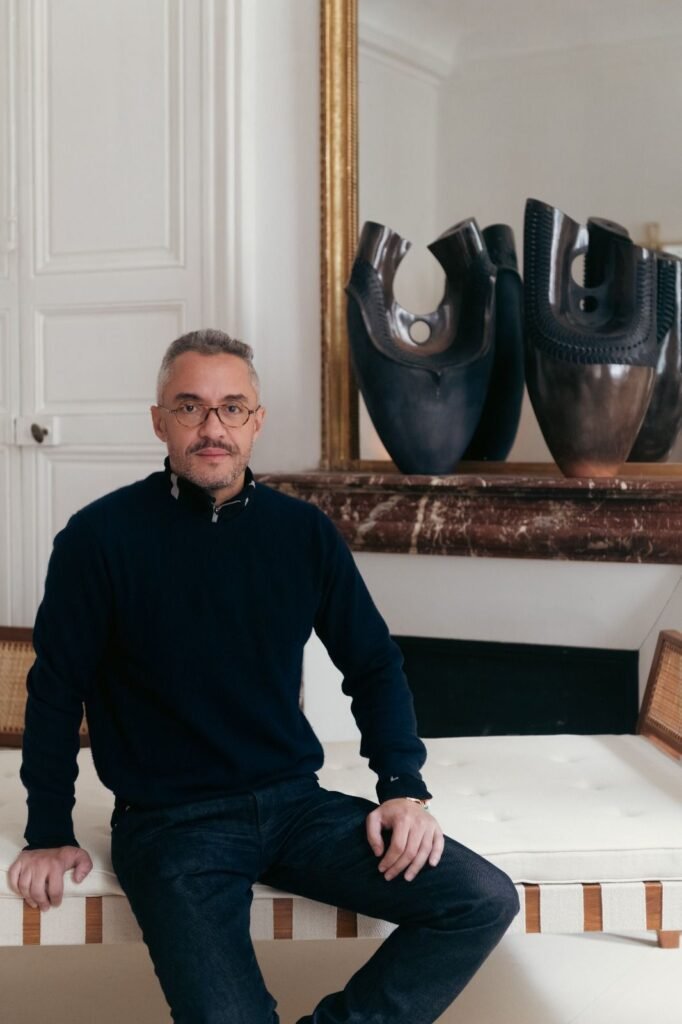
In an era where specialization has long been seen as the only route to mastery, Amine Amharech offers a compelling alternative. Born in Morocco and now based between Paris and Dubai, he’s an art curator, architect, and competitive fencer each discipline feeding into the other to form a singular creative identity. His journey from Casablanca to the world’s cultural capitals is one of persistence, experimentation, and unwavering authenticity.
Early Life and Education
Amharech’s story begins in Morocco, where his fascination with form and structure first took shape. As a child, he sketched buildings and landscapes with an intuitive grasp of proportion and rhythm. That early curiosity led him to study architecture ,first in Paris, and later in Los Angeles at the Southern California Institute of Architecture (SCI-Arc), where his thesis on sensorial architecture explored how built environments can engage human perception.
This transatlantic education exposed him to contrasting design philosophies ,Parisian rigor and LA’s experimental freedom ,setting the foundation for a practice that defies boundaries.

A Multidisciplinary Vision
Architecture gave Amharech precision; curation gave him narrative depth; fencing gave him control and focus. Together, they form the framework of what he calls “strategic synthesis”a model that merges aesthetics, intellect, and discipline. Industry observers note how his spatial understanding informs exhibition layouts, while the mental rigor of fencing translates into meticulous curatorial strategy.
Curating as an Act of Resilience
For Amharech, exhibitions aren’t mere displays they’re psychological encounters. “I curate exhibitions as an act of resilience. I want people to introspect and dig deep into their own experiences,” he says. His curatorial approach reframes the gallery as a site of transformation, inviting reflection rather than passive admiration.
This aligns with a broader cultural shift where art intersects with wellness, emotion, and self-awareness.

Notable Projects
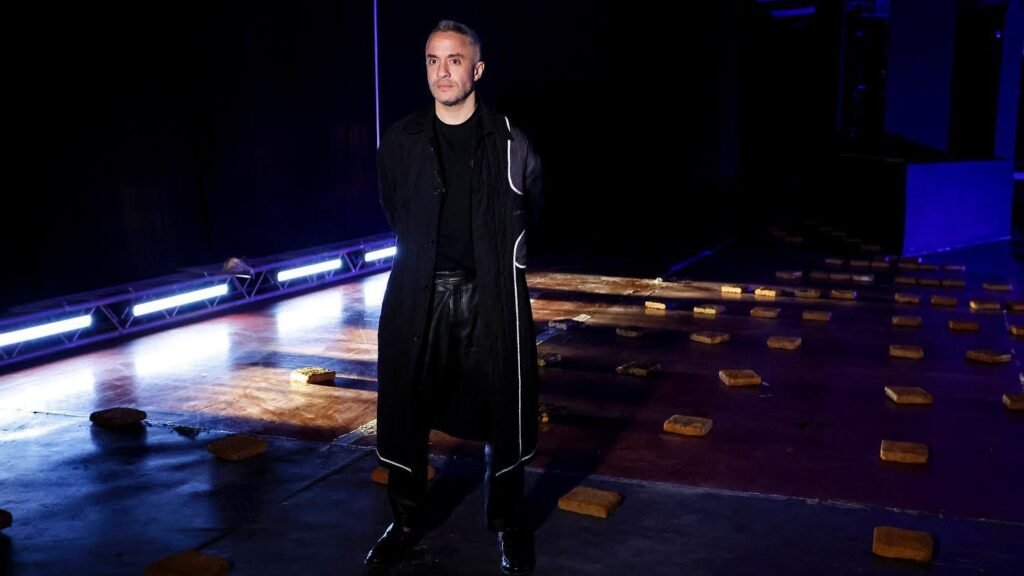
Among his defining projects is “PECULIAR MYTHOLOGY – Paradigm & Personae,” which explored the tension between identity and myth through immersive spatial design. His Paris Design Week collaboration, “Tables, a model from Surface to Volume, showcased design as both narrative and structure art meeting commerce with grace.
Recently, he was appointed Artistic Director of The AP Room, a new gallery for collectible design founded by Elie Khouri, CEO of Vivium Holding. The appointment cements Amharech’s role as a thought leader at the crossroads of art, design, and market innovation.
Lifestyle and Influence
Splitting his life between Paris and Dubai, Amharech moves fluidly through two worlds: one steeped in heritage, the other hungry for the new. His digital presence, @eon.plus, blends architecture, curation, and introspective visuals for over 48,000 followers a portfolio that doubles as both inspiration and strategy.
Industry analysts note that such reach isn’t vanity; it’s leverage, translating creative credibility into tangible opportunity.
Challenges and Philosophy
Breaking into the international art circuit wasn’t effortless. Institutional barriers, market skepticism, and cultural bias were all part of the terrain. Yet Amharech’s response has been steady authenticity refusing trend conformity for the sake of integrity. His trajectory illustrates a principle that many creatives rediscover too late: longevity belongs to those who stay consistent in vision, even when the world isn’t watching.
The Amharech Model
In a market defined by flux, Amharech embodies what many call the “convergence thesis” where creativity thrives not by narrowing focus, but by merging disciplines into a unified form of intelligence. His synthesis of architecture, curation, and fencing isn’t a quirk; it’s a statement about how the next generation of cultural professionals might survive and lead.
As he continues to design, curate, and challenge perceptions, Amine Amharech reminds us that art, at its best, is not just made—it’s lived.
Read More: UAE Fuel Prices June 2025: Petrol Rises, Diesel Drops