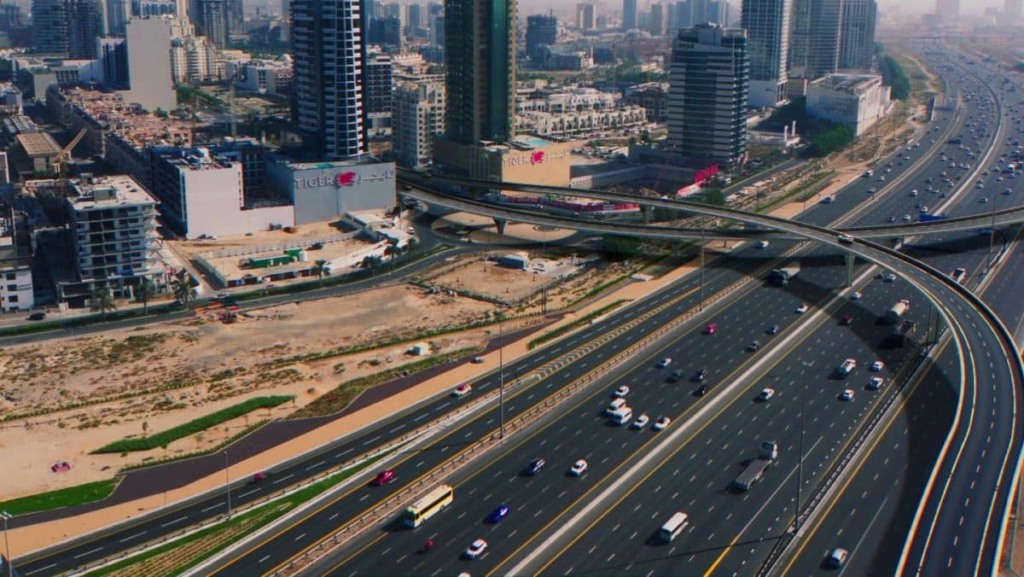
Dubai’s rapid urban growth has placed increasing pressure on its road network, particularly in residential and mixed-use districts that continue to expand. In response, the Al Fay Street Development stands out as one of the most ambitious road infrastructure upgrades currently reshaping the city’s transport landscape. Designed to ease congestion and improve connectivity, the project represents a strategic investment in Dubai’s future mobility.
Announced through Dubai Media Office and implemented by Roads and Transport Authority, the project carries an estimated cost of Dhs1.5 billion. Its scale and scope reflect Dubai’s long-term vision of building resilient, efficient transport corridors that serve both current residents and future developments.
Strategic Location and Route Coverage
Al Fay Street plays a critical role in linking several of Dubai’s key arterial roads. The development stretches from its intersection with Sheikh Mohammed bin Zayed Road, passes through Sheikh Zayed bin Hamdan Al Nahyan Street, and continues all the way to Emirates Road.

This corridor is not just a road; it is a vital connector between residential communities, commercial hubs, and leisure destinations. By upgrading this stretch, Dubai ensures smoother transitions between major highways while reducing pressure on surrounding roads that previously carried overflow traffic.
Five Major Intersections for Smoother Movement
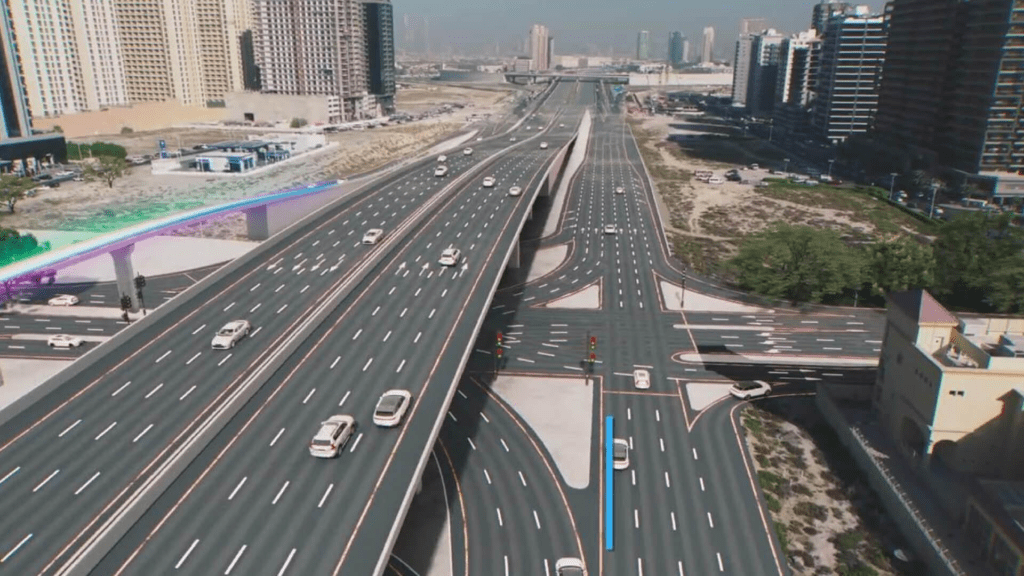
A defining feature of the Al Fay Street Development is the addition of five major intersections. These intersections are designed to eliminate traffic bottlenecks that have historically slowed down peak-hour movement. By introducing grade-separated interchanges, flyovers, and improved slip roads, the project allows traffic to flow more freely without frequent stops.

This redesign significantly reduces conflict points between vehicles, improving both safety and journey times. For daily commuters, this means fewer delays, less frustration, and a more predictable driving experience across one of Dubai’s busiest corridors.
Increased Capacity to Meet Growing Demand
One of the most impressive outcomes of the project is its expanded road capacity. Once fully operational, Al Fay Street will be able to accommodate up to 64,400 vehicles per hour. This dramatic increase directly addresses the rising number of vehicles associated with new residential developments and commercial activity in surrounding districts.
The improved capacity is not just about handling more cars. It is about ensuring consistent traffic flow, reducing congestion-related emissions, and supporting Dubai’s broader sustainability goals by minimizing idle time on the roads.
Direct Benefits for Residents and Communities
The Al Fay Street Development is expected to improve traffic conditions for approximately 600,000 residents living in nearby communities. For many, daily travel involves commuting to work, schools, shopping destinations, and recreational facilities. The upgraded road network brings tangible quality-of-life improvements by cutting down travel times and reducing daily stress.
Drivers will notice a significant difference when accessing Dubai Sports City, Jumeirah Village Circle, Dubai Production City, Jumeirah Golf Estates, Tilal Al Ghaf, Damac Lagoons, The Oasis, and Remraam. These areas have seen rapid population growth, and improved road access ensures they remain attractive and well-connected places to live.
Supporting Economic Growth and Urban Expansion
Beyond easing daily commutes, the project plays a crucial role in supporting Dubai’s economic momentum. Efficient transport infrastructure is essential for businesses, logistics, and service providers that rely on timely movement across the city. By strengthening a key transport artery, the Al Fay Street Development enhances access to business districts and industrial zones.
This improved connectivity also adds value to surrounding real estate. Developers and investors benefit from reliable infrastructure, while residents gain from better access to employment hubs and lifestyle destinations. In this way, the project contributes to balanced urban development across Dubai.
A Human-Centered Approach to Road Design
What sets this development apart is its focus on real-world user experience. The project is not just about expanding lanes; it is about designing roads that work intuitively for drivers. Clear signage, smoother transitions between highways, and safer intersections all contribute to a more comfortable journey.
For families, professionals, and service workers who rely on Al Fay Street daily, these improvements translate into reclaimed time and reduced commuting fatigue. Over months and years, those small daily gains add up to a noticeable improvement in overall wellbeing.
Part of Dubai’s Long-Term Mobility Vision
The Al Fay Street Development aligns with Dubai’s broader strategy to future-proof its transport network. As the city continues to grow outward and upward, infrastructure projects like this ensure that mobility keeps pace with ambition.
By investing heavily in strategic corridors today, Dubai avoids reactive fixes tomorrow. The result is a city that moves efficiently, supports economic vitality, and remains livable for its diverse population.
A Transformational Step for Everyday Travel
The Al Fay Street Development is more than a road expansion; it is a transformational step in how Dubai manages movement across its rapidly evolving urban landscape. With enhanced capacity, smarter intersections, and improved access to major communities, the project delivers lasting benefits for residents, businesses, and visitors alike.
For anyone who regularly travels through this part of the city, the impact will be immediate and lasting, reinforcing Dubai’s reputation for forward-thinking infrastructure and people-focused urban planning.
Do follow UAE Stories on Instagram
Read Next – Al Sarooj Park Revamp Boosts Quality of Life in Al Ain