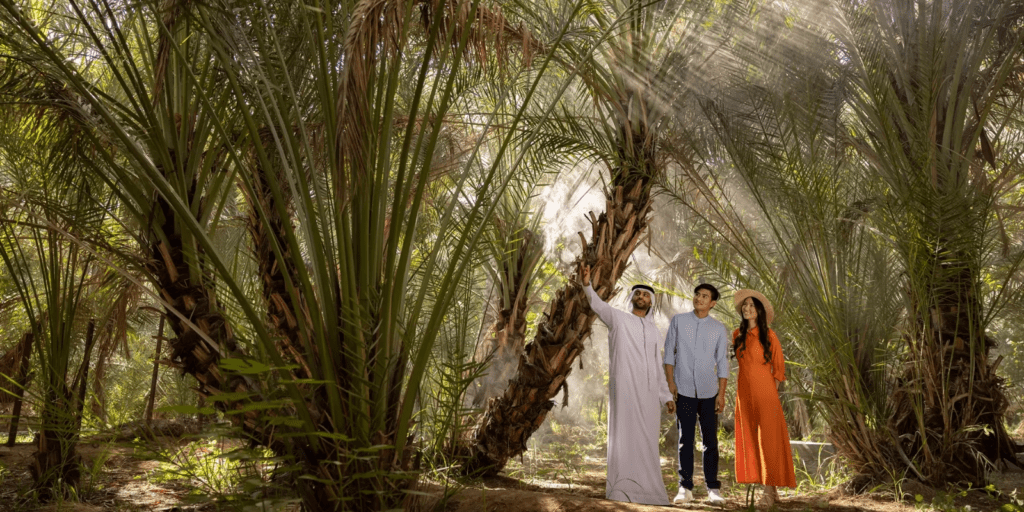
Nestled in the historic city of Al Ain, Al Ain Oasis stands as one of the most remarkable examples of human resilience and environmental harmony in the Arabian Peninsula. Spanning more than 1,200 hectares, this vast green sanctuary is not only the largest oasis in the United Arab Emirates but also one of the oldest continuously inhabited landscapes in the region. Surrounded by modern roads, museums, and urban life, the oasis remains a calm reminder of how people once survived, farmed, and flourished in one of the world’s harshest climates.
Declared a UNESCO World Heritage Site in 2011, Al Ain Oasis is more than a scenic destination. It is a living archive of knowledge, traditions, and sustainable practices that date back thousands of years.
Origins That Stretch Back Millennia
Archaeological evidence suggests that human settlement in the Al Ain region dates back to around 3000 BCE. The oasis itself developed as communities learned to harness underground water sources to support agriculture and daily life. Over generations, families passed down knowledge of farming, irrigation, and land stewardship, shaping the oasis into a carefully balanced ecosystem.

Historical records and excavations show that Al Ain became a vital stop along ancient trade routes linking Oman, Mesopotamia, and the wider Arabian Gulf. Its reliable water supply made it a natural hub for travelers, traders, and settlers, contributing to its long-standing cultural significance.
The Falaj System: Engineering Ahead of Its Time
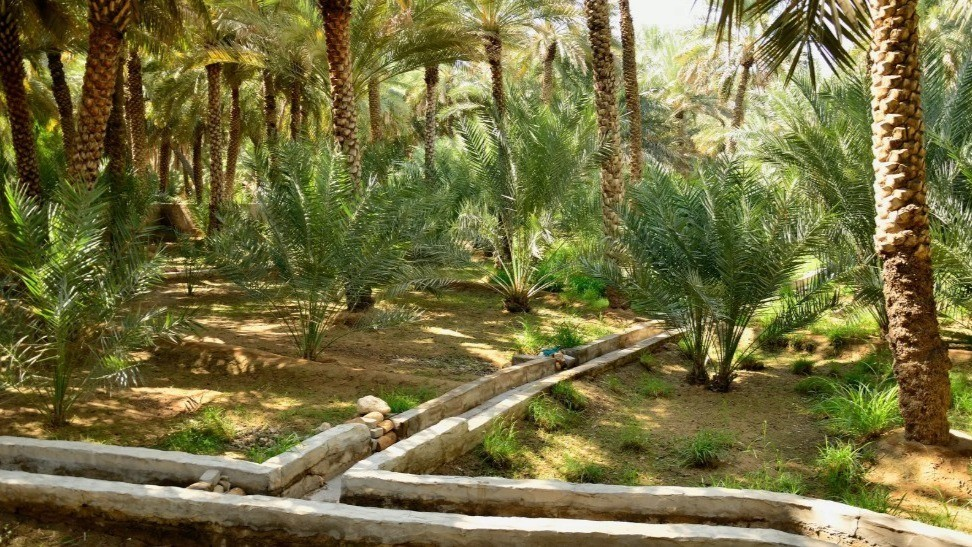
At the heart of Al Ain Oasis lies the falaj irrigation system, a network of underground and surface channels designed to distribute water evenly across farmland. Some of these falaj systems are believed to be over 3,000 years old, making them among the earliest known examples of sustainable water management in arid environments.

Water flows gently from natural aquifers through gravity-fed channels, ensuring that every plot receives its fair share. This system reduced waste, prevented flooding, and supported year-round cultivation. Even today, parts of the falaj system remain operational, demonstrating the brilliance and durability of traditional engineering.
A Thriving Agricultural Landscape
The oasis is home to more than 147,000 date palms, along with fruit trees such as mango, banana, fig, and citrus. These crops are arranged in a layered farming system, where tall palms provide shade for smaller trees and ground crops beneath them. This natural design helps retain moisture, protect plants from extreme heat, and improve soil health.
Dates have always been the backbone of oasis life. For centuries, they served as a primary food source, trade commodity, and symbol of hospitality. The agricultural practices within Al Ain Oasis reflect a deep understanding of nature, balance, and patience.
Cultural and Social Heart of Al Ain
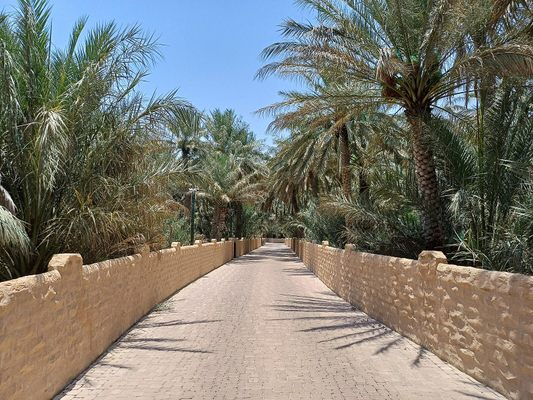
Beyond farming, the oasis played a central role in social life. It was a gathering place where families worked together, shared resources, and resolved disputes. Shaded pathways allowed people to move comfortably between homes, farms, and markets, even during intense summer heat.
Traditional mud-brick structures, watchtowers, and resting areas within the oasis tell stories of community cooperation and mutual dependence. These spaces were essential not just for survival, but for maintaining strong social bonds and cultural identity.
Connection to the UAE’s Founding History
Al Ain Oasis holds special importance in the modern history of the United Arab Emirates. It was closely associated with the country’s founding leadership, particularly during the mid-20th century when Al Ain served as a key administrative and cultural center. The oasis influenced early ideas about conservation, agriculture, and sustainable development that later shaped national policies.
Preserving the oasis became a symbol of respecting heritage while embracing progress, a balance that continues to define the UAE today.
Recognition as a UNESCO World Heritage Site
In 2011, Al Ain Oasis was officially recognized by UNESCO as part of the Cultural Sites of Al Ain. This designation acknowledged not only the physical landscape but also the intangible heritage embedded within it, including traditional knowledge, farming techniques, and community practices.
The recognition helped strengthen conservation efforts, ensuring that modernization would not erase the delicate systems that sustained life here for centuries.
A Modern Experience Rooted in Tradition
Today, Al Ain Oasis welcomes visitors from around the world. Carefully designed walking and cycling paths allow people to explore the oasis without disturbing its natural balance. Educational centers explain the history of the falaj system, agriculture, and daily life, making the experience both relaxing and informative.
Despite its accessibility, the oasis retains a sense of quiet and authenticity. The sound of flowing water, rustling palm leaves, and birdsong creates an atmosphere that feels untouched by time.
Lessons for a Sustainable Future
Al Ain Oasis offers valuable lessons for the modern world. Long before sustainability became a global concern, the people of Al Ain practiced water conservation, biodiversity protection, and responsible land use. Their methods prove that living in harmony with nature is not a new concept, but a timeless necessity.
As climate challenges intensify, the oasis stands as a reminder that innovation does not always mean new technology. Sometimes, the most effective solutions are those refined through centuries of experience.
A Timeless Symbol of Life and Balance
Al Ain Oasis is not just a historical site or tourist attraction. It is a living symbol of endurance, wisdom, and respect for nature. Its shaded paths and flowing waterways tell a story of how human determination transformed a desert landscape into a thriving green haven.
In a rapidly changing world, Al Ain Oasis continues to breathe life into the past while inspiring a more thoughtful and sustainable future.
Do follow UAE Stories on Instagram
Read Next – Falaj Al Mualla Fort: A Remarkable Historical Icon of Umm Al Quwain