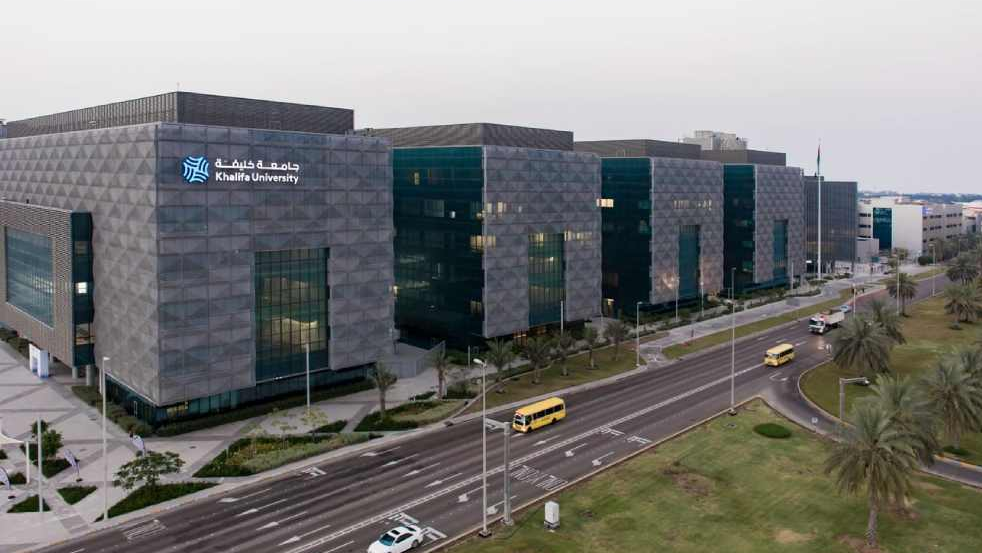
Khalifa University of Science and Technology has partnered with the Electric Power Research Institute (EPRI) to develop an advanced artificial intelligence program aimed at strengthening the future of nuclear safety. The initiative focuses on creating an AI-driven Uncertainty Quantification framework to support the safety analysis of next-generation water-cooled nuclear reactors. This collaboration marks an important step for the UAE as it continues to invest in peaceful nuclear technology and advanced research.
The project combines artificial intelligence with high-fidelity Computational Fluid Dynamics simulations. These tools will help researchers predict and understand thermal-hydraulic behavior inside nuclear reactors more accurately. Since thermal-hydraulic performance directly influences reactor safety, improved prediction models will help both regulators and operators enhance safety measures and ensure stronger reliability.
A Strategic Partnership Supporting Future Nuclear Technologies
The partnership brings together the strengths of Khalifa University and EPRI, a well-established global research organization dedicated to advancing energy systems. This collaboration aligns with the UAE’s long-term vision for innovation, sustainability and leadership in peaceful nuclear energy.

Professor Ebrahim Al Hajri, President of Khalifa University, emphasized that the agreement highlights the university’s focus on impactful research. He noted that Khalifa University possesses advanced AI infrastructure and expertise, which will support the entire development process. According to Al Hajri, integrating artificial intelligence with advanced simulation tools opens the door to transformative solutions for the global energy sector.
The initiative also builds on earlier collaborations between Khalifa University and EPRI, including the establishment of a joint research and development laboratory. EPRI President and CEO Arshad Mansoor stated that the initiative demonstrates the importance of innovation in strengthening nuclear safety practices around the world.

Al Hajri also highlighted the strong support from the Emirates Nuclear Energy Corporation in Abu Dhabi. ENEC plays a central role in the UAE’s peaceful nuclear program, and its involvement reinforces the country’s leadership in safe and sustainable nuclear energy.
Enhancing Reactor Reliability and Regulatory Confidence
Next-generation nuclear reactors, such as the APR1400 and Small Modular Reactors, require precise and accurate safety evaluations before they can be licensed. The AI-driven Uncertainty Quantification framework aims to enhance these evaluations by improving how reactor behavior is analyzed.
Machine-learning models will be developed to assess uncertainties related to thermal-hydraulic performance. These models will help address gaps in existing analysis techniques and provide regulators with more reliable data. Improved predictions also support operators during maintenance planning, long-term operation strategies and overall system optimization.
By integrating AI tools into the safety analysis process, the project aims to increase regulatory confidence and promote safer deployment of nuclear technologies worldwide.
Building on Local and International Expertise
The Emirates Nuclear Technology Centre at Khalifa University will lead the project. ENTC plays an important role in supporting nuclear education and technical research in the UAE. The leadership team includes Professor Yacine Addad as Principal Investigator and Dr. Antonio Cammi as Co-Investigator. They will work alongside EPRI researchers Dr. YJ Choi, Dr. Hasan Charkas and Dr. Andrew Ceto.
The collaboration brings together global experience in artificial intelligence, nuclear engineering, modeling and thermal-hydraulic analysis, ensuring that the project benefits from the best available expertise.
Two-Phase Program to Build the AI Framework
The project will follow a two-phase approach to ensure thorough development and testing of the AI-driven framework.
Phase One: Framework Foundations and Initial Development
The first phase involves identifying the key safety-related phenomena within nuclear reactors and reviewing current AI and machine-learning methods. Researchers will begin building the initial Uncertainty Quantification framework and prepare an interim report outlining early progress.
During this phase, the team will also evaluate existing gaps in nuclear safety assessment and study how AI tools can address these challenges more effectively.
Phase Two: Simulations and Final Framework Integration
The second phase will focus on running large-scale CFD simulations to analyze reactor behavior under different operational conditions. The team will refine the framework, perform full uncertainty quantification and integrate the finalized tool into EPRI’s nuclear accident analysis code.
A comprehensive final report will be produced at the end of this phase, summarizing the methodology, results and recommendations for future use.
Strengthening Global Nuclear Safety
The collaboration between Khalifa University and EPRI has the potential to reshape how nuclear safety assessments are conducted. By combining artificial intelligence with detailed reactor simulations, the project aims to deliver more accurate predictions, stronger safety margins and enhanced regulatory confidence.
As countries continue to adopt nuclear energy as a reliable and low-carbon power source, innovations like this become essential. The AI-driven framework developed through this partnership will not only support the UAE’s nuclear program but also provide valuable contributions to the international nuclear safety community.
The project reflects the UAE’s commitment to developing sustainable and safe energy solutions while positioning the country as a global leader in nuclear research and innovation.
Do follow UAE Stories on Instagram
Read Next – RTA Opens New Al Quoz Branch to Expand Driver Training Services