A Landmark for Faith and Sustainability
In the heart of Abu Dhabi, a groundbreaking project is quietly reshaping how the world envisions the future of religious architecture. The world’s first net-zero energy mosque has risen from the desert sands — built using solar energy, natural mud bricks, and deep-rooted Islamic design principles.
This architectural marvel is more than just a place of worship; it is a living statement of harmony between faith, sustainability, and modern innovation. At a time when cities around the world are striving to reduce carbon emissions and embrace renewable energy, Abu Dhabi’s new mosque stands as a shining example of how tradition and technology can coexist beautifully.
The mosque embodies the UAE’s vision for a sustainable future, reflecting its commitment to environmental preservation while staying true to Islamic values of stewardship over the Earth.

The Vision Behind a Sustainable Sanctuary
The idea of creating a net-zero energy mosque emerged from a simple but profound question: how can a sacred space embody both spiritual purity and environmental responsibility? The answer came through a design that generates as much energy as it consumes, minimizing its carbon footprint and serving as a model for sustainable construction across the Muslim world.
Developers, architects, and environmental engineers collaborated to ensure that every element of the mosque — from its foundations to its minaret — supports energy efficiency and resource conservation. The structure demonstrates that faith-based spaces can lead the global sustainability movement, showing that environmental consciousness is not just a civic duty but also a moral and spiritual one.

Harnessing the Power of the Sun
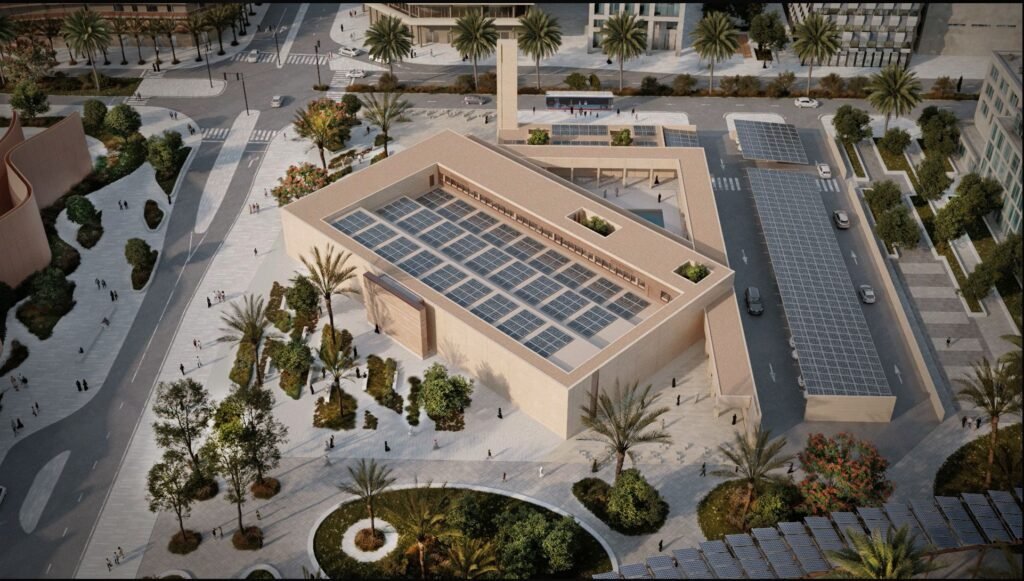
At the core of the mosque’s sustainability design lies its sophisticated solar power system. Rows of solar panels elegantly positioned on rooftops and shaded structures capture the intense Abu Dhabi sunlight, converting it into clean electricity.
This solar energy powers everything — from lighting and air-conditioning to water purification systems — allowing the mosque to operate entirely off-grid during optimal conditions. Excess energy is stored or redirected, ensuring uninterrupted operation even on cloudy days.
By relying on renewable energy, the mosque drastically reduces its dependence on fossil fuels and eliminates greenhouse gas emissions. The result is a self-sustaining sanctuary that symbolizes the perfect alignment of faith and environmental science.
Building with Mud: Ancient Wisdom Meets Modern Innovation
Perhaps the most striking feature of the mosque is its use of traditional mud bricks, a building material that harks back to ancient Arabian architecture. Far from being a nostalgic choice, the decision to use mud was rooted in science and sustainability.
Mud is a natural insulator. It keeps interiors cool in summer and warm in winter, reducing the need for energy-intensive climate control. When combined with modern engineering techniques, these mud bricks form a structure that is both durable and eco-friendly.
This blend of ancient craftsmanship and cutting-edge sustainability makes the mosque truly unique. It is a powerful reminder that innovation often lies in rediscovering the wisdom of the past and applying it thoughtfully to modern challenges.
A Design Inspired by Nature and Faith
The mosque’s architecture is inspired by the natural environment and the spiritual essence of Islam. The building’s orientation maximizes natural ventilation and sunlight, while carefully designed courtyards and water features create a sense of calm and reflection.
The minaret, though strikingly modern, remains rooted in traditional design aesthetics. Its sleek structure houses advanced systems that monitor energy use and regulate airflow, quietly working in harmony with nature.
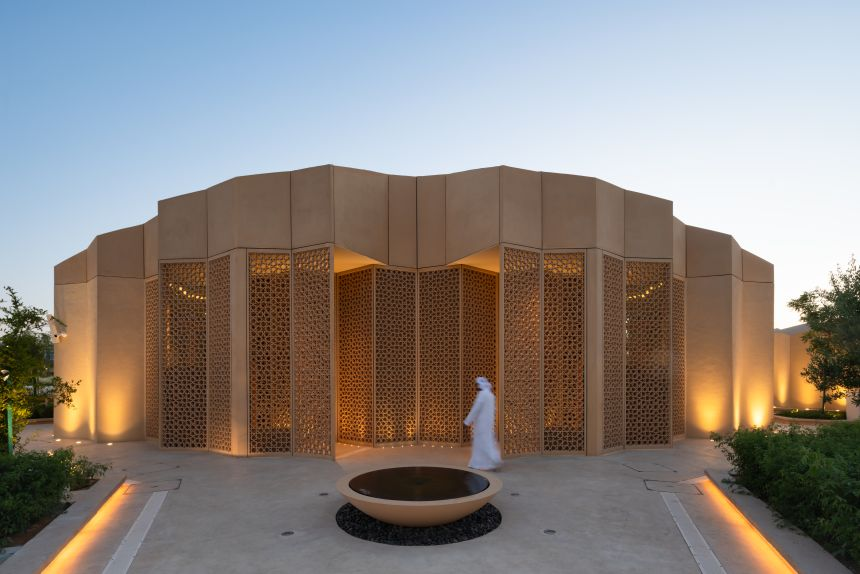
The prayer hall is bathed in soft, diffused light — achieved through strategically placed skylights that minimize artificial lighting during the day. Every design element serves a dual purpose: spiritual serenity and environmental efficiency.
Water Conservation: Every Drop Matters
In a desert nation like the UAE, water is one of the most precious resources. The net-zero mosque tackles this challenge head-on through a series of innovative conservation systems.
Greywater from ablution areas is collected, filtered, and reused for landscaping and cleaning purposes. Smart faucets and motion sensors minimize wastage, while drought-resistant native plants adorn the mosque’s surroundings, requiring minimal irrigation.
The landscaping is designed not just for beauty but for sustainability. Small shaded gardens, cooled by recycled water and natural breezes, provide a tranquil refuge for worshippers and visitors alike.
Comfort Without Compromise
Despite its environmentally conscious design, the mosque doesn’t sacrifice comfort or accessibility. The interiors are climate-controlled using energy-efficient systems powered by solar energy. Smart sensors adjust cooling and lighting based on occupancy, ensuring that no energy is wasted.
Acoustic engineering enhances the sound of prayers, while natural materials like clay, limestone, and recycled wood create a soothing ambiance. The fusion of technology and tradition is seamless — worshippers may not even realize how much innovation surrounds them as they pray.
A Model for the Muslim World
With this project, Abu Dhabi has set a precedent for sustainable religious architecture. The world’s first net-zero mosque is not just a local achievement; it’s a global message.
Across the Muslim world, where millions gather daily in mosques, the potential for energy-efficient design is enormous. If replicated, similar structures could drastically reduce carbon emissions and water use in communities everywhere.
The mosque also serves as an educational hub, inviting students, architects, and policymakers to study its systems and design principles. It is both a place of worship and a classroom for the future — demonstrating how environmental responsibility aligns perfectly with Islamic teachings about protecting the Earth.
Faith and Sustainability: A Shared Ethic
In Islam, the concept of stewardship — khalifa — teaches that humans are caretakers of the Earth, entrusted with its preservation. This mosque is a living interpretation of that principle. Its sustainable design turns religious practice into environmental action.
Every prayer performed here is accompanied by the silent hum of solar panels and the cooling breath of natural ventilation — a reminder that caring for the planet is itself an act of devotion. It beautifully bridges the gap between spirituality and sustainability, inspiring other faith communities to explore similar pathways.
Community-Centered Design
Beyond its architecture, the mosque is envisioned as a hub for the local community. It includes spaces for lectures, workshops, and interfaith dialogue centered on sustainability, innovation, and faith-based environmentalism.
Families can gather for educational sessions about renewable energy, while students from nearby universities visit to study how traditional design principles can inform modern green construction. The goal is to foster a culture of environmental awareness that extends far beyond the mosque’s walls.
The project also created local employment opportunities, involving artisans, engineers, and sustainability experts from across the UAE. This community-driven approach ensures that the mosque’s legacy is not just physical but social and educational.
The Global Impact of a Local Innovation
Abu Dhabi’s net-zero mosque has already begun to draw international attention. Sustainability experts, architects, and urban planners from around the world are studying its design to understand how faith-based spaces can contribute to global climate goals.
The success of this project could pave the way for similar initiatives across different religious traditions — green churches, temples, and synagogues that operate with minimal environmental impact. It’s a vision of unity, showing how spiritual spaces can collectively lead humanity toward a cleaner, more responsible future.
Symbol of the UAE’s Sustainable Future
The mosque aligns perfectly with the UAE’s broader sustainability ambitions. The nation has made remarkable strides in renewable energy through projects like Masdar City and large-scale solar farms. This new mosque adds a spiritual dimension to those efforts, making sustainability not just a national policy but a shared cultural value.
It also symbolizes Abu Dhabi’s leadership on the global stage — a city that respects its heritage while boldly embracing innovation. For the UAE, the mosque is not just an architectural triumph but a moral one, reminding the world that progress and tradition can walk hand in hand.
Visitors’ Reactions: Awe and Inspiration
Worshippers and visitors who have stepped inside the mosque describe it as a deeply moving experience. Many speak of the tranquility that fills the air — a quiet sense of connection not only with God but with the planet itself.
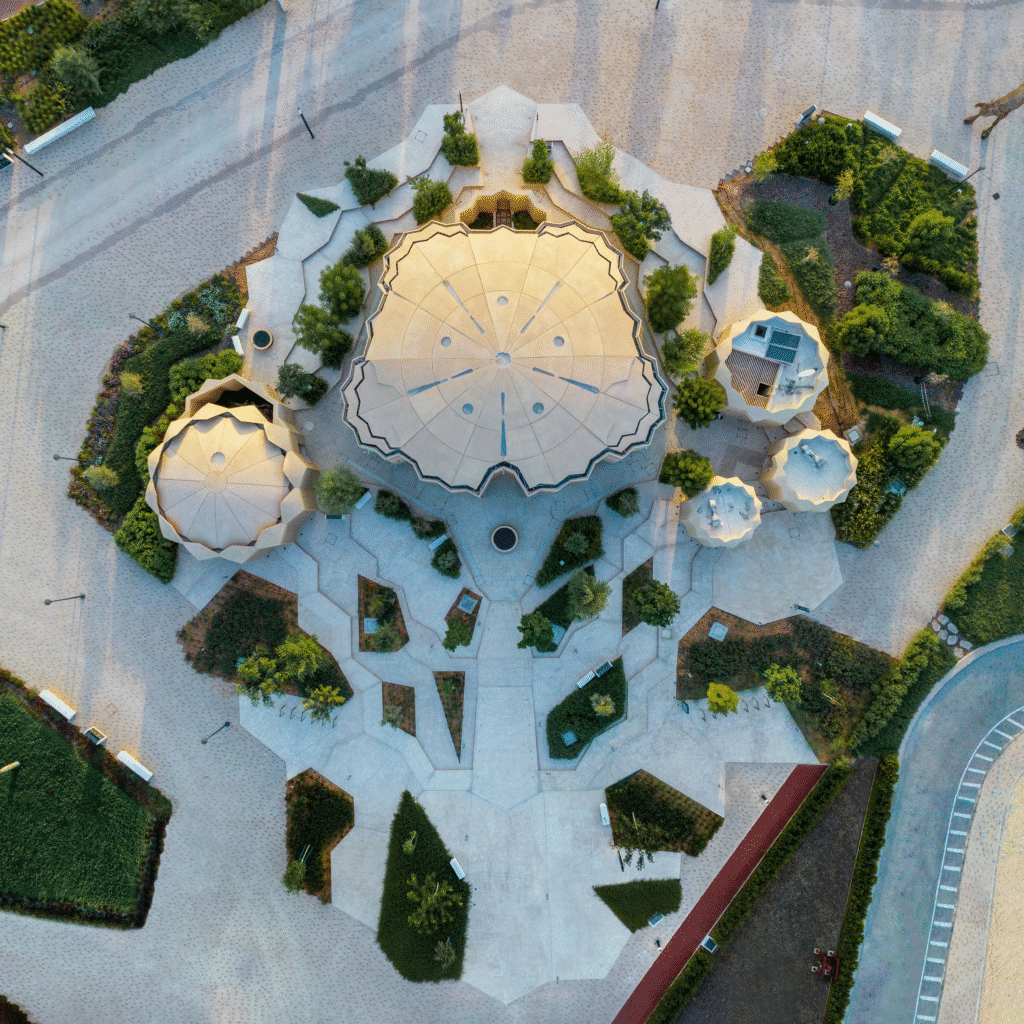
The earthy tones of the mud walls, the natural light filtering through skylights, and the soft hum of solar power systems together create a spiritual ambiance unlike any other. People leave not just with spiritual fulfillment but with a sense of inspiration, realizing that sustainability can be both sacred and practical.
Beyond Architecture: A Legacy of Hope
The mosque’s impact reaches far beyond its physical walls. It represents hope — hope that humanity can innovate responsibly, that faith can lead environmental action, and that technology can serve spirituality rather than overshadow it.
Future generations will look to this project as a turning point — the moment when sustainable design and spiritual purpose merged to create something timeless. It sets a precedent for how communities around the world can reimagine sacred spaces in an age of climate awareness.
Conclusion: Where Faith Meets the Future
Abu Dhabi’s net-zero energy mosque is more than an engineering marvel; it is a declaration of values. Built with solar power, mud, and vision, it reminds the world that sustainability is not just about technology — it’s about respect, humility, and gratitude for creation.
In its sunlit courtyards and serene prayer halls, one can feel the quiet pulse of a new era — one where faith leads the way toward balance and renewal. This mosque is not merely the world’s first of its kind; it is a symbol of what’s possible when human ingenuity and divine purpose work together.
As the call to prayer echoes through the desert air, it carries a message that resonates far beyond Abu Dhabi — a message of faith, harmony, and hope for a sustainable world.
Do follow UAE Stories On Instagram
Read Next – $11.4 Billion Boost: Abu Dhabi’s Ambitious Move Toward a Brighter Future