

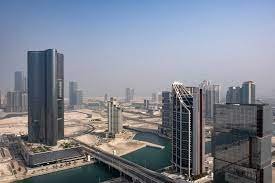
When you stroll through Abu Dhabi’s glitzy financial district, it’s hard not to be impressed. Towering glass buildings shimmer against the desert sun, state-of-the-art offices promise the perfect backdrop for ambitious dealmakers, and a skyline that was once modest now rivals global capitals. The buzz of growth is everywhere — new firms announcing regional headquarters, international banks signing up for floor after floor in sparkling new skyscrapers, and job listings popping up promising high salaries and tax-free packages.
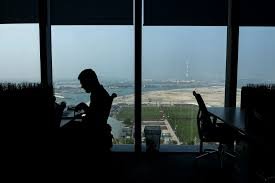
But step inside these impressive towers and you might be surprised at what you find: empty desks, silent meeting rooms, and office spaces waiting to be filled.
It’s a fascinating contradiction — one that reflects not just the story of Abu Dhabi’s ambitions, but also the evolving reality of work in a post-pandemic, digitally driven world.

A City Built for Business
Over the last decade, Abu Dhabi has invested heavily in becoming more than just the UAE’s political capital. Through financial free zones like Abu Dhabi Global Market (ADGM), the city positioned itself as a Middle Eastern rival to Dubai’s DIFC and even aimed to grab a piece of the financial pie from places like Singapore and London.

The strategy seemed bulletproof. Offer 100% foreign ownership, zero corporate tax for decades, an independent legal framework, and ultra-modern infrastructure on Al Maryah Island — a manmade, master-planned financial enclave right in the heart of the city.
And for the most part, it worked. Global investment firms, asset managers, hedge funds, fintech startups, and family offices rushed to register and secure prime real estate within the zone. Leasing rates soared, and available spaces vanished fast on paper.

The Empty Desk Dilemma
But behind those glossy numbers lies a quieter truth: many of those registered offices aren’t bustling hives of activity. Some firms keep a token presence — a handful of local hires or a single executive suite — while their decision-making, client-facing, and operational teams continue to work remotely or remain based in financial hubs abroad.
It’s not that Abu Dhabi failed to attract business — it succeeded in drawing names, licenses, and investments. But the age of hybrid work, combined with the convenience of doing business digitally, means many offices are half-empty or being used in a vastly different way than what planners envisioned.
Desks stay empty not because there aren’t jobs, but because the very definition of a job has shifted. Employees now split their time between home, co-working spaces, and the occasional in-person meeting in the office. For many, the idea of a full, 9-to-5 office presence feels increasingly outdated.
The New Face of Business Life
Speak to young professionals living in Abu Dhabi today and you’ll hear a common theme. The appeal of working from home, avoiding commutes, and having flexible hours is now more than a pandemic habit — it’s become a lifestyle expectation.
For expat workers who make up the bulk of the financial sector’s labor force, this flexibility means being able to travel, spend more time with family, or focus on personal side projects without being tied to a desk. Many financial firms have adapted by offering hybrid work policies, staggered office days, and hot-desk setups rather than assigning permanent spaces to employees.
And while the physical office still holds importance for client meetings, strategic discussions, and team-building exercises, it’s no longer the heart of daily business activity.
Abu Dhabi’s Bigger Picture
Interestingly, this trend doesn’t seem to have dampened the city’s financial ambitions. Abu Dhabi continues to position itself as a wealth management hub, particularly for the region’s growing population of ultra-high-net-worth individuals and sovereign wealth funds. The government’s Vision 2030 blueprint remains focused on diversifying the economy, with financial services playing a key role.
In fact, empty desks may be less of a concern for city planners than one might think. The licenses issued, the international attention, and the regional headquarters status still drive the perception of Abu Dhabi as a business-friendly, globally connected city. What matters is not the number of people physically present but the value and volume of financial transactions, investment deals, and economic activity being driven through these registered entities.
The Rise of Virtual Business Communities
One unintended but positive side effect of this shift is the rise of virtual business communities. Professional networking events, workshops, pitch nights, and thought-leadership sessions now happen online or in informal gatherings at cafés, hotel lounges, and community hubs across the city.
These gatherings might not fill up traditional office towers, but they’re where genuine connections and future deals are being made. In a city where personal relationships have always mattered, this informal, flexible networking culture arguably fits better with Abu Dhabi’s personality than a rigid corporate structure.
The Human Story Behind the Numbers
What makes this story especially interesting isn’t just the economics — it’s the people behind it. Take Amal, a 32-year-old asset manager who moved to Abu Dhabi from London in 2022. She signed on for a role that promised a bustling office environment but found herself working from home four days a week, with occasional strategy meetings at the company’s waterfront office.
“I was expecting this Wall Street kind of vibe,” she laughs, “but it turns out, everyone’s either in a Zoom meeting or out traveling. It’s quiet most of the time.”
Yet, Amal isn’t complaining. The lifestyle perks of living in Abu Dhabi — beach clubs, gourmet restaurants, weekend trips to Oman, and a slower, safer pace of life — more than make up for the lack of daily office banter.
Or consider Saif, a local Emirati entrepreneur who founded a fintech startup two years ago. He operates out of a co-working space with a flexible plan that allows his team of ten to rotate in and out. Saif believes the traditional office setup is dead.
“Why pay for a big office when no one wants to be stuck inside it?” he shrugs. “We collaborate online, meet when we need to, and live better lives because of it.”
Adapting to a Changing World
What Abu Dhabi’s financial district is experiencing isn’t unique — it’s part of a global phenomenon. Cities from New York to Singapore are grappling with similar patterns, where office towers stay lit but half their cubicles remain empty.
The difference is that Abu Dhabi is embracing this change faster than many might have expected. Its willingness to adapt zoning laws, encourage co-working operators, and rethink infrastructure plans means the city could become a case study in how to build a modern financial hub that values outcomes over appearances.
A Future Built on Flexibility
Looking ahead, it’s likely that Abu Dhabi’s financial hub will continue to evolve into a hybrid ecosystem where physical office spaces coexist with virtual work environments, informal business clubs, and community-driven initiatives.
The challenge won’t be how to fill desks but how to keep attracting top talent, ensure productive collaboration, and maintain the city’s reputation as a financial capital in a region teeming with competition.
If anything, the empty desks tell a story of progress — proof that Abu Dhabi isn’t afraid to rewrite the rulebook, challenge old ideas of work, and find new ways to balance ambition with quality of life.
And perhaps that’s the most exciting thing about this city. It keeps you guessing. It keeps evolving. And while its offices may be a little quieter these days, its heartbeat is louder than ever.
Follow us on Instagram: UAE STORIES
Air Arabia Abu Dhabi Adds Sialkot Service From July 2025