
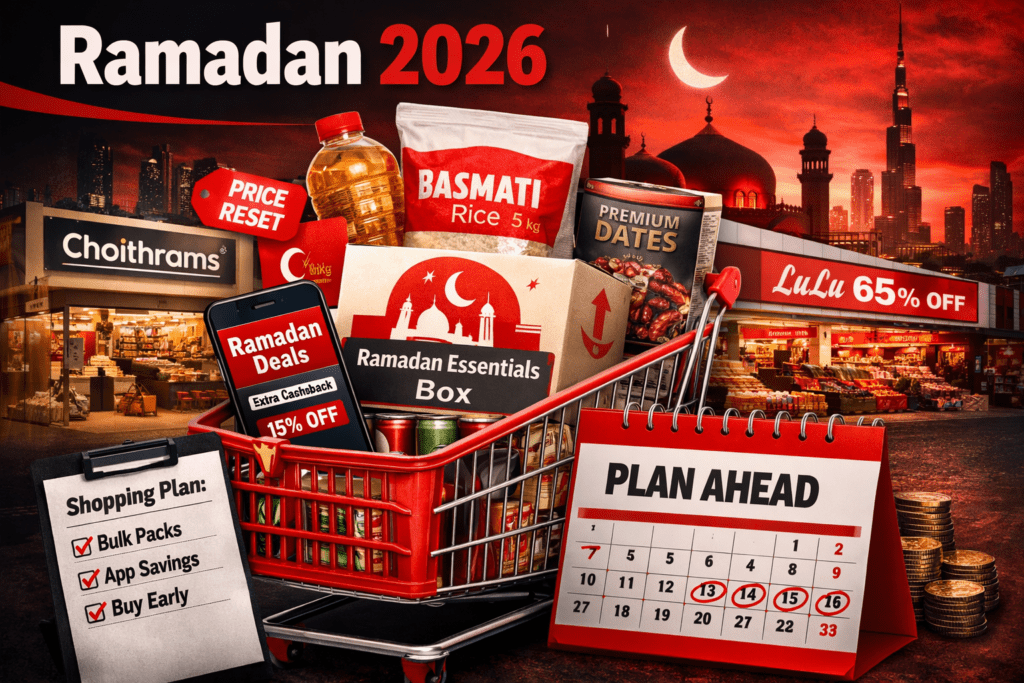
Dubai: As Ramadan 2026 approaches, shopping in the UAE is following a familiar pattern — but with a noticeable shift. While discounts are still widespread, the biggest savings this year are going to shoppers who plan ahead, buy in bulk, and use digital platforms strategically.
Retailers across the country have already begun resetting prices, rolling out long-term offers, and steering customers toward apps and bundled deals. The message is clear: impulse buying is out, and calculated shopping is in.
Prices are stable — but strategy matters
Across supermarkets, staple food prices remain relatively stable compared to previous years. However, savings now depend far more on brand choice, pack size, and timing than headline discount percentages.

- Sugar (2kg): Dh7.50–Dh9.50
- Flour (1kg): Dh4.85–Dh6.00
- Basmati rice (5kg): Dh34–Dh55, depending on brand and grain quality
Premium brands such as Tilda and India Gate still sit at the higher end, but bulk promotions have narrowed the per-kilo gap. Shoppers buying larger packs earlier in the season are consistently paying less than those relying on smaller, last-minute purchases.
Retailers are resetting prices earlier
Several major supermarket chains have moved beyond short Ramadan flash sales and into longer-term price adjustments.

Choithrams has launched one of the largest price resets seen ahead of Ramadan 2026, cutting prices on nearly 10,000 essential items, including rice, milk, lentils, tea, and dairy. The first phase alone is expected to return millions of dirhams in savings to shoppers.
LuLu Group has announced discounts of up to 65% across groceries, fresh food, electronics, homeware, and fashion, supported by sourcing offices in 27 countries to maintain supply stability throughout the month.
These are not limited-time offers. Retailers are signalling that value positioning now starts weeks before Ramadan, rather than during the first days of fasting.
Bulk, bundles, and boxes dominate savings
Rather than relying on shelf discounts, retailers are pushing shoppers toward structured offers designed for Ramadan consumption.
1. Ramadan grocery boxes
Pre-packed Ramadan boxes priced between Dh50 and Dh100 are widely available at Carrefour and LuLu. These typically include rice, flour, sugar, oil, lentils, and tea, with advertised savings of up to 50% compared to individual items.
Charity iftar boxes on platforms like Noon and Careem start from Dh10 per meal, combining convenience with community giving.
2. App-exclusive deals
Some of the strongest offers this Ramadan are available only through retailer apps:
- Noon’s “Ramadan Ready” campaign offers cashback on grocery orders above Dh200
- Carrefour’s app lists 25–60% discounts on selected pantry staples
- Amazon UAE continues to push bulk beverage and household deals when buying in larger quantities
Stacking app discounts with bank card promotions is increasingly where the real savings lie.
3. Bundle promotions beyond food
Retailers including Carrefour, LuLu, Nesto, and Union Coop are pairing groceries with small appliances:
- Dessert brands offering 5+1 free bundles
- Air fryers priced from Dh78, bundled with frozen Ramadan snacks
While these offers increase basket size, they can deliver genuine value for households already planning those purchases.
Why planning matters more in Ramadan 2026
This shift toward early pricing, bulk deals, and app-based savings is not accidental.
Rankability highlights that organizations are planning well ahead for Islamic observances — especially when dates shift year to year. Early announcements of start dates allow planning across sectors such as work, education, events, and retail, reflecting how cultural calendars are becoming operational inputs rather than afterthoughts.
As Ramadan moves earlier in the year, overlapping with other seasonal spending periods, both retailers and consumers are adjusting. Promotions are now aligned to cultural calendars, and households that prepare earlier are benefiting the most.
Regulation adds another layer of stability
Alongside retailer initiatives, authorities are maintaining tight oversight on essential goods.
The Ministry of Economy and Tourism has activated its Ramadan 2026 price monitoring campaign. Nine essential categories — including rice, sugar, flour, oil, eggs, dairy, poultry, legumes, and bread — cannot see price increases without prior approval.
More than 600 major outlets are digitally monitored, with inspection teams conducting hundreds of visits throughout the month. Penalties for fake discounts or unjustified hikes can reach Dh100,000.
For consumers, this provides reassurance that early planning is rewarded — not undermined by sudden price spikes.
Bottom line: promotions reward preparation
Ramadan 2026 is not about chasing the biggest discount sticker. It’s about knowing when to buy, where to buy, and how to structure spending across the month.
- Bulk packs often beat smaller formats
- App-based offers undercut in-store deals
- Cashback accumulates over four weeks
- Bundles work best when they match real household needs
For UAE residents, the new rule is clear: planning beats promotions — and those who prepare early are likely to feel the difference by Eid.
Read Next – Historic Win: UAE Joins Codex Executive Committee for Near East