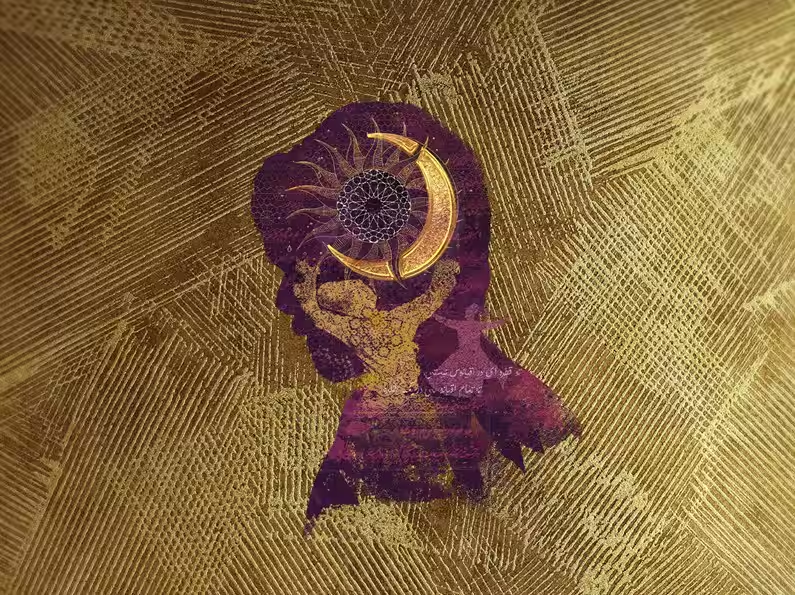
Rumi – The Musical arrived in Dubai as a breathtaking theatrical experience — a performance that blends ancient poetry, spiritual wisdom, and powerful artistry into a stage production that resonates deeply with audiences. Based on the life and philosophy of the 13th-century Persian poet and mystic Jalaluddin Rumi, the musical explores timeless themes of love, longing, transformation, and unity through the powerful mediums of song, movement, and storytelling.
Dubai’s cultural landscape welcomed this magnificent production with open arms. In a city celebrated for its cosmopolitan vibrancy and artistic diversity, the arrival of Rumi – The Musical marked a moment of artistic depth and spiritual celebration — a performance that invited hearts and minds to connect through beauty, rhythm, and shared human experience.
From the first orchestral note to the final ovation, this musical performance carried audiences on a journey that felt both intimate and transcendent — a poetic exploration of life’s eternal questions and the human spirit’s capacity for love.

Who Was Rumi? A Poet of Love and Wisdom
The heart of Rumi – The Musical lies in the teachings and poetry of Jalaluddin Rumi, one of the most celebrated spiritual poets in history. Born in 1207 in present-day Afghanistan, Rumi’s work has transcended time and geography to touch hearts across cultures and eras. His poems are meditations on love, unity, longing, divine connection, and the mystical interplay between the inner self and the cosmos.
Rumi’s words do not belong to any one religion or tradition — they speak to universal human experience. His poems have been translated into every major language, inspiring millions around the world to explore meaning, reflection, and unity through lyrical expression.

The musical weaves Rumi’s wisdom into its narrative, bringing his voice to life onstage in a way that is both historically grounded and emotionally compelling.
A Stage Set for Beauty: Dubai’s Theatrical Landscape
Dubai has become a vibrant destination for world-class performance art, from musicals and dance to orchestral concerts and theatrical storytelling. Rumi – The Musical found its home within this dynamic cultural ecosystem — a place where artistic excellence is celebrated, and diverse audiences come together in appreciation of creative expression.
Dubai’s reputation as a crossroads of global culture — where East meets West and tradition meets innovation — enhanced the resonance of this production. The city’s appreciation for art that speaks deeply to the heart made it the perfect stage for such a spiritually rich performance.
Immersive Production Design: A Canvas of Sensory Wonder
The visual design of Rumi – The Musical played a central role in creating an immersive experience. From elegant costumes inspired by historical motifs to lighting that echoed poetic emotion, each element of the stage design contributed to the narrative’s emotional depth.
Scenic transitions carried audiences through Rumi’s life — from his early years to his spiritual awakening, from moments of love to revelations of universal unity. Musicians, dancers, and actors all became storytellers of sound and presence, inviting the audience into Rumi’s world with every movement.
The overall design was not merely a backdrop — it was a living canvas that reflected Rumi’s poetic spirit and the emotional landscape of the human journey.
Music That Breathes Life Into Poetry
Music was the heart of this production — weaving threads of joy, sorrow, longing, triumph, and love into every scene. Traditional instruments blended with contemporary orchestration to create a score that felt timeless yet newly alive.
Melodies carried Rumi’s poetry into sound — harmonies that elevated lines of verse into emotional connection. The musical compositions guided audiences through quiet reflection, dynamic crescendos, and moments of pure spiritual exaltation.
Live singers and musicians infused each phrase with presence, creating a soundscape that felt both intimate and monumental.
Dance as Expression: Movement and Meaning
Dance held a central place in Rumi – The Musical. Choreography became a language of spirit — a body-expressed response to inner longing, joy, and unity. From solo interpretive moments to ensemble pieces filled with rhythmic harmony, movement translated Rumi’s metaphors into motion.
Some dance sequences echoed Sufi traditions — swirling, expressive, and meditative — while others reflected emotional narrative progressions that helped audiences feel the story in their bodies as much as in their minds.
This kinetic energy brought poetry off the page and into lived experience — bridging the internal world of emotion with external expression.
The Narrative Arc: Journey of the Heart
The musical’s storyline followed the emotional and spiritual evolution of Rumi — from early curiosity about life’s deeper questions to profound life shifts shaped by love and devotion. Central to the narrative was Rumi’s transformative relationship with his teacher, Shams of Tabriz — a connection that ignited revolutionary shifts in his understanding of self and spirit.
Through dialogue, song, and movement, the narrative explored themes of love as a force of transformation, longing as a path to awareness, and unity as the heart’s ultimate destination.
The audience was invited not merely to observe this journey but to reflect on parallel moments within their own lives — places of questioning, awakening, and heartfelt connection.
Audience Engagement: Emotional Presence and Reflection
What made Rumi – The Musical especially memorable was its ability to connect with audiences on a deeply emotional level. Many moments of the show elevated collective presence — when the audience seemed to breathe as one, sing in silence, or reflect in shared stillness.
Live theatre holds a power that recorded performance cannot replicate — it creates a shared moment in time, where every heartbeat in the audience becomes part of the living experience. In this musical, those moments were felt profoundly.
Tears, smiles, laughter, and silence were all part of the emotional arc — shared among strangers who became connected through presence, beauty, and heartfelt storytelling.
Themes That Transcend Time and Culture
Rumi’s work is beloved because it speaks to universal human experiences — love, loss, longing, hope, and the search for unity. Rumi – The Musical brought these themes to the forefront, reminding audiences that poetry is not only read — it is lived.
In Dubai — a city where cultures converge — this message found fertile ground. People from diverse traditions, backgrounds, and perspectives gathered to witness a story rooted in spiritual inquiry and timeless expression.
This cultural resonance made the performance not only entertaining but deeply meaningful.
Visual Symbolism and Stage Atmosphere
Lighting design played with color, shadow, and illumination to reflect internal landscapes of emotion. Soft hues accompanied tender moments. Bold lighting emphasized emotional breakthrough. Shadows created landscapes of introspection.
This visual language of light and shade became part of the production’s emotional grammar — turning every scene into a tableau of presence and feeling.
The result was an environment where audience members felt seen not only as spectators, but as participants in the unfolding narrative.
High Points and Audience Reactions
As the show reached its emotional peaks — moments of revelation, reunion, and truth — applause rose in waves. The theater became a space of collective appreciation — a place where performance and presence met in emotional resonance.
Audiences clapped not only for technical excellence but for moments of connection — when poetry felt like personal reflection, when music felt like invitation, and when shared emotion felt like unity.
These reactions were a remembrance of art’s ability to shape memory and meaning.
The Role of Live Performance in Cultural Celebration
Live theatre has a unique role in cultural expression — it captures presence, emotion, and shared humanity. In Rumi – The Musical, theatre became an opportunity for reflection as much as celebration — an opportunity to gather and participate in art that speaks to the spirit.
Dubai’s role in hosting this production underscores the city’s embrace of artistic diversity and cultural depth. In a time when digital media often dominates cultural consumption, live performance provides a space of togetherness, physical presence, and emotional engagement that digital formats cannot replace.
The musical reminded audiences of the joy of being present — fully engaged in sight, sound, feeling, and community.
Stories Shared After the Show
When the final curtain fell, and applause filled the hall, audience members lingered — sharing reflections, emotions, and favorite moments. Some spoke of how specific songs moved them. Others reflected on how the story echoed their own life questions.
These shared post-show conversations became part of the cultural experience — turning performance into memory, and memory into story.
Live performance doesn’t end with the final bow — it continues in conversation, reflection, and shared narrative.
Inspiration for Creative Hearts
For aspiring artists, musicians, and storytellers in the audience, Rumi – The Musical offered inspiration — a reminder that creativity rooted in meaning and beauty carries lasting power.
Seeing poetry transformed into sound, movement, and light sparked new curiosity about the possibilities of artistic expression. For young creators, this performance served as a beacon — an invitation to explore creation that comes from the heart.
Creative inspiration often moves quietly at first — a lingering idea, a memory of melody, a question of interpretation. In moments like these, artistic potential awakens.
Legacy of Spiritual Art in a Modern World
Rumi – The Musical was more than a performance — it was a celebration of timeless art in a contemporary world. The blending of ancient poetry with modern performance design reminded audiences that art can transcend era, geography, and cultural difference.
In a city shaped by future-forward vision and global perspective, the performance anchored its message in the enduring beauty of human experience — love, longing, connection.
This blend of old and new made the musical both a cultural bridge and an artistic celebration.
Conclusion: A Celebration of Love, Wisdom, and Human Connection
Rumi – The Musical in Dubai was an unforgettable celebration of artistic expression, spiritual poetry, emotional depth, and shared experience.
Through breathtaking performance, evocative music, expressive dance, and compelling narrative, the musical invited audiences into a timeless world of meaning, presence, and heart.
It reminded everyone present that art can speak to the soul — and that storytelling, when wrapped in beauty and wisdom, has the power to unite, inspire, and elevate the human spirit.
In Dubai’s rich cultural landscape, Rumi – The Musical stood as a testament to the enduring power of art — a luminous celebration of life, love, and the poetry that lives within every heart.
Do follow UAE Stories on Instagram
Read Next – UAE Defense Council Advances Strategic 2026 Military Modernisation