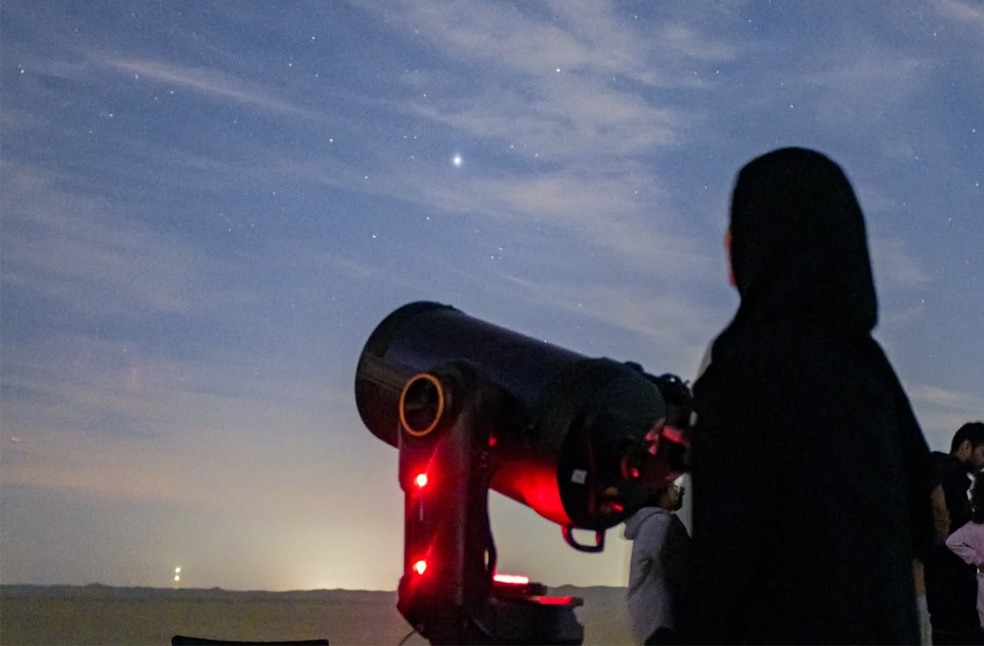
A Spectacular Celestial Celebration in the Desert
Dubai’s desert skies are set to glow with a rare and captivating astronomical display as a Planetary Parade unfolds at Al Qudra Desert. Organized by the Dubai Astronomy Group, the event promises an unforgettable evening where science, spirituality and community come together in harmony.
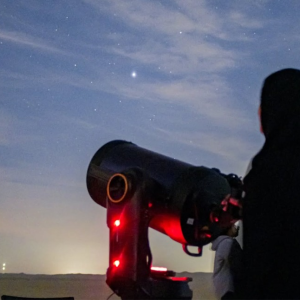
Taking place at Al Qudra Desert on 21 February, this special gathering invites families, astronomy enthusiasts and curious minds to witness a stunning alignment of planets under one of the clearest night skies in the region. Against the serene backdrop of rolling sand dunes, attendees will observe Saturn, Jupiter, Uranus and the Moon through powerful telescopes, experiencing the wonders of the universe up close.
More than just a skywatching event, this Planetary Parade blends scientific discovery with the reflective spirit of Ramadan, creating a meaningful experience that resonates deeply with participants of all ages.

What Is a Planetary Parade?
A Planetary Parade occurs when several planets appear close together in the sky from Earth’s perspective. While the planets remain millions of kilometers apart in space, their alignment along the ecliptic creates the illusion of a cosmic gathering. For observers on the ground, it feels like witnessing a rare celestial choreography.
During this event, Saturn, Jupiter and Uranus will be visible, alongside the Moon. Saturn’s iconic rings, Jupiter’s vibrant cloud bands and the subtle glow of Uranus will all be accessible through telescopic observation. For many, it will be the first opportunity to see these distant worlds in remarkable detail.

Events like this remind us of humanity’s enduring fascination with the sky. From ancient desert travelers who navigated by the stars to modern astronomers studying planetary motion, the night sky has always inspired wonder and reflection.
A Ramadan Evening Under the Stars
This Planetary Parade has been thoughtfully designed to reflect the spirit of Ramadan. The program begins at 6:00 pm with a welcome and introduction, setting the tone for an evening of exploration and connection.
At 6:20 pm, guests pause for Iftar, sharing a meal as the sun sets over the desert horizon. A prayer break follows, allowing participants to embrace the spiritual essence of the holy month before turning their attention to the sky.
By 6:45 pm, telescopes are directed toward Saturn. As the planet will be setting shortly afterward, early arrival is strongly encouraged to ensure guests do not miss this highlight. Seeing Saturn’s rings through a telescope is often described as a life-changing moment, particularly for children experiencing it for the first time.
At 7:15 pm, an engaging talk explores Ramadan traditions, moon sighting practices and the science behind lunar observation. The session bridges faith and astronomy, explaining how scientific methods complement traditional moon sighting in determining the Islamic calendar.
At 7:45 pm, experts delve into the mechanics of planetary alignments. Attendees learn how and why these celestial events occur, gaining a deeper understanding of orbital dynamics and Earth’s position within the solar system.
Interactive Learning and Open Telescope Viewing
The evening continues with a Q&A session at 8:30 pm, offering participants the chance to ask questions about the planets, the universe and observational astronomy. These interactive discussions are often a highlight, especially for young aspiring scientists.
At 8:45 pm, telescope observations resume with views of the Moon, Uranus and Jupiter. The Moon’s craters and surface details appear strikingly vivid through high-powered equipment, while Jupiter’s massive size and colorful atmospheric bands showcase the grandeur of our solar system’s largest planet.
From 9:30 pm onward, guests enjoy open telescope viewing, including deep-sky objects such as star clusters and distant nebulae. Participants are also invited to take smartphone photographs directly through the telescopes, capturing personal keepsakes of the evening’s discoveries.
Ticket Information and Accessibility
The event is open to the public, with ticket prices structured to encourage family participation. General admission is priced at AED 160, while children under the age of 13 can attend for AED 130. The accessible pricing ensures that families can share this enriching experience together.
Given the popularity of astronomical events in the UAE and the limited window for observing certain planets, early booking is recommended. The desert location offers minimal light pollution, significantly enhancing visibility and making Al Qudra an ideal venue for such celestial gatherings.
Why Al Qudra Desert Is the Perfect Setting
Al Qudra Desert is renowned for its tranquil landscapes and expansive horizons. Away from the city’s bright lights, the desert provides optimal conditions for observing faint celestial objects. The stillness of the environment enhances the experience, allowing guests to immerse themselves fully in the beauty of the cosmos.
There is something profoundly humbling about standing on ancient desert sands while gazing at planets that have inspired humanity for millennia. The combination of natural serenity and scientific exploration makes this Planetary Parade particularly special.
A Unique Blend of Faith and Science
Ramadan is a time of reflection, gratitude and community. By pairing skywatching with educational talks on moon sighting and planetary science, this event offers a holistic experience that resonates both intellectually and spiritually.
The Moon holds deep significance in Islamic tradition, marking the beginning and end of the holy month. Observing it through a telescope adds a layer of appreciation for its physical features and orbital patterns. Understanding the science behind lunar cycles enhances, rather than diminishes, the sense of wonder associated with them.
In many ways, astronomy and faith share common ground: both encourage contemplation of our place in the universe. As families gather in the desert to witness the Planetary Parade, they participate in a timeless human tradition of looking upward in search of meaning.
Inspiring the Next Generation
Events like the Planetary Parade at Al Qudra Desert play a crucial role in inspiring young minds. Seeing Saturn’s rings or Jupiter’s swirling storms firsthand can spark a lifelong interest in science, technology and space exploration.
For parents, it is an opportunity to introduce children to astronomy in an engaging and memorable way. For adults, it is a reminder that curiosity does not fade with age. The shared experience of discovery strengthens bonds and creates lasting memories.
The Planetary Parade at Al Qudra Desert promises not only a breathtaking astronomical display but also a powerful reminder of the beauty that emerges when science and spirituality meet beneath the stars.
Do follow UAE Stories on Instagram
Read Next – Best Areas in Ajman for Families with Kids