The countdown is on
As the holy month approaches, anticipation is building across the UAE and the wider Muslim world. Ramadan is not only a period of fasting, but also a time of reflection, community, generosity, and spiritual renewal. With preparations already underway, astronomers have now shared detailed guidance on when Ramadan in 2026 is most likely to begin, offering clarity months in advance.
Experts based in the UAE have closely analysed the lunar cycle and confirmed that astronomical conditions point strongly toward a later start in February. While the final confirmation will still depend on official moon sighting announcements, the scientific data paints a very clear picture.
Why the Ramadan start date changes each year
Ramadan follows the Islamic Hijri calendar, which is lunar rather than solar. Each month begins with the sighting of the new crescent moon, meaning Islamic months are around 29 or 30 days long. Because of this, Ramadan shifts earlier by about 10 to 11 days every year when compared to the Gregorian calendar.

This moon-based system also explains why the start of Ramadan can sometimes differ between countries. Weather conditions, geographical location, and the ability to sight the crescent moon all play a role in determining the exact first day of fasting.
Astronomers clarify moon sighting conditions
According to the International Astronomy Centre, it will be impossible to sight the Ramadan crescent moon on Tuesday, February 17, 2026, in the UAE and surrounding regions.

February 17 corresponds to the 29th day of Shaban in the Islamic calendar. Under normal circumstances, this is the evening when moon sighting committees would attempt to observe the new crescent to determine whether Ramadan begins the following day.
However, astronomers have confirmed that the moon will not have had enough time to transition from the new moon phase to a visible crescent. This makes sighting impossible, even with advanced optical equipment.
What makes the crescent moon impossible to see
The challenge lies in timing and positioning. The crescent moon forms at the very lower edge of the lunar disk after the new moon phase. On February 17, the moon will set before the sun in the UAE, leaving no window for observation.
In fact, astronomical calculations show that the moon will set approximately one minute before sunset. This eliminates any chance of visibility, as the crescent must remain above the horizon after sunset to be seen.
The Astronomy Centre also clarified that moonset timing is calculated based on the lower edge of the lunar disk rather than the upper edge, which further confirms that visibility will not be achievable that evening.
Advanced technology offers no exception
Even with modern scientific techniques, including high-powered telescopes and digital imaging, the crescent will remain invisible on February 17. Astronomers emphasised that no technology currently available can overcome the physical limitations created by the moon’s position and age on that date.
This level of certainty is rare and significant. In many years, moon sighting results can be uncertain or disputed, but in this case, the data leaves virtually no room for alternative interpretations.
The significance of the solar eclipse
Adding further weight to the astronomical conclusion is the occurrence of an annular solar eclipse on the same day. This eclipse will be visible from parts of southern Africa and Antarctica and will coincide with sunset across large areas of the eastern and central world, extending toward Asia.
A solar eclipse represents a visible conjunction between the sun and the moon. When such a conjunction occurs, it serves as direct evidence that the crescent moon cannot be seen at that time or for several hours afterward.
For astronomers, this phenomenon acts as definitive proof that Ramadan cannot begin the following day.
So when will Ramadan 2026 begin?
Given the impossibility of sighting the crescent moon on February 17, the month of Shaban will complete 30 days. This means Ramadan is expected to begin on Thursday, February 19, 2026.
While official religious authorities will still conduct their customary moon sighting procedures, astronomers stress that the scientific data overwhelmingly supports this date.
For residents of Dubai and the wider UAE, this provides valuable clarity for planning work schedules, school calendars, travel, and Ramadan preparations.
What this means for the UAE and beyond
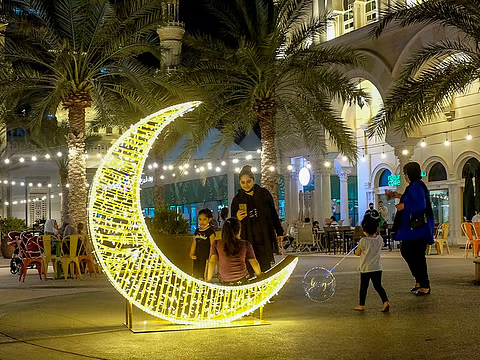
Ramadan holds deep cultural and spiritual importance across the United Arab Emirates. Daily routines shift, working hours are adjusted, and communities come together for iftar gatherings, charitable initiatives, and nightly prayers.
Advance clarity on the likely start date allows families and businesses to prepare thoughtfully. From stocking homes with essential groceries to organising charitable campaigns and adjusting hospitality offerings, early planning makes a meaningful difference.
Across the wider Muslim world, similar astronomical conditions suggest that many countries may begin Ramadan on the same date, though regional confirmations will still vary.
A reminder about official confirmation
Despite the strong astronomical evidence, it is important to remember that the official start of Ramadan will only be confirmed by authorised moon sighting committees. These announcements are typically made on the evening of the 29th day of Shaban.
However, when astronomers state that visibility is impossible, history shows that official confirmations almost always align with the scientific forecast.
Looking ahead with confidence
With the countdown underway, Muslims across the UAE can begin preparing for Ramadan 2026 with confidence and calm. The clarity provided by astronomers removes much of the uncertainty that often surrounds the holy month’s arrival.
As February approaches, anticipation will continue to grow, bringing with it the familiar sense of reflection, unity, and generosity that defines Ramadan year after year.
Do follow UAE Stories on Instagram
Read Next – A Night of Pure Techno With Marco Carola at Pacha Icons Dubai