
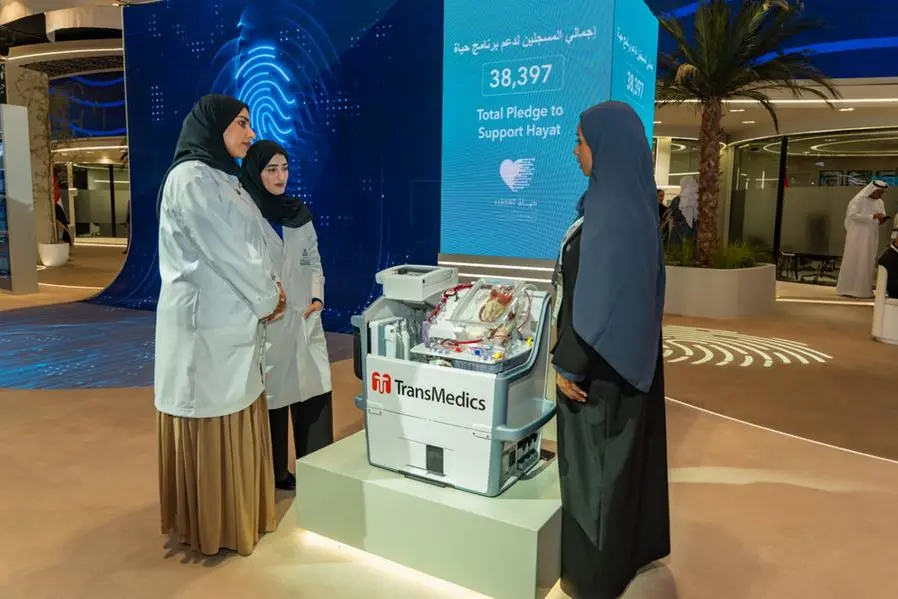
Showcasing innovation in organ perfusion and genomic medicine
The Emirates Health platform has emerged as a powerful symbol of the UAE’s commitment to transforming healthcare delivery through advanced science, technology, and national collaboration. Its showcase at World Health Expo 2026 reflected a focused strategy to strengthen organ donation and transplantation systems while accelerating innovation that directly improves patient outcomes.
Through a portfolio of national projects, the platform highlighted how the UAE is investing in long-term, sustainable healthcare solutions aligned with its broader national vision. The emphasis was not only on technology but also on integration—bringing together legislation, research, clinical expertise, and digital intelligence into a unified healthcare ecosystem.
At the heart of this showcase was a clear message: the future of organ transplantation depends on precision, preparedness, and trust, and the UAE is actively building all three.

Strengthening National Transplant Capabilities
One of the most significant initiatives presented under the Emirates Health platform was the organ perfusion technology project supporting the National Program for Organ and Tissue Donation and Transplantation, Hayat. This project represents a major leap forward in how donor organs are preserved, evaluated, and prepared for transplantation.
Organ perfusion technology allows vital organs to remain functional outside the human body by circulating blood or nutrient-rich solutions under tightly controlled oxygen, pressure, and temperature conditions. Unlike traditional cold storage methods, this approach maintains near-physiological conditions, helping organs remain viable for longer periods.

This advancement directly addresses one of the most critical challenges in transplantation: ensuring that donated organs remain healthy and transplant-ready from the moment of retrieval to the moment of implantation.
Transforming Organ Preservation and Assessment
The organ perfusion system functions as a biological circulatory simulator, enabling medical teams to continuously monitor organ performance before transplantation. Key indicators such as oxygen uptake, vascular resistance, metabolic activity, and tissue response can be assessed in real time.
This capability allows transplant specialists to make more informed decisions about organ viability. Organs that may previously have been rejected due to uncertainty can now be reassessed with greater confidence, potentially expanding the donor pool and saving more lives.
For patients awaiting transplants, this translates into improved readiness, reduced surgical complications, and higher chances of long-term success. For clinicians, it offers a level of insight and control that was previously unattainable.
Extending Transport Times and Expanding Collaboration
Another critical benefit of organ perfusion technology is its ability to safely extend organ transport times. By maintaining organ function during transit, the system reduces time pressure and logistical constraints, especially in complex cases involving long-distance transfers.
This advancement has strengthened the UAE’s capacity to manage organ exchange across cities and international borders. It has also opened new pathways for regional and global collaboration, enabling healthcare systems to coordinate transplant procedures more efficiently.
By improving preservation quality and flexibility, the technology supports a more responsive and resilient transplant network—one that can adapt to varying clinical and logistical demands without compromising patient safety.
Integrating Technology, Policy, and Expertise
The success of the Emirates Health platform lies in its integrated approach. Rather than treating technology as a standalone solution, the platform aligns innovation with regulatory frameworks, medical expertise, and ethical standards.
This integration ensures that advancements in transplantation are implemented responsibly and sustainably. It also reinforces public trust in the organ donation system, which is essential for encouraging donor participation and maintaining transparency.
Partnerships with healthcare providers, research institutions, and technology developers further strengthen this ecosystem, creating a collaborative environment where innovation can thrive.
Advancing Precision Medicine Through Genomics
Beyond transplantation, the Emirates Health platform also highlighted the National Genome System, a foundational initiative aimed at building a comprehensive genetic database for the UAE population. This system supports advanced research, disease prevention, and personalized treatment strategies.
By integrating genomic data into clinical practice, healthcare providers can better understand genetic predispositions, tailor treatments, and improve long-term health outcomes. In the context of organ transplantation, genomic insights can enhance donor-recipient matching and reduce the risk of rejection.
The National Genome System reflects the UAE’s broader commitment to precision medicine—using data-driven insights to deliver more effective, individualized care.
Fostering Innovation Across the Healthcare Workforce
In parallel with technological showcases, the Emirates Health platform featured a series of workshops and interactive sessions focused on workplace wellbeing, integrative medicine, and healthcare innovation. These sessions emphasized the human element of healthcare transformation.

By investing in training, knowledge exchange, and professional development, the platform supports a workforce capable of adapting to rapid technological change. This focus on people ensures that innovation is not only advanced but also accessible and impactful at the clinical level.
Several memoranda of understanding were also signed during the event, reinforcing cooperation in research, education, and data integration across the healthcare sector.
Supporting Long-Term National Health Goals
All initiatives presented under the Emirates Health platform align with the UAE’s long-term health strategy and its vision for future generations. By prioritizing advanced medical technologies, the country is building a healthcare system that is proactive rather than reactive.
Organ donation and transplantation are central to this vision, as they represent both a life-saving service and a measure of system maturity. The ability to deliver complex, high-risk procedures with precision and confidence reflects the strength of the overall healthcare infrastructure.
Through sustained investment and strategic planning, the UAE continues to position itself as a regional and global leader in medical innovation.
A Model for the Future of Transplant Care
The Emirates Health platform has demonstrated how technology, policy, and compassion can work together to redefine transplant care. From extending organ viability to improving assessment accuracy and fostering international collaboration, the initiatives showcased represent a holistic approach to healthcare advancement.
As global demand for organ transplants continues to rise, systems that prioritize innovation, integration, and patient-centred care will define the future. The UAE’s approach offers a model for how nations can responsibly expand their transplant capabilities while maintaining ethical and clinical excellence.
Ultimately, the platform’s work reflects a simple yet powerful goal: to give more patients a second chance at life through smarter, safer, and more connected healthcare solutions.
Do follow UAE Stories on Instagram
Read Next – Moreeb Dune: The Desert Giant That Redefines Adventure