Discovering Desert Life
Dubai’s modern skyline and high-speed lifestyle can make it easy to forget that this land was once home to nomadic tribes whose lives were defined by the desert. To truly understand the soul of this region, many travellers choose to go in the footsteps of the Bedouins — a journey that reveals a world of resilience, wisdom, and profound connection to nature.
This experience is more than a tour; it is a passage into the heart of the desert where every dune, windshift, and sunset tells a story of survival, community, and cultural heritage.
The Essence of Desert Living
The Bedouins were traditionally nomadic people who moved across arid landscapes in search of water, grazing land, and shelter. Life in the desert was challenging — the sun was relentless, water was scarce, and every day demanded ingenuity and cooperation.

Going in the footsteps of the Bedouins allows visitors to feel what life was once like before urban development — a life shaped by instinct, observation, and deep respect for the environment. In the vast emptiness of sand and sky, simplicity becomes strikingly beautiful.
Connection to Nature and Survival
One of the most profound lessons from Bedouin life was the ability to live in harmony with the environment. Water meant everything; knowing where to find it could mean the difference between survival and hardship. Plants and animals were valued not only for sustenance but also for their signs — clues that guided movement and settlement.

When travellers go in the footsteps of the Bedouins, they often follow traditional routes, learning to observe the land and appreciate how every ridge and valley offered meaning to those who knew the desert intimately.
Community and Cooperation
For the Bedouins, survival was not a solitary pursuit — it was a shared responsibility. Families and extended communities worked together to navigate the desert, protect livestock, and build temporary shelters. Hospitality was essential; welcoming a guest with warmth and generosity was a cultural cornerstone.
Experiencing daily life in the footsteps of the Bedouins offers a deep appreciation for these values — reminding visitors that even in harsh environments, kindness and community are powerful sources of resilience.
The Art of Storytelling
Storytelling was central to Bedouin culture. Around campfires beneath endless skies, poetry, lineage, and lessons were passed down with reverence. These stories were more than entertainment — they were memory, morality, and identity woven into each phrase.
As travellers go in the footsteps of the Bedouins, they are often invited to listen to tales — ancient and personal — that colour the desert with meaning far beyond sand and silence.
Traditional Skills and Crafts
Life in the desert required extraordinary skill. From tracking and navigation to animal husbandry and shelter building, Bedouins developed practical arts that ensured survival and cultural continuity.
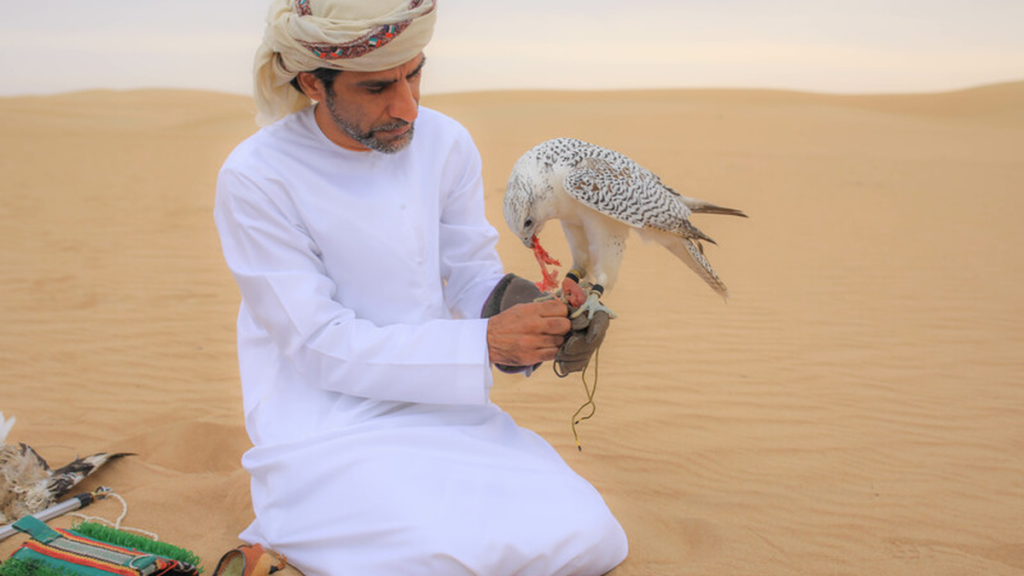
Visitors who go in the footsteps of the Bedouins may witness demonstrations of traditional crafts such as weaving, leatherwork, and pottery. These crafts not only served functional purposes but also reflected artistic expression — a way of preserving identity in every stitch, knot, and pattern.
Camels and Desert Travel
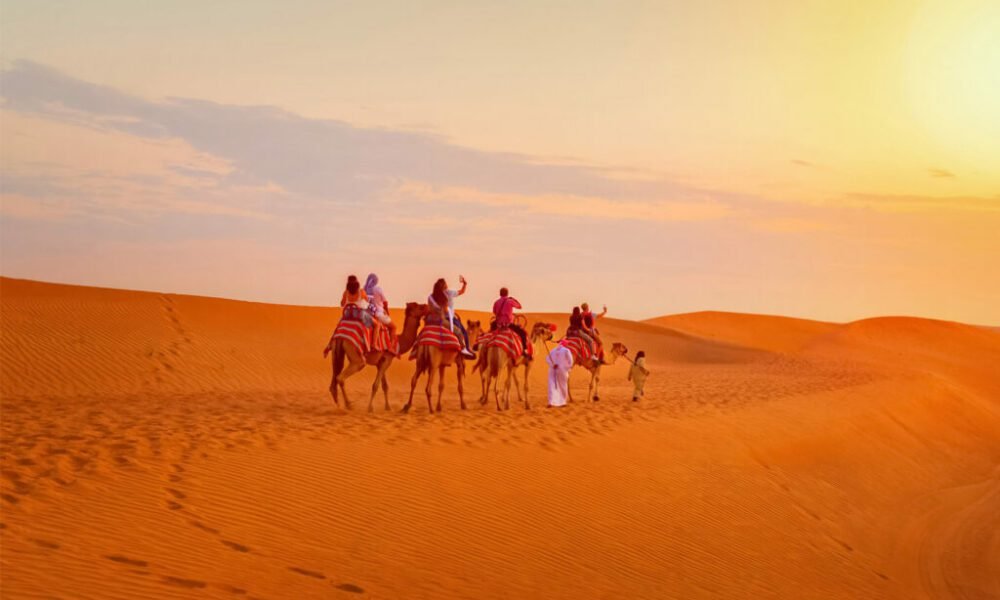
Camels were central to desert life — a means of transport, source of sustenance, and a companion on long journeys. Known as the “ships of the desert,” camels carried families, belongings, and courage across expanses that tested endurance and spirit.
Following routes in the footsteps of the Bedouins often includes encountering these remarkable animals, whose presence is a living reminder of how people and nature shaped each other’s stories in the desert.
Nights Under the Stars
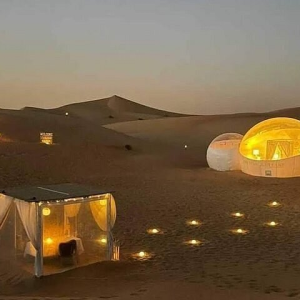
Perhaps one of the most unforgettable parts of going in the footsteps of the Bedouins is the night sky. With no city lights to dim the view, the cosmos unfolds in stunning clarity. The Milky Way, planets, and constellations become companions of quiet reflection.
Sitting beneath these skies — with only the wind and the hush of the sands — gives a sense of perspective that few urban experiences can match. It is a moment of communion with vastness, solitude, and wonder.
IHeritage and Modern Reflection
Today, the legacy of the Bedouins is honoured in Dubai through cultural experiences, storytelling events, and heritage sites that welcome visitors. These journeys bridge past and present — inviting people not just to observe history, but to feel it.
Going in the footsteps of the Bedouins is not about reliving a lost time as a performance, but about engaging with values that endure — simplicity, courage, adaptability, and respect.
Why It Matters Today
In a world of rapid change, the lessons found in the footsteps of the Bedouins offer grounding. They remind us that life’s essentials are often not material; they are relational — connections to land, to each other, and to stories that carry meaning.
These experiences inspire not just admiration, but reflection — encouraging visitors to consider what it means to live well, with intention and humility.
A Journey Worth Taking
For those who seek a deeper understanding of Dubai beyond modern marvels, walking in the footsteps of the Bedouins is a journey that expands perspective. It reveals a timeless rhythm — one where sand and sky meet the human heart.
This path connects the past with the present, the land with its people, and every traveller with a part of themselves often forgotten in daily life: the joy of simplicity, the power of community, and the profound depth of presence.
Do follow UAE Stories on Instagram
Read Next – Understanding the Cost of Owning a Car in Dubai