

How to Make Ramadan With Kids Meaningful
Ramadan is not just about fasting; it’s a time to strengthen faith, build character, and bond as a family. For parents, involving children in this holy month may seem challenging, but with creativity and patience, Ramadan with kids can become a time of learning, joy, and spiritual growth for children of all ages.
Start Simple When Explaining Ramadan With Kids
Children learn best through stories and examples they can relate to. Start by explaining the meaning of Ramadan in simple words. Talk about fasting not only as abstaining from food but also as a way to practice self-discipline, empathy for the less fortunate, and gratitude for what they have.
Use everyday examples: let them notice when someone is hungry, involve them in small acts of kindness, or ask them to reflect on what they are grateful for. Children who understand why they are observing Ramadan are more likely to embrace the spiritual journey rather than see it as a restriction.

Create a Daily Routine for Ramadan With Kids
Routine helps children feel secure and focused. Design a daily Ramadan schedule that includes meal times, prayers, Quran reading, and family activities. Include breaks for rest, play, or small chores so children feel engaged rather than confined.
Encourage kids to take age-appropriate responsibilities like helping set the table for iftar or preparing dates for breaking the fast. A consistent routine makes Ramadan with kids smoother and more meaningful for the whole family.

Fun and Educational Activities for Ramadan With Kids
Learning through play is one of the most effective ways to engage children. Introduce Ramadan-themed crafts, coloring pages, and interactive games that highlight the values of the month.
Create a Ramadan calendar where each day includes a small act of kindness, like donating toys, helping a neighbor, or giving compliments. Storytelling is another powerful tool—share stories of the Prophets, companions, or fictional tales teaching generosity, patience, and honesty.
Encourage kids to ask questions, create their own projects, or recite short Quranic verses. When children feel their efforts matter, they develop pride and ownership in their spiritual journey.
Teaching Charity During Ramadan With Kids
One of the most important lessons of Ramadan is giving. Children learn empathy and gratitude by participating in charitable acts suitable for their age. Simple activities like collecting clothes, toys, or food for those in need help them understand the value of sharing.
Explain that charity isn’t only about money—it’s about time, love, and kindness. Encourage children to think creatively about helping others, from drawing cards for the elderly to volunteering at community iftars. Practicing charity during Ramadan with kids instills lifelong values.
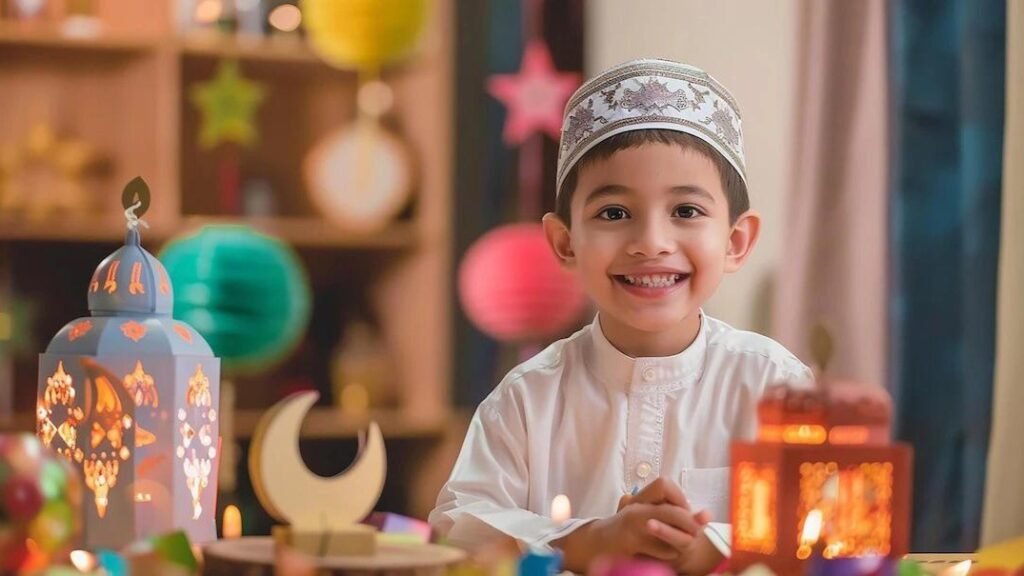
Make Fasting Age-Appropriate and Fun
For younger children, fasting can start gradually. Let them fast for a few hours or skip one meal. Praise their efforts and avoid comparisons with older siblings or adults.
Older children can engage more deeply with fasting. Ask them to reflect during the day: how they feel, what they are grateful for, and what lessons they are learning. Turning fasting into a shared family experience strengthens bonding and spiritual growth during Ramadan with kids.
Include Children in Meal Preparation
Cooking together is a fun and educational way to involve kids in Ramadan. Let children help prepare suhoor and iftar meals according to their abilities. Younger kids can wash vegetables or set the table, while older ones can chop ingredients or follow simple recipes.
Explain the importance of nutrition during fasting and involve them in meal planning. Contributing to meal preparation makes children feel connected and more appreciative of the effort behind every meal.
Stories and Lessons From the Quran for Kids
The Quran is full of teachings suitable for children when explained in simple language. Use stories of patience, generosity, honesty, and compassion to spark meaningful discussions. Ask questions like: “How do you think this character felt?” or “What would you do in their place?”
These discussions help children connect religious teachings to their daily life. Over time, kids internalize values and begin making ethical decisions independently, making Ramadan with kids an enriching experience.
Celebrate Achievements and Effort
Positive reinforcement motivates children. Celebrate milestones like completing a fast, performing extra prayers, or helping someone. Small rewards, verbal praise, or a simple high-five encourages them without materializing spirituality.
Consider a Ramadan journal where kids write or draw their experiences. Reviewing it together at the end of the month allows them to see how much they have grown spiritually and emotionally during Ramadan with kids.
Encourage Reflection and Gratitude
Ramadan is an ideal time to develop mindfulness. Encourage children to reflect on their actions, feelings, and relationships. Simple exercises like gratitude jars or noting moments of kindness help children cultivate empathy and awareness.
Reflection doesn’t need to be long—just a few minutes before bedtime or after iftar can help children connect with themselves and appreciate the blessings around them.
Involve the Whole Family in Community Activities
Children learn best by observing example. Participate in community iftars, charity drives, or mosque events together. Experiencing the communal side of Ramadan teaches social responsibility and belonging.
Family activities such as distributing food, visiting the elderly, or volunteering at shelters allow children to see the broader impact of Ramadan with kids beyond home rituals. These experiences leave lasting memories.
Balance Technology During Ramadan With Kids
Modern life is full of digital distractions. Set boundaries on screen time during Ramadan to allow children to focus on spiritual growth and family bonding.
Use technology positively: educational videos about Ramadan, virtual Quran lessons, or interactive activities aligned with the values of the month. Striking the right balance ensures children enjoy the modern world while embracing the sacredness of Ramadan with kids.

Extend Ramadan Lessons Beyond the Month
The lessons children learn during Ramadan should continue throughout the year. Encourage daily prayers, acts of kindness, and gratitude. Highlight that values like patience, generosity, and mindfulness are part of life, not just Ramadan.
Turning spiritual habits into lifelong practices helps children grow into responsible, empathetic, and thoughtful adults, carrying the lessons of Ramadan with kids into every day.
Final Thoughts
Making Ramadan with kids meaningful requires patience, creativity, and balance. By explaining significance, involving children in rituals, encouraging reflection, and celebrating their achievements, parents can create an enriching experience.
The essence of Ramadan lies in connecting with God, family, and community. When children experience this month thoughtfully, it becomes a joyful journey of growth, compassion, and spirituality—one that will be remembered and cherished for a lifetime.
Do follow UAE Stories on Instagram
Ultimate Ramadan Beauty and Grooming Trends You Must Try