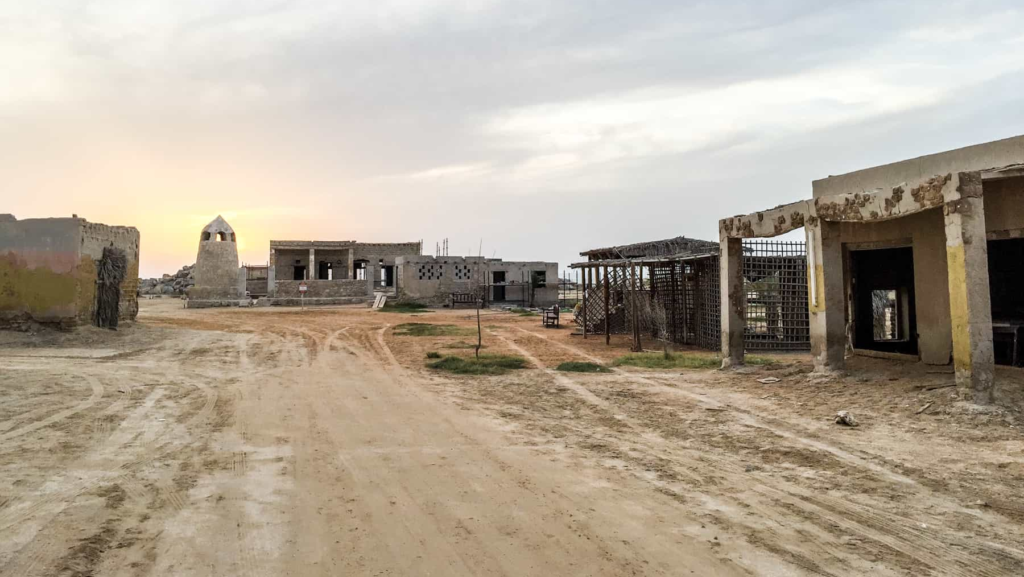
Hidden along the coast of Ras Al Khaimah, the Al Jazirah Al Hamra Ghost Town stands as one of the most haunting and emotionally powerful heritage sites in the United Arab Emirates. Unlike imagined ghost towns built for spectacle, this village was once alive with families, trade, prayer, and tradition. Today, its coral-stone houses, collapsed roofs, and silent mosques tell a deeply human story of survival, transition, and loss.
Abandoned in the mid-20th century, Al Jazirah Al Hamra remains one of the best-preserved traditional villages in the region. It offers a rare and intimate glimpse into life before oil transformed the Gulf forever.
Origins of a Coastal Settlement
Al Jazirah Al Hamra was founded in the late 18th century, around 1768, by the Al Zaab tribe. The settlement grew on a natural island connected to the mainland, strategically positioned near rich pearl beds. At its height during the 19th and early 20th centuries, the village supported a population of approximately 2,000 people.

The economy of the village revolved around pearl diving, fishing, boat building, and small-scale trade. Men spent months at sea during pearl-diving seasons, while women managed households and preserved food. Children grew up surrounded by the rhythms of the tide, the call to prayer, and the close-knit bonds of tribal life.
Architecture Shaped by Climate and Community
The architecture of Al Jazirah Al Hamra reflects remarkable ingenuity. Homes were built from coral stone, sea rocks, palm fronds, and mangrove wood. Many houses featured wind towers, designed to funnel cooler air into living spaces during intense summers.

The village was divided into residential quarters, markets, mosques, and open courtyards. Narrow pathways offered shade and protection from desert winds. Unlike modern urban planning, every structure here was built with community interaction and environmental harmony in mind.
Even in decay, the layout reveals how architecture once served social unity rather than individual luxury.
Religious and Social Life
Religion played a central role in daily life. Al Jazirah Al Hamra contained several mosques, including a large Friday mosque built in the early 19th century. These mosques were not just places of worship but also centers for discussion, education, and decision-making.
Social life revolved around shared responsibilities. Weddings, funerals, pearl departures, and returns were communal events. Oral storytelling preserved history, while poetry and songs reflected both hardship and hope. The village functioned as a living organism, each member essential to its survival.
Decline of the Pearl Industry
The decline of Al Jazirah Al Hamra began in the 1930s with the collapse of the global pearl market. The introduction of cultured pearls from Japan drastically reduced demand for natural Gulf pearls. Economic hardship followed, forcing families into debt and uncertainty.
By the 1940s, life had become increasingly difficult. Many residents struggled to maintain livelihoods as traditional income sources disappeared. Despite resilience and adaptation, the village faced a future that no longer supported its way of life.
Abandonment and the Oil Era
The final abandonment occurred in the late 1960s, shortly before the formation of the UAE in 1971. The discovery of oil in nearby regions brought modern housing, healthcare, education, and employment opportunities. Families gradually relocated to newly developed areas offering stability and infrastructure.
Unlike sudden disasters that erase towns overnight, Al Jazirah Al Hamra faded slowly. Homes were left with belongings still inside. Doors remained open. The silence that followed was not violent, but deeply emotional.
Preservation Through Stillness
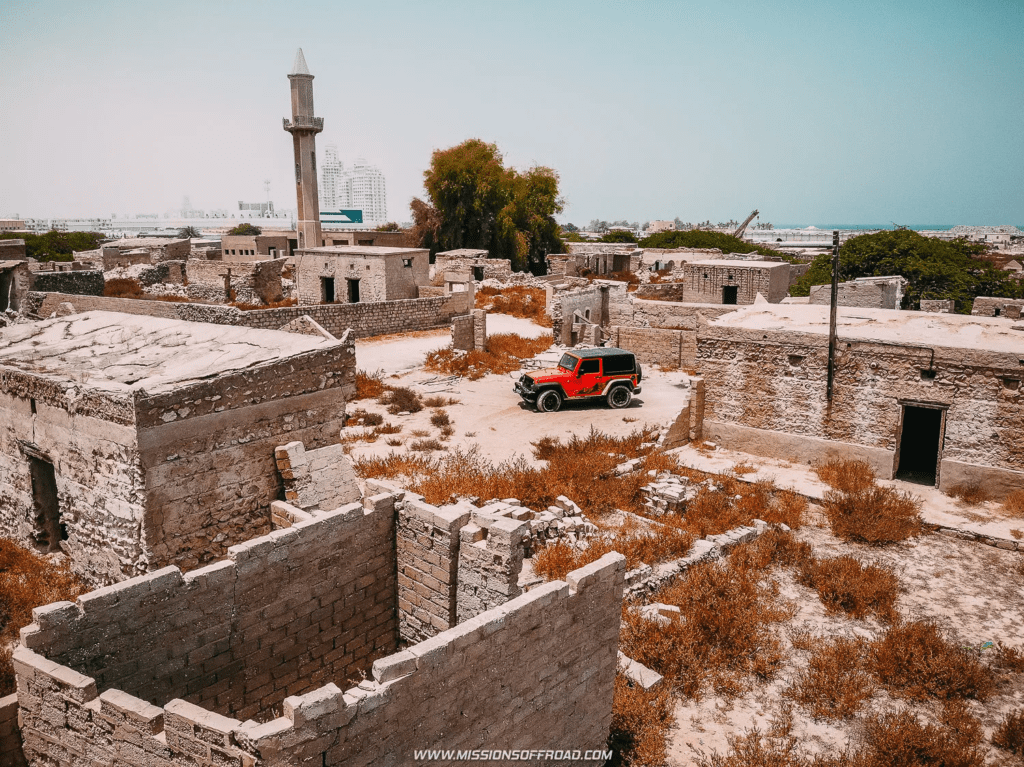
What makes Al Jazirah Al Hamra exceptional is the absence of aggressive redevelopment. While many historic villages across the Gulf were demolished, this town remained largely untouched. Nature and time took over, preserving structures in an honest state of decay.
Cracked walls, faded plaster, and collapsing roofs reveal layers of history rather than erasing them. Each house tells a story, not through plaques or guides, but through space, texture, and absence.
Myths, Legends, and Modern Curiosity
Over time, the village became associated with local myths and ghost stories. While no historical evidence supports supernatural claims, the atmosphere undeniably feels heavy with memory. Empty rooms echo with imagination, and shadows stretch long at sunset.
Today, Al Jazirah Al Hamra attracts historians, photographers, filmmakers, and travelers seeking authenticity. It has been featured in documentaries and cultural studies focused on pre-oil Gulf society.
Cultural Significance Today
In recent years, preservation efforts have increased. Authorities now recognize the village as a cultural heritage site, ensuring its protection for future generations. Restoration is careful and minimal, respecting original materials and layout.
The ghost town serves as an educational bridge between generations. It reminds modern residents of the sacrifices and resilience that built the foundation of contemporary life in the Emirates.
A Living Memory, Not a Ruin
Al Jazirah Al Hamra Ghost Town is not simply abandoned architecture. It is a living memory of endurance, adaptation, and identity. Walking through its streets is an emotional experience, connecting visitors to a time when survival depended on community, courage, and the sea.
In a region defined by rapid transformation, this silent village stands firm, offering balance between progress and remembrance. It proves that history does not need to be rebuilt to be powerful. Sometimes, it only needs to be preserved exactly as it was left behind.
Do follow UAE Stories on Instagram
Read Next – Phobia Dubai: Inside the City’s Ultimate Fear Experience