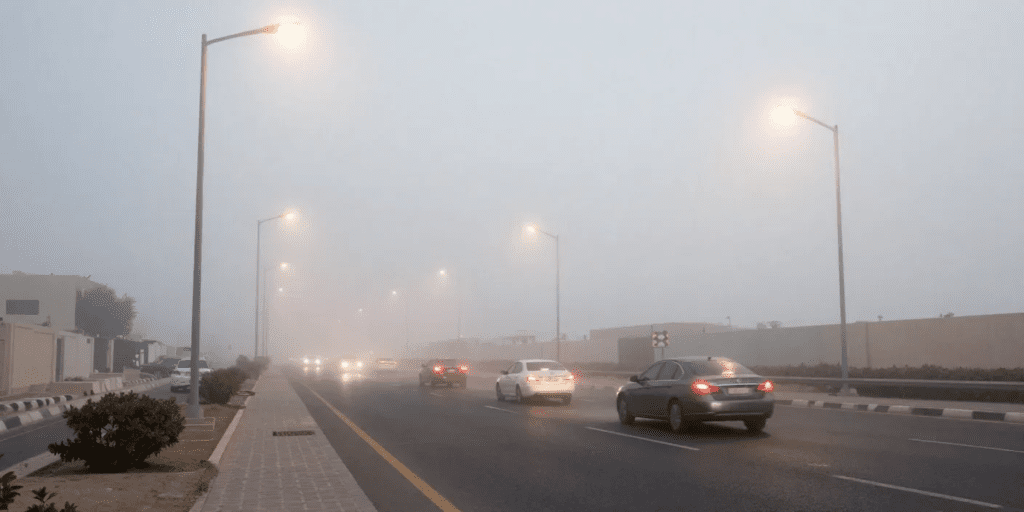
The National Centre of Meteorology has issued a fog alert after visibility levels dropped across several internal and coastal regions of the United Arab Emirates, raising renewed concerns about road safety during early morning travel. The advisory highlights the recurring nature of fog during cooler months, when calm winds and elevated humidity combine to create conditions that significantly reduce horizontal visibility.
Fog formation has once again drawn attention to the challenges faced by motorists who rely on major road corridors connecting inland areas with coastal cities. These routes are essential for daily commuters, logistics operations, and inter-emirate travel, making any disruption a matter of public safety and planning rather than inconvenience alone.
Why fog forms frequently across the UAE
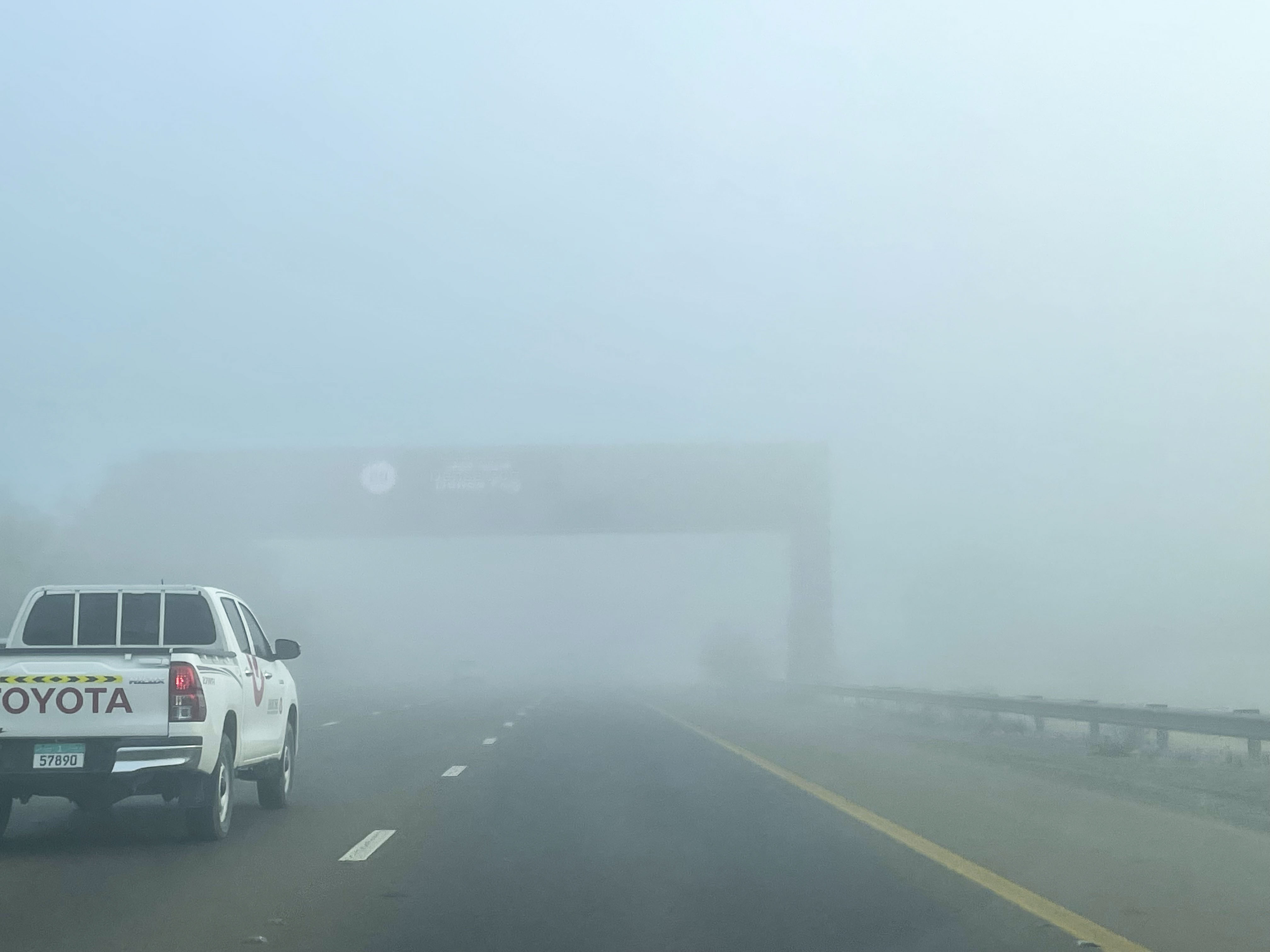
Fog in the UAE is most common during cooler periods when overnight temperatures drop and moisture in the air condenses near the ground. Light winds prevent the dispersion of this moisture, allowing fog to settle and linger, particularly in low-lying areas, desert fringes, and regions close to the coastline.

Internal areas often experience radiation fog, which forms when the ground cools rapidly after sunset. Coastal zones, on the other hand, are more prone to advection fog, where humid air moves over cooler land surfaces. These natural processes are well understood by meteorologists, yet their impact on daily life can be significant when visibility drops sharply within a short span of time.
Such conditions tend to develop quietly and intensify suddenly, catching drivers off guard if they are not prepared. This unpredictability is one of the main reasons weather advisories play a critical role in public safety planning.

Impact on key road networks and daily movement
Reduced visibility caused by fog directly affects major highways linking internal regions with coastal cities. These roads support heavy traffic volumes, especially during early morning hours when commuters, freight vehicles, and public transport services are most active.
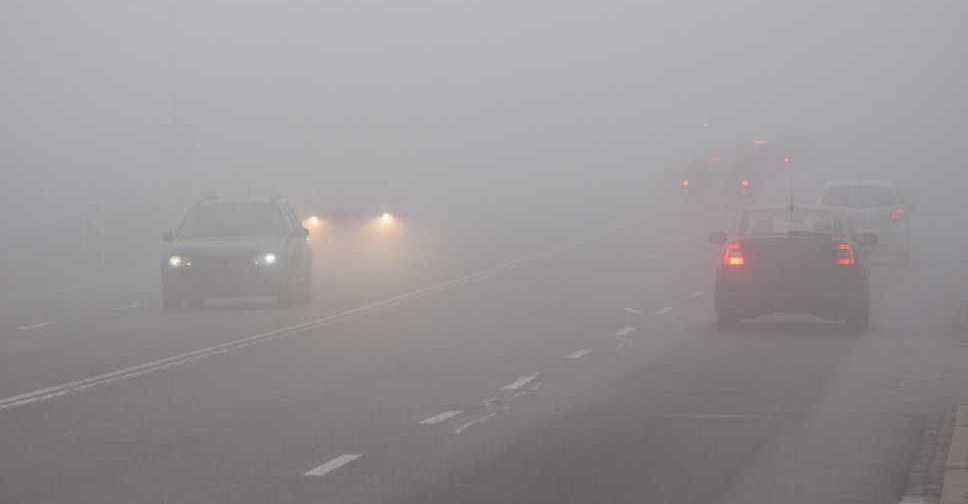
When visibility drops, drivers may struggle to judge distances accurately, increasing the risk of rear-end collisions and sudden braking. Traffic flow often slows as motorists attempt to navigate cautiously, which can lead to congestion and heightened stress levels behind the wheel.
Authorities have noted that fog-related incidents are more likely when drivers underestimate the severity of conditions or fail to adjust their driving behaviour accordingly. This makes awareness and compliance with safety advisories essential for preventing avoidable accidents.

Safety guidance issued for motorists
In response to the fog alert, motorists have been urged to adopt preventive measures to reduce risks while travelling. Lowering speed is one of the most effective steps drivers can take, as it allows more time to react to sudden changes in traffic conditions or unexpected obstacles.
Maintaining a safe following distance is equally important. Fog reduces depth perception, making vehicles ahead appear farther away than they actually are. Keeping extra space between cars helps prevent chain-reaction accidents if traffic slows abruptly.
Drivers have also been advised to remain attentive to electronic message boards and traffic instructions, which often display real-time updates and speed adjustments during adverse weather. These systems are designed to guide motorists safely through challenging conditions and should be followed without hesitation.
Proper vehicle lighting and driving discipline
Ensuring that vehicle lights are functioning correctly is another key aspect of safe driving in fog. Low-beam headlights and fog lights improve visibility without causing glare, while high-beam headlights should be avoided as they can reflect off fog particles and worsen visibility.
Authorities have reminded drivers not to use hazard lights while the vehicle is in motion. Although well-intentioned, this practice can confuse other road users and make it harder to judge the movement of traffic. Hazard lights should only be used when a vehicle is stationary and poses a potential obstruction.
Smooth, predictable driving is strongly encouraged. Sudden lane changes, abrupt braking, or aggressive manoeuvres can be especially dangerous when visibility is limited and reaction times are reduced.
Coordinated response from traffic authorities
As part of precautionary measures, Abu Dhabi Police have activated variable speed limits on affected road sections to enhance safety during foggy conditions. Speed reduction systems are commonly deployed during low-visibility events to minimise the severity of potential accidents and maintain orderly traffic flow.
These measures reflect a coordinated approach between meteorological services and traffic authorities, aimed at protecting lives rather than reacting after incidents occur. By adjusting speed limits and issuing timely alerts, authorities seek to reduce the likelihood of serious collisions during challenging weather.
Such proactive responses also help reinforce a culture of shared responsibility, where drivers, enforcement agencies, and weather experts work together to manage risks on the road.
The role of public awareness and preparedness
Fog alerts serve as more than just warnings; they are reminders of how environmental conditions can influence everyday activities. Regular commuters who stay informed about weather advisories are better equipped to plan their journeys, allow extra travel time, and adjust their expectations when conditions are less than ideal.
Public awareness campaigns and social media updates have become valuable tools in spreading timely information. When drivers understand why certain measures are implemented, such as reduced speed limits or advisory messages, compliance tends to improve.
Preparedness also extends beyond driving habits. Simple steps like checking weather updates before leaving home and ensuring vehicles are well maintained can make a meaningful difference during foggy conditions.
Looking ahead: balancing mobility and safety
Fog is a natural and recurring phenomenon in the UAE, particularly during cooler periods, and it is unlikely to be eliminated entirely. However, its impact on road safety can be managed effectively through early warnings, infrastructure support, and responsible driving behaviour.
The latest fog alert underscores the importance of vigilance, patience, and cooperation on the roads. While reduced visibility may slow movement temporarily, prioritising safety ensures that commuters reach their destinations without incident.
By staying informed, respecting advisories, and adapting to changing conditions, motorists contribute to a safer driving environment for everyone. In the long run, this collective approach helps balance the demands of mobility with the fundamental need to protect lives on the UAE’s roads.
Do follow UAE Stories on Instagram
Read Next – Dubai Police Caution Jobseekers Against Fake Work Visa Fraud