Hollywood has always been in search of spectacular locations that capture the imagination of audiences. Over the years, the UAE has emerged as one of the most stunning and versatile filming destinations. From futuristic skylines to vast deserts, the Emirates offer filmmakers both authenticity and glamour.
The journey began two decades ago with George Clooney’s political thriller Syriana. The film, set in a fictional Arabian Gulf oil state, starred Clooney alongside Matt Damon and Amanda Peet. Several iconic locations across Dubai, including the Burj Al Arab hotel, Al Fahidi Historical Neighbourhood, and surrounding deserts, featured prominently in the movie. Syriana became a turning point, not only for Hollywood but also for the UAE’s presence on the global film map.
George Clooney and Syriana: UAE’s First Big Break
Syriana marked the UAE’s first significant Hollywood project. George Clooney won an Oscar for his role, highlighting the global reach of a film shot partially in the Emirates. For the Abu Dhabi Film Commission, which was established four years later, Syriana laid the groundwork for attracting more international productions.

At the time, the UAE was beginning to explore ways to diversify its economy beyond oil, and the film industry became a key avenue. By inviting Hollywood productions, the country not only sought global attention but also aimed to nurture a local film ecosystem. Developing infrastructure for Emiratis to tell their own stories became a parallel goal, ensuring that Hollywood visits were both commercially rewarding and culturally enriching.
The Burj Khalifa Moment: Tom Cruise’s Daring Stunt
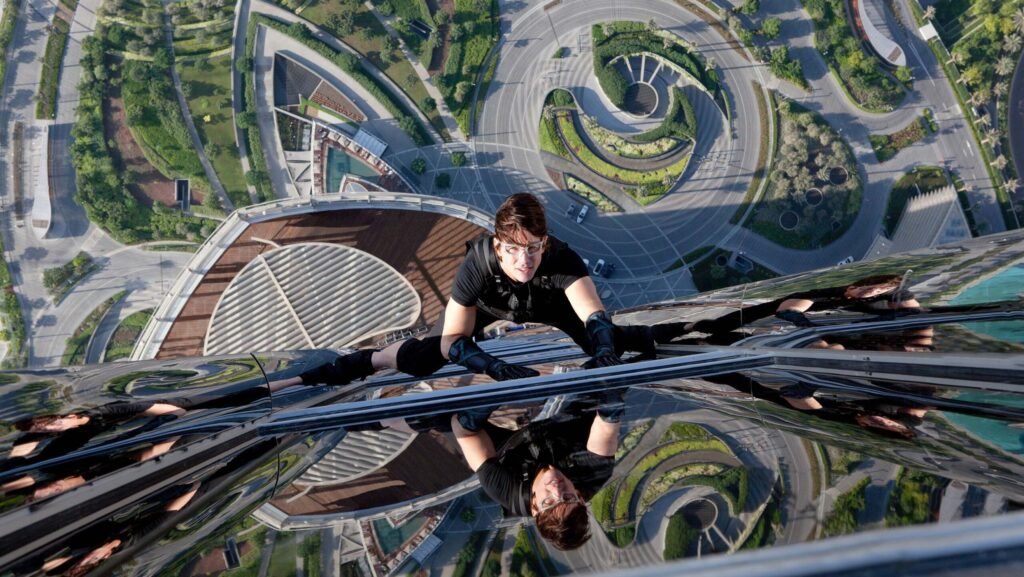
Hollywood’s love for the UAE took a dramatic turn in 2011 with Mission: Impossible – Ghost Protocol. Tom Cruise’s jaw-dropping stunt atop the Burj Khalifa, the world’s tallest building, captured global attention and demonstrated the UAE’s potential for cinematic spectacle.

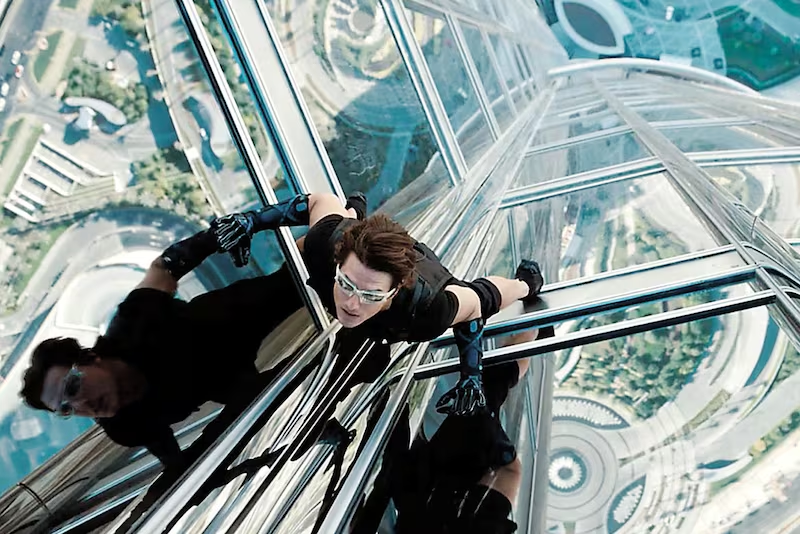
Filmmakers are always on the lookout for locations that feel fresh and unseen. Dubai and Abu Dhabi offered not only visually striking landscapes but also modern infrastructure, making them ideal for large-scale productions. The success of Mission: Impossible opened the door to more blockbuster films, each using the UAE to its advantage.
From Star Wars to Dune: UAE as Iconic Film Landscape
Following Mission: Impossible, major franchises sought UAE locations for their epic stories. The Abu Dhabi desert, especially around Liwa Oasis, became the desert planet for Star Wars: The Force Awakens. It also served as the backdrop for Dune in 2021 and 2023. Dubai’s futuristic architecture was repurposed in Star Trek Beyond to represent a 23rd-century world.
Films like War Machine in 2017 and The Kingdom in 2007 used Abu Dhabi to double for international locations, including Afghanistan and Saudi Arabia. These productions demonstrated the versatility of the UAE, capable of representing both real and fictional settings.
UAE as Itself: Fast-Paced Action and Global Recognition
While the UAE initially stood in for other countries, filmmakers soon embraced it as a character in its own right. Furious 7 in 2015 showcased Emirates Palace, Yas Marina F1 Circuit, and Jumeirah at Etihad Towers in scenes that were unmistakably set in the UAE.
This trend continued with F1: The Movie in 2023, where Abu Dhabi’s Yas Marina became central to the story. Tom Cruise returned for Mission: Impossible – Dead Reckoning, performing stunts across the roof of Zayed International Airport, highlighting the UAE’s cutting-edge architecture and daring action sequences.
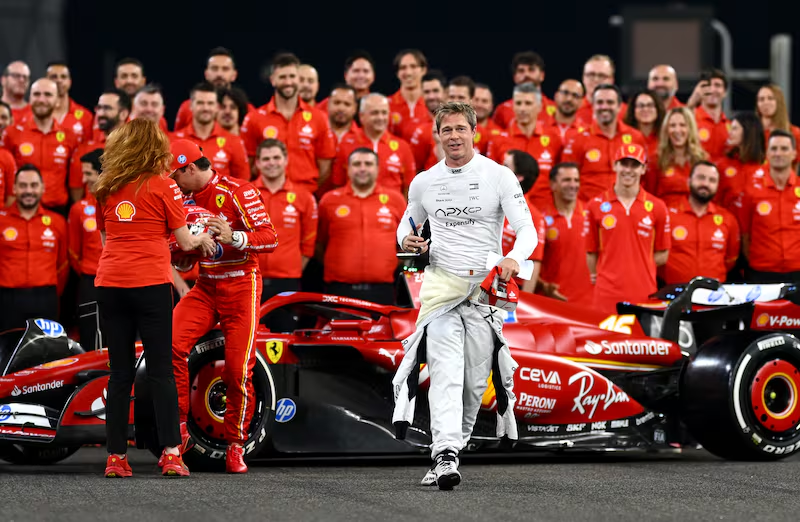
Using the location as itself benefits both the film and the host city. By showcasing the UAE in its true form, movies serve as powerful promotional tools, reaching global audiences without the need for traditional advertising. Films that feature real locations give viewers a sense of place, promoting tourism and cultural appreciation while building the UAE’s global image.
Supporting Local Talent and Arab Stories
The Abu Dhabi Film Commission has also focused on nurturing emerging Arab talent. One notable example is Wadjda, the first Saudi feature film directed by a woman, Haifaa Al Mansour. The film was made possible with a financial prize from the Commission, which helped fund the production and provided mentorship.
With over 300 million Arabic-speaking viewers in the region, there is a growing demand for culturally resonant stories. By supporting local filmmakers, the UAE not only builds its creative industry but also connects international audiences with authentic Arab narratives. Many local talents have begun their careers with the Commission, contributing to the country’s rising cinematic profile and building a pipeline of homegrown storytellers.
Abu Dhabi Film Commission: The Catalyst
Since its creation in 2009, the Abu Dhabi Film Commission has been central to the UAE’s film success story. By offering financial incentives such as a 35% cashback rebate, assistance with locations, and local expertise, the Commission has made it easier for Hollywood to bring its productions to the Emirates.
The Commission’s strategy combines attracting global productions with developing a domestic industry. While Hollywood blockbusters grab headlines, the ultimate goal is to empower Emirati storytellers, giving them the resources to create films for regional and global audiences alike. These initiatives ensure that while international films continue to showcase the UAE, local filmmakers are equipped to tell their own stories.
UAE on the Global Stage: A Win-Win for Tourism and Culture
The impact of Hollywood films goes beyond box office success. Each blockbuster shot in the UAE promotes the country’s stunning architecture, luxury resorts, and desert landscapes to millions of viewers worldwide. Iconic locations like Burj Khalifa, Yas Marina, and Liwa Oasis become symbols of modernity and adventure.
Movies also highlight the UAE’s ability to support large-scale productions, from logistics to safety and innovation. This exposure encourages tourism, investment, and cultural exchange, strengthening the UAE’s position as a global hub for entertainment and creativity. The UAE’s involvement in major franchises ensures it is recognized not just as a location but as an active participant in global storytelling.
Conclusion: Hollywood and the UAE – A Thriving Partnership
From George Clooney’s Syriana to Tom Cruise’s daring stunts and modern franchises like F1: The Movie, Hollywood has discovered the UAE as both a versatile backdrop and a cinematic star. The partnership has grown over two decades, supported by the Abu Dhabi Film Commission and a vision to foster local talent.
The UAE’s deserts, skyscrapers, and luxurious resorts continue to captivate filmmakers, proving that the Emirates are not just a stand-in for other locations but a destination in their own right. As Hollywood keeps seeking fresh and spectacular locations, the UAE is ready, offering a perfect blend of modernity, tradition, and cinematic magic.
Do follow UAE Stories on Instagram
Read Next – Abu Dhabi Approves New Residential Grant Transfer Rules