
QatarEnergy has taken a major step toward a cleaner energy future by awarding an engineering, procurement, and construction (EPC) contract to Samsung C&T Corporation. The project, based in Ras Laffan Industrial City, will capture and sequester up to 4.1 million tons of carbon dioxide (CO₂) every year. This large-scale initiative will serve the company’s existing liquefied natural gas (LNG) production facilities and marks one of the most ambitious carbon capture projects in the region. It reflects Qatar’s growing commitment to environmental sustainability and its determination to align energy development with climate goals.
Importance of the Contract
This contract represents a new chapter for QatarEnergy and the entire LNG sector. The energy industry has faced growing pressure to reduce carbon emissions while maintaining production levels to meet global demand. By investing in advanced carbon capture and storage (CCS) technology, QatarEnergy is demonstrating that large-scale energy producers can be part of the global solution to climate change. The partnership with Samsung C&T shows the importance of collaboration between major industrial players to achieve meaningful climate progress.
For Samsung C&T, this is another milestone in its expanding portfolio of large-scale engineering and environmental projects. The company’s selection highlights its strong technical expertise and proven record in executing complex EPC contracts. It also enhances its reputation as a leader in sustainable industrial development.

Project Overview
The new carbon capture and storage system will be integrated into the existing LNG production trains at Ras Laffan Industrial City. These facilities play a vital role in Qatar’s position as one of the world’s leading LNG exporters. Once operational, the system will capture carbon dioxide from gas processing streams, compress it, and safely inject it into underground geological formations for long-term storage. The project aims to capture about 4.1 million tons of CO₂ per year, a massive figure that underscores the scale of QatarEnergy’s environmental ambitions.
This project is part of QatarEnergy’s broader sustainability strategy, which includes reducing the carbon footprint of its operations, investing in renewable energy, and advancing technologies for emission reduction. By embedding CCS systems into its existing facilities, the company is turning its LNG operations into a model for cleaner fossil fuel production.

How the System Will Work
CO₂ Capture
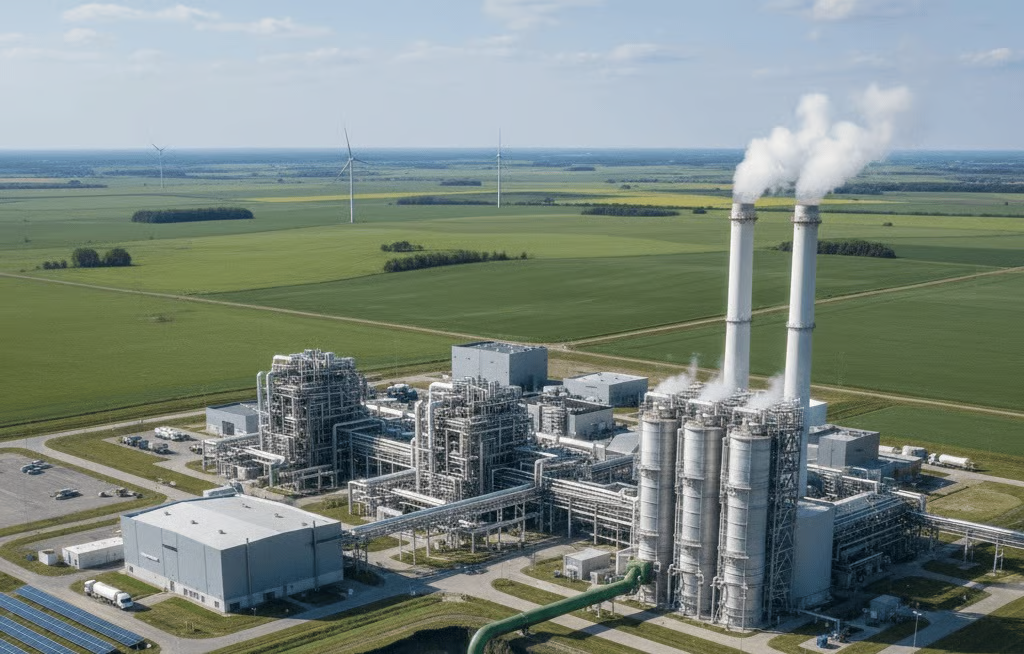
At the LNG facilities, carbon dioxide produced during gas processing will be separated using advanced capture systems. These systems will include specialized pipelines, compressors, and integration with existing infrastructure. The process will ensure that the gas streams leaving the facility contain minimal CO₂ emissions.
Compression and Transport
Once captured, the CO₂ will be compressed under high pressure and transported via dedicated pipelines to the designated injection sites. This phase involves careful engineering design to handle high pressures safely while ensuring minimal energy loss. Transport efficiency and safety are key priorities, given the volume of CO₂ involved.
Injection and Storage
At the final stage, the compressed carbon dioxide will be injected into deep underground geological formations. These formations, such as depleted gas reservoirs and saline aquifers, have been thoroughly studied to ensure safe and permanent storage. Monitoring systems will track the injected CO₂ to ensure there is no leakage and that the gas remains securely stored for decades to come.
Environmental and Strategic Benefits
The carbon capture project delivers major benefits both for QatarEnergy and for the environment. From an environmental perspective, capturing 4.1 million tons of CO₂ annually is equivalent to removing nearly a million cars from the road each year. This will help reduce the overall carbon intensity of LNG exports and support global climate targets. Strategically, the initiative positions QatarEnergy as a responsible and forward-looking energy company capable of meeting both market demand and environmental expectations.
For Qatar, the project supports the country’s national sustainability goals and strengthens its position as a global energy leader. It demonstrates that the region’s major oil and gas producers can adopt world-class emission reduction technologies without compromising economic growth or energy security.
Why Samsung C&T Was Selected
Samsung C&T has a long history of executing complex infrastructure and energy projects across Asia and the Middle East. The company is recognized for its innovation, safety standards, and project management expertise. Its experience with large-scale construction and advanced engineering solutions made it a natural fit for QatarEnergy’s ambitious CCS initiative. Samsung C&T’s involvement also ensures that international best practices in design, safety, and environmental protection will be followed throughout the project’s lifecycle.
Challenges Ahead
Despite its promise, the project comes with several technical and operational challenges. The first involves ensuring that the underground storage sites are safe and suitable for long-term CO₂ containment. Detailed geological studies and continuous monitoring will be required to guarantee the security of stored carbon. Another challenge lies in integrating the carbon capture system into a running LNG facility without major disruptions. This requires precise planning and coordination between engineering, operations, and maintenance teams.
The project will also face scrutiny from environmental groups and regulators. Transparency, safety, and accountability will be crucial to maintain public trust and demonstrate that carbon capture is not just a symbolic gesture but a genuine climate solution. Additionally, managing the high energy demand for compression and transport will be vital to ensure that the process remains efficient and economically viable.
Project Timeline and Next Steps
The EPC contract marks the beginning of the project’s detailed engineering and execution phase. Following this stage, procurement of equipment, site preparation, and construction will commence. The project will likely progress through several major milestones—engineering design, drilling of injection wells, installation of capture units, and commissioning of the system. Once operational, the plant will undergo a testing phase to verify performance and ensure safety before full-scale operation begins.
While QatarEnergy has not disclosed specific completion dates, large projects of this nature typically span several years from planning to full operation. As work advances, updates are expected to highlight key achievements such as the first CO₂ injection and the ramp-up to full capture capacity.
Global Impact and Industry Significance
This project has the potential to influence the future of the global LNG and energy industry. It shows that carbon-intensive operations can evolve and integrate sustainability into their business models. By combining traditional energy production with carbon reduction technologies, QatarEnergy is setting a new standard for environmental responsibility in the hydrocarbon sector.
Other major energy companies are likely to study this project as a model for their own decarbonization strategies. The success of the QatarEnergy-Samsung C&T initiative could encourage similar investments worldwide, particularly in regions with large industrial emissions. It also demonstrates that CCS can play a major role in balancing the world’s continued need for reliable energy with the urgent requirement to reduce greenhouse gas emissions.
Human and Economic Dimensions
Beyond environmental benefits, the project will create new job opportunities, stimulate technological innovation, and strengthen Qatar’s industrial capabilities. Thousands of engineers, technicians, and construction workers will be engaged throughout the project’s duration. Local suppliers and service providers will also benefit, contributing to the national economy. The project embodies a human dimension by linking economic growth with environmental care, offering a vision of progress that includes both prosperity and sustainability.
For the younger generation, this initiative serves as inspiration to pursue careers in renewable energy, environmental engineering, and sustainable development. It demonstrates that even traditional energy industries can contribute positively to global climate goals through innovation and collaboration.
Conclusion
QatarEnergy’s decision to award Samsung C&T the EPC contract for its massive carbon capture and storage project is a significant milestone in the global shift toward cleaner energy. By aiming to capture and store up to 4.1 million tons of CO₂ each year, QatarEnergy is proving that economic strength and environmental responsibility can coexist. This project not only strengthens Qatar’s leadership in the LNG market but also sets a powerful example for the world’s energy industry. As the project moves forward, it will be closely watched by governments, investors, and environmental organizations as a model for sustainable industrial transformation.
Do follow UAE Stories on Instagram
Read Next – Honeywell Executive Hails UAE’s Bold Smart Energy Leadership