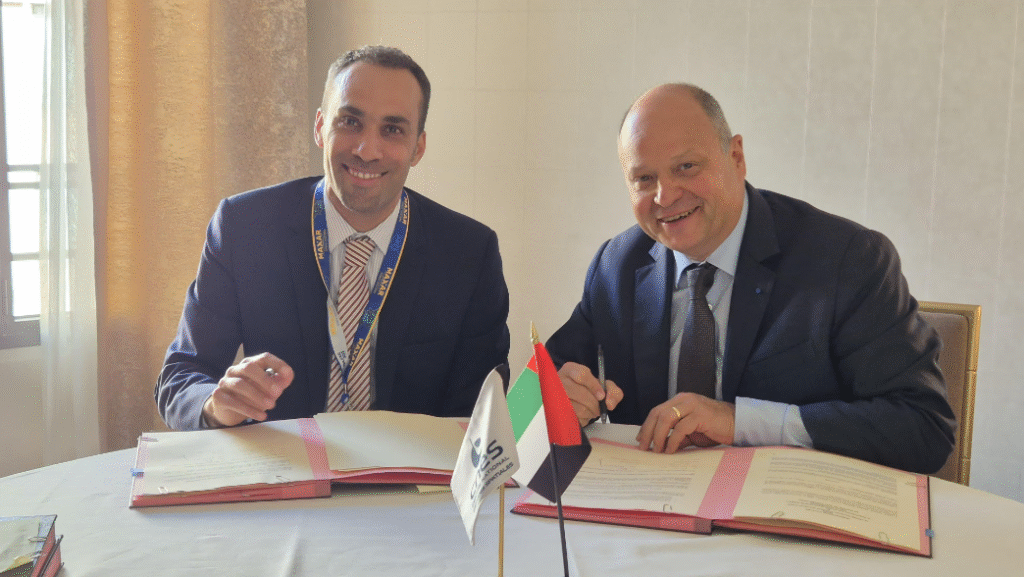
Dubai and French Space Agencies collaboration Rashid Rover 2 mission is entering a new era as the UAE and France deepen their cooperation to achieve a landmark lunar mission. This mission, the second Rashid Rover project, is designed to explore the Moon’s far side, pushing the boundaries of international space collaboration and scientific discovery. It reflects the UAE’s growing ambition in space technology and its desire to play a leading role in global lunar exploration.
Building on a Strong Partnership
The collaboration between the United Arab Emirates and France has grown steadily over the years. The first Rashid Rover mission laid the foundation for technical cooperation, knowledge exchange, and shared scientific goals. The Rashid Rover 2 mission builds on this foundation, with both nations committed to combining expertise to tackle the unique challenges of lunar exploration.
The partnership is not just symbolic. It involves the sharing of advanced technology, testing protocols, and joint engineering efforts. Dubai’s space agency, the Mohammed Bin Rashid Space Centre (MBRSC), and France’s National Centre for Space Studies (CNES) are working closely to ensure that the rover is equipped with the most advanced instruments for scientific research.

Advanced Scientific Instruments
One of the most significant aspects of this collaboration is the provision of advanced scientific instruments by the French side. High-resolution cameras and imaging modules will be installed on Rashid Rover 2 to capture detailed images of the lunar terrain. These instruments will allow scientists to study the Moon’s surface, geological structures, and environmental conditions in unprecedented detail.
The imaging systems are designed to provide real-time data that will help scientists understand lunar surface features, temperature fluctuations, and the interaction of the Moon’s surface with solar radiation. Such detailed observations are essential for future lunar exploration missions, including human landings and the construction of lunar infrastructure.

Preparing for Lunar Challenges
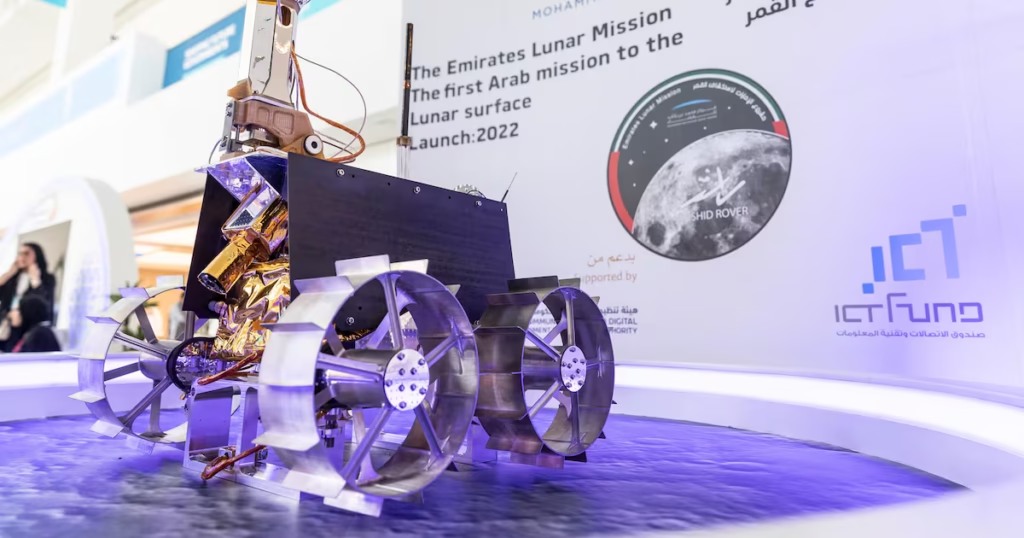
Operating on the Moon is far from easy. The lunar environment is harsh, with extreme temperature variations, high radiation levels, and rough terrain. To prepare the Rashid Rover 2 for these challenges, rigorous testing is underway. The rover is undergoing thermal vacuum tests that simulate the conditions of space and the lunar surface.
These tests ensure that every system, from the rover’s wheels to its communication equipment, can withstand the harsh conditions it will encounter. Engineers are focusing on thermal management, energy efficiency, and the durability of mechanical components. These preparations are crucial for a successful mission and will help prevent failures during the rover’s operations on the Moon.
Mission Objectives and Scientific Goals
The Rashid Rover 2 mission has clear scientific objectives that will expand our understanding of the Moon. One of the key goals is to study the properties of lunar soil and dust. Lunar dust poses significant challenges for equipment and human activity due to its abrasive nature and tendency to cling to surfaces. The rover will test different materials to assess their resistance to dust adhesion, which will inform the design of future lunar machinery, spacesuits, and habitats.
Another important objective is studying temperature variations on the Moon’s far side. These variations influence the behavior of lunar soil, surface materials, and potential resources. The rover’s instruments will gather data to support future missions, particularly those aimed at establishing long-term human presence or mining lunar resources.
Additionally, Rashid Rover 2 will analyze the Moon’s photoelectron sheath—a layer of charged particles on the surface caused by solar radiation. Understanding this phenomenon is essential for the design of electronic systems, communication devices, and scientific instruments for both robotic and crewed missions.
Communication and Data Collection
Operating on the far side of the Moon poses a unique challenge: direct communication with Earth is not possible due to the Moon’s obstruction. The Rashid Rover 2 mission has implemented solutions to ensure uninterrupted communication. A radio transmitter on board the rover will relay data to lunar orbiters or other infrastructure, enabling scientists on Earth to receive information in real time.
This setup allows the rover to transmit high-resolution images, temperature readings, and other scientific data back to mission control. The ability to maintain consistent communication is critical for mission success, particularly when exploring regions that have never been studied in detail.
Strategic International Collaboration
The Rashid Rover 2 mission is a clear example of how international collaboration can advance space exploration. By combining resources and expertise, the UAE and France are achieving results that would be far more difficult independently. The French contribution of advanced imaging systems and testing expertise complements the UAE’s engineering and mission management capabilities.
This partnership also strengthens diplomatic and scientific ties between the two nations. The mission serves as a platform for training engineers, exchanging knowledge, and fostering innovation. It positions both countries as key contributors to the next generation of lunar exploration.
Preparing for the Lunar Landing
The deployment of Rashid Rover 2 requires a reliable lunar lander to carry it safely to the Moon’s surface. Careful planning and engineering are underway to ensure that the rover lands on a suitable site that allows maximum scientific exploration. Engineers are evaluating terrain features, surface stability, and potential hazards to identify the safest landing zones.
Once on the Moon, the rover will deploy its scientific instruments, conduct tests, and begin transmitting data back to Earth. Every step of the mission, from launch to landing and surface operations, is being meticulously planned to reduce risk and maximize the mission’s scientific output.
Funding and Support
The Rashid Rover 2 mission is supported by significant investment from the UAE. Funding comes from national agencies that focus on science, technology, and innovation, reflecting the strategic importance of space exploration for the country. The investment enables the UAE to acquire cutting-edge technology, collaborate internationally, and train a new generation of space engineers.
The mission also has broader economic and educational impacts. It inspires students, encourages careers in STEM fields, and showcases the UAE’s commitment to contributing to global scientific knowledge.
Inspiring the Next Generation
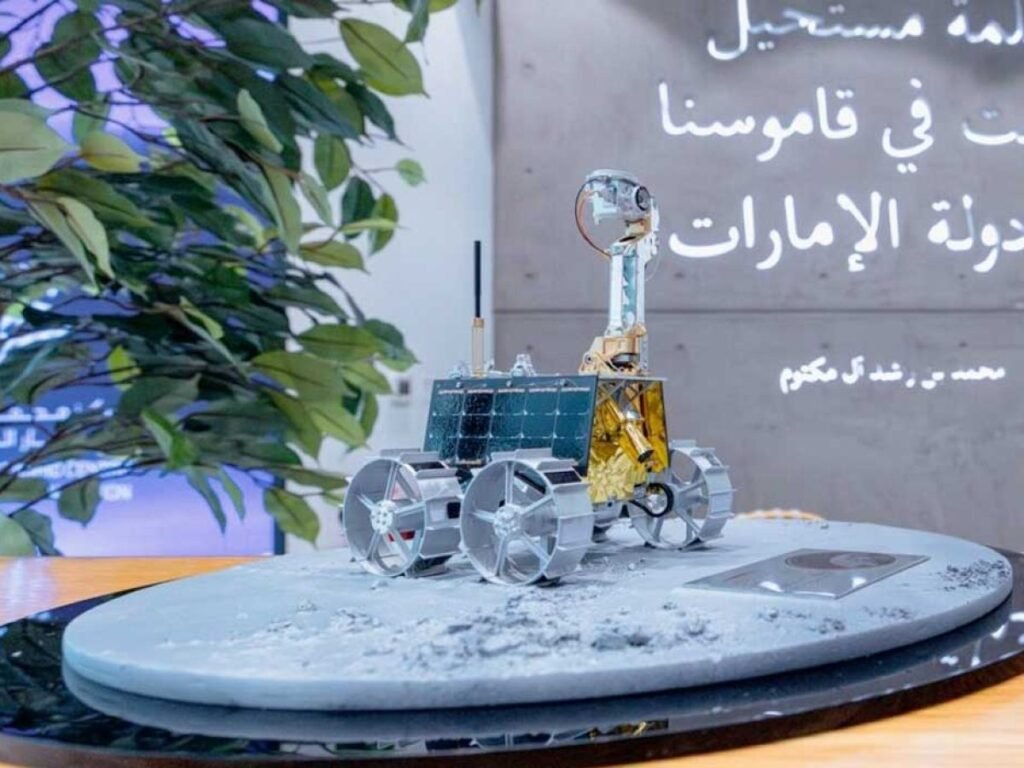
Beyond its scientific objectives, Rashid Rover 2 has an important role in education and public engagement. The mission captures the imagination of students and young professionals, demonstrating what is possible through science and international cooperation. By highlighting the UAE’s achievements in space, the mission encourages the next generation to pursue careers in science, technology, engineering, and mathematics.
Public engagement initiatives include educational programs, interactive content, and outreach events designed to make space exploration accessible and exciting. This mission becomes not just a technical achievement but a source of inspiration and national pride.
Global Implications
The success of Rashid Rover 2 will have implications beyond the UAE and France. Data collected from the Moon’s far side will contribute to global knowledge about lunar geology, surface conditions, and environmental hazards. This information is valuable for all nations planning lunar missions and will support future international exploration projects.
The mission demonstrates the benefits of collaboration in space science. By pooling expertise and sharing resources, countries can achieve more ambitious goals and accelerate the pace of discovery. Rashid Rover 2 sets a model for future multinational projects that explore the Moon, Mars, and beyond.
Looking Ahead
As the launch date approaches, preparations are intensifying. Engineers and scientists continue to test the rover, refine mission plans, and ensure that every system is fully operational. The UAE and France are committed to making Rashid Rover 2 a success, representing a landmark in international space cooperation.
The mission is more than a technological feat—it is a statement of ambition, vision, and the potential of collaboration. By combining expertise, innovation, and determination, Dubai and its French partners are pushing the boundaries of what is possible in lunar exploration.
Rashid Rover 2 promises to provide invaluable data, inspire future generations, and position the UAE as a major contributor to global space science. The world will be watching as this historic mission unfolds, marking a new chapter in humanity’s exploration of the Moon.
Do follow UAE Stories on Instagram
Read Next – Dubai Municipality Removes 1,387 Abandoned Vehicles in First Half of 2025