
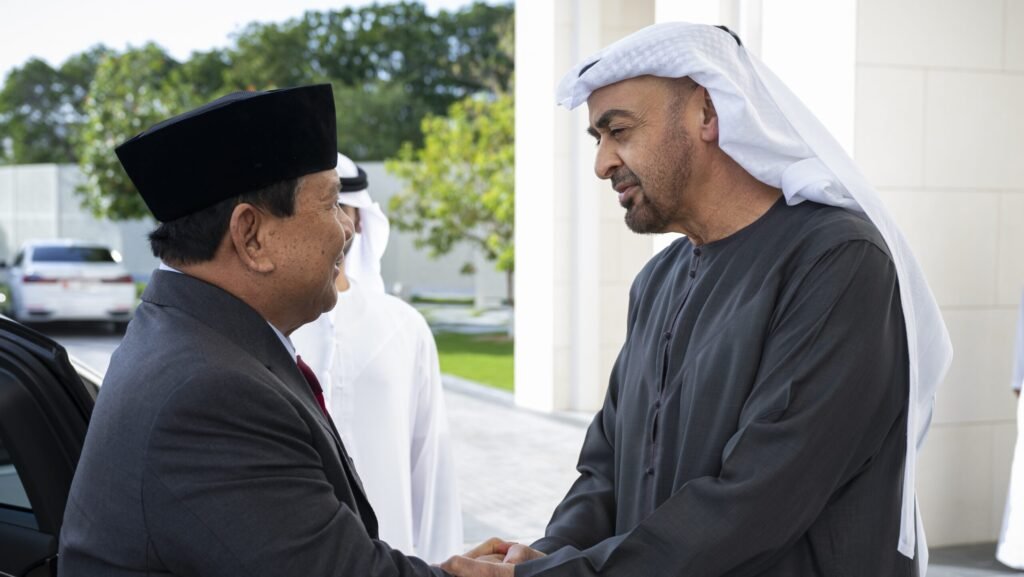
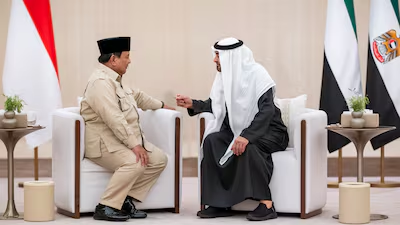
UAE-Indonesia bilateral relations took center stage in Abu Dhabi recently as President Sheikh Mohamed bin Zayed Al Nahyan welcomed Indonesian President Prabowo Subianto for high-level talks. The meeting reflected the shared commitment of both nations to strengthen their partnership in diverse sectors, from economic cooperation to cultural diplomacy. This visit is a significant milestone in the ongoing journey to deepen mutual trust, investment opportunities, and regional collaboration.
A Warm Diplomatic Welcome
President Prabowo Subianto’s arrival in Abu Dhabi was met with a distinguished reception, emphasizing the importance of this diplomatic engagement. The ceremonial welcome, featuring UAE officials and senior dignitaries, underscored the value the UAE places on its relationship with Indonesia. Such warm hospitality reflects the historic ties and shared aspirations of both countries for regional and global progress.
The reception set a positive tone for the discussions that followed, signaling mutual respect and a strong willingness to collaborate. Leaders from both nations exchanged greetings and shared their enthusiasm for advancing bilateral cooperation in multiple areas.

Enhancing Economic Cooperation
One of the core focuses of the meeting was enhancing economic ties. UAE and Indonesia share strong potential in trade, investment, and infrastructure development. Discussions explored avenues to strengthen the Comprehensive Economic Partnership Agreement, focusing on expanding trade flows, encouraging joint ventures, and boosting investment in strategic sectors.
Both leaders acknowledged the complementary strengths of their economies. The UAE’s position as a global investment hub and Indonesia’s dynamic and growing economy provide a fertile ground for partnerships in renewable energy, technology, logistics, and tourism. Collaborative projects in these areas can enhance economic resilience, create employment opportunities, and drive long-term growth.

Investment in Renewable Energy and Sustainability
A major highlight of the discussions was renewable energy and sustainable development. Both nations recognize the urgency of transitioning toward cleaner energy sources, addressing climate change, and ensuring energy security for their populations. Talks focused on investment opportunities in solar and wind energy, green infrastructure, and sustainable urban development.
By fostering partnerships in renewable energy, UAE and Indonesia aim to contribute to global efforts to combat climate change while simultaneously stimulating economic growth. Joint initiatives may include technology transfer, research collaborations, and large-scale energy projects that benefit both countries.
Trade Relations and Strategic Industries
Trade relations were another significant focus of the Abu Dhabi talks. Both leaders discussed the potential for expanding exports and imports across key sectors such as oil and gas, manufacturing, agriculture, and high-tech industries. Emphasis was placed on diversifying trade portfolios, encouraging private sector participation, and supporting small and medium-sized enterprises to engage in bilateral trade.
Strategic industries, including defense, aviation, and logistics, were also discussed. Collaboration in these areas is expected to enhance both countries’ capabilities, strengthen supply chains, and ensure that bilateral relations are resilient in the face of global challenges.
Regional Security and Cooperation
The UAE-Indonesia bilateral relations extend beyond economic interests to include security and regional stability. The meeting highlighted the importance of collaboration in addressing regional security challenges, counterterrorism, and ensuring peace in the broader Middle East and Southeast Asia regions. Both leaders expressed solidarity on critical issues and shared their commitment to multilateral dialogue to promote security and stability.
A key topic was the recent regional crises, emphasizing the importance of coordinated efforts to maintain peace and uphold international law. Through open dialogue and joint initiatives, UAE and Indonesia reaffirmed their role as responsible actors in the global community, promoting stability and constructive engagement with other nations.
Cultural and Religious Diplomacy
Beyond politics and economics, cultural and religious diplomacy was a significant part of the discussions. UAE and Indonesia share deep cultural, historical, and religious bonds. Both nations highlighted the importance of fostering interfaith dialogue, preserving cultural heritage, and promoting mutual understanding between peoples.
The UAE has previously supported initiatives in Indonesia, such as the construction of mosques, educational institutions, and cultural centers, demonstrating its commitment to nurturing cultural ties. These initiatives not only strengthen people-to-people connections but also serve as bridges of understanding between diverse communities.
Education and Knowledge Exchange
Education and knowledge exchange were identified as key areas for future collaboration. Both countries agreed on the importance of promoting student exchanges, scholarships, and academic partnerships. By investing in education, UAE and Indonesia aim to develop human capital, foster innovation, and empower the next generation of leaders.
Joint programs in higher education, research institutions, and vocational training can provide opportunities for youth in both nations to acquire skills essential for the global economy. These initiatives contribute to long-term societal development while reinforcing the strategic partnership.
Healthcare Collaboration
Healthcare was another area of interest highlighted during the discussions. Both nations emphasized the importance of cooperation in medical research, pharmaceutical development, and healthcare infrastructure. By sharing expertise and resources, UAE and Indonesia can strengthen their healthcare systems and enhance public health outcomes.
Joint initiatives may include collaborative research in advanced medical technologies, establishing training programs for healthcare professionals, and supporting innovative health solutions to meet growing population needs. These efforts align with the broader vision of sustainable development and societal well-being.
Tourism and Hospitality Partnerships
Tourism emerged as a key sector for bilateral growth. UAE and Indonesia have significant tourism potential, with both nations offering unique cultural, historical, and natural attractions. The discussions focused on promoting tourism exchanges, investment in hospitality infrastructure, and joint initiatives to attract international travelers.
Collaborations in this sector can generate revenue, create employment opportunities, and enhance cultural understanding. Initiatives may include joint marketing campaigns, tourism fairs, and hospitality training programs to ensure high standards of service and mutual benefit.
Technology and Innovation
Innovation and technology also featured prominently in the talks. Both leaders recognized the transformative role of digital technology in economic development and governance. Areas of interest included smart cities, fintech, artificial intelligence, and digital infrastructure.
Partnerships in technology can accelerate growth, improve public services, and foster entrepreneurship. By leveraging each country’s strengths in innovation, UAE and Indonesia can develop cutting-edge solutions that address contemporary challenges while enhancing competitiveness in global markets.

Strengthening Multilateral Engagements
The UAE-Indonesia bilateral relations are strengthened through active participation in international organizations and multilateral forums. Both countries underscored the importance of collaborating on global challenges such as climate change, peacekeeping, sustainable development, and humanitarian initiatives.
By working together on international platforms, UAE and Indonesia can amplify their influence, contribute to global stability, and promote shared values of cooperation and mutual respect. These efforts reinforce the strategic importance of their bilateral partnership in a rapidly changing world.
Future Prospects
Looking ahead, the UAE-Indonesia bilateral relations are poised for significant growth. The discussions in Abu Dhabi laid the foundation for enhanced collaboration across multiple sectors, from economic development to cultural diplomacy. The leaders’ commitment to mutual growth, regional stability, and sustainable development signals a promising future for both nations.
Potential upcoming projects may include large-scale renewable energy initiatives, investment in strategic industries, educational exchanges, healthcare partnerships, and tourism development. These efforts are expected to yield tangible benefits for citizens of both countries and strengthen the long-term strategic alliance.
Conclusion
The meeting between President Sheikh Mohamed bin Zayed Al Nahyan and President Prabowo Subianto in Abu Dhabi represents a milestone in UAE-Indonesia bilateral relations. Through discussions spanning economics, culture, security, education, and technology, both leaders have charted a clear path toward deeper cooperation and shared prosperity.
This engagement underscores the commitment of both nations to nurture strong ties, address regional and global challenges, and promote mutual growth. As UAE and Indonesia continue to build upon this foundation, their strategic partnership will likely serve as a model for effective international collaboration in the years to come.
UAE-Indonesia bilateral relations are no longer just a diplomatic formality; they are a dynamic partnership aimed at creating meaningful impact in multiple spheres, strengthening ties between two influential nations, and fostering a brighter, more prosperous future for their citizens and the wider region.
Do follow UAE Stories on Instagram
Read Next – Shabestan Dubai: 40 Years of Iranian Culinary Excellence