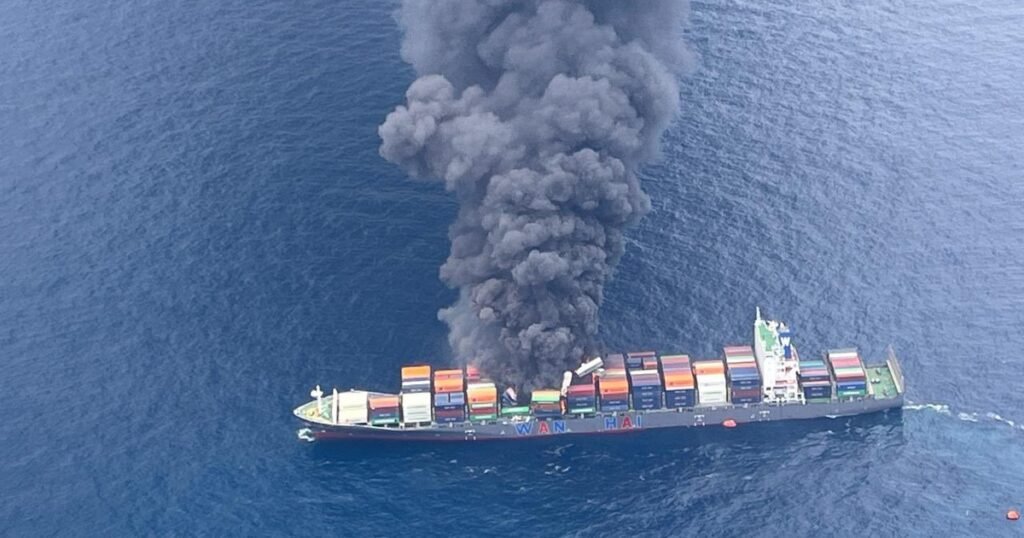
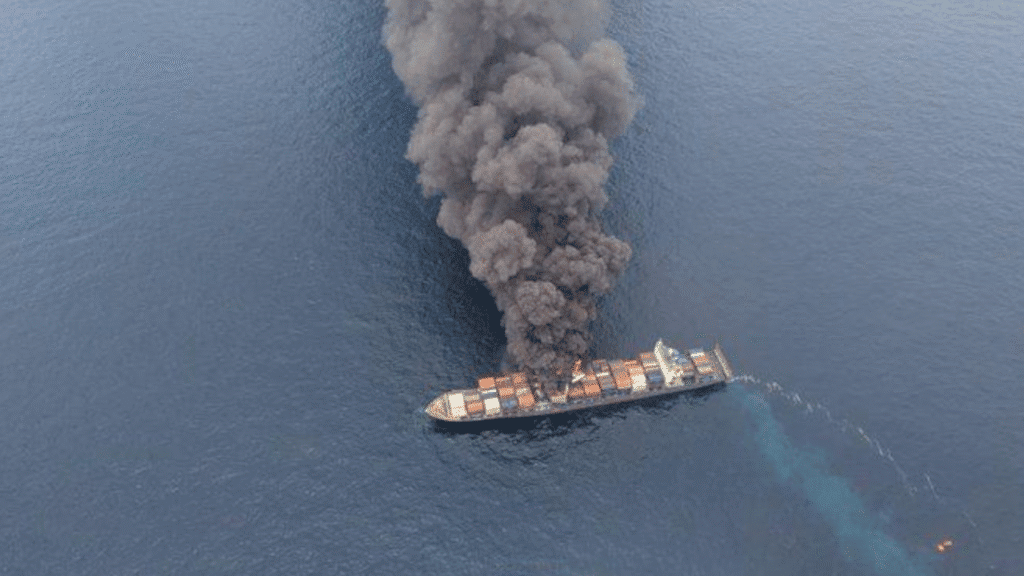
The Wan Hai 503 explosion UAE safe harbor situation drew global attention after the Singapore-flagged container vessel suffered a catastrophic incident on June 9, 2025. The vessel was en route from Colombo, Sri Lanka, to Mumbai, India, when a series of explosions erupted in its cargo hold approximately 130 nautical miles off the coast of Kerala. The explosions resulted in a massive fire, forcing the crew to abandon ship, and highlighted serious concerns about maritime safety and environmental risks.
Explosion and Immediate Rescue Efforts
At around midday, multiple explosions shook the vessel, igniting a large fire that spread rapidly across the cargo area. The Wan Hai 503 was carrying 650 containers, including several with hazardous materials. The severity of the explosions led to at least 40 containers falling overboard into the Arabian Sea, raising immediate concerns about environmental contamination.
The 22-member crew had no choice but to abandon the vessel as the situation became increasingly dangerous. The Indian Coast Guard and Navy quickly mobilized, deploying ships and aircraft to rescue the crew. By the end of the day, 18 crew members were rescued, though four remained missing. The operation highlighted the urgency of responding to maritime disasters and the challenges involved in ensuring crew safety in high-risk situations.

Hazardous Cargo and Environmental Threats
A major concern during the incident was the nature of the cargo. The vessel was transporting hazardous chemicals such as trichlorobenzene, hydroquinone, and tetrachloroethylene, all of which pose significant risks to marine life and the surrounding ecosystem if released into the sea. Authorities feared that any leakage from damaged containers could result in long-term environmental damage along the Indian coastline.
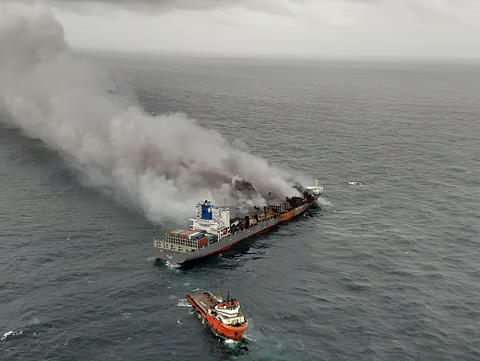
In response, the Indian Coast Guard initiated firefighting operations to contain the blaze and prevent the ship from drifting closer to shore. Efforts were made to stabilize the vessel, but firefighting proved difficult due to limited onboard resources and equipment. This situation drew criticism from the Directorate General of Shipping (DGS), which warned the ship’s owners of possible legal consequences for failing to provide adequate firefighting and salvage capabilities.

UAE Provides Safe Harbor
As the Wan Hai 503 remained adrift and the fire continued to burn, the UAE extended an offer of safe harbor to the stricken vessel. The decision was critical to preventing the ship from posing further environmental risks within Indian waters. The vessel was towed westward, away from India’s Exclusive Economic Zone, and anchored safely within UAE territorial waters. This allowed salvage operations to proceed under controlled conditions.
The UAE’s intervention demonstrated its commitment to maritime safety and environmental protection. By providing a secure location for the vessel, the authorities helped reduce the risk of chemical contamination and ensured that salvage teams could operate safely. The move was widely praised by international maritime organizations as a positive example of regional cooperation in responding to maritime emergencies.
Salvage Operations and Safety Measures
Once in UAE waters, salvage operations focused on extinguishing the remaining fire, securing hazardous cargo, and stabilizing the vessel for transport or dismantling. Teams worked carefully to prevent any leakage of toxic substances and mitigate potential ecological damage. The operation required specialized equipment and coordination between local authorities and international maritime experts.
This incident has underscored the importance of having robust safety protocols and emergency response plans for vessels carrying hazardous materials. It also highlighted the need for regional ports to be prepared to offer assistance in maritime emergencies, particularly for ships at risk of environmental contamination.
Investigations and Future Implications
Investigators from India and Singapore have launched inquiries into the cause of the explosion aboard the Wan Hai 503. Preliminary findings suggest that the incident may have been triggered by a cargo-related underdeck explosion, but the exact cause is still under review. Authorities are also examining whether lapses in safety protocols or insufficient onboard firefighting measures contributed to the disaster.
The incident has broader implications for the shipping industry. It emphasizes the importance of safe handling of hazardous cargo, proper training for crew members, and the need for clear international guidelines for emergency response. Governments and shipping companies alike may need to reassess their safety standards and disaster preparedness to prevent similar occurrences in the future.
Lessons for Maritime Safety
The Wan Hai 503 explosion serves as a reminder of the inherent risks in maritime transport, particularly when hazardous materials are involved. Key lessons include:
- The necessity of rigorous safety protocols for ships carrying dangerous cargo.
- The importance of immediate and coordinated emergency response by local and international authorities.
- The value of offering safe harbor to distressed vessels to prevent environmental disasters.
- The critical need for effective communication and collaboration between nations in maritime emergencies.
Ensuring that such lessons are applied in the future can help reduce casualties, protect marine ecosystems, and maintain the safety and reliability of global shipping networks.
Conclusion
The Wan Hai 503 explosion and subsequent rescue operations highlight the challenges faced in maritime safety and environmental protection. The Indian Coast Guard and Navy played a pivotal role in rescuing the crew, while the UAE’s provision of safe harbor allowed the vessel to be stabilized and salvaged safely. This incident emphasizes the need for stringent safety measures, preparedness, and international collaboration to prevent maritime disasters from escalating into environmental catastrophes.
While investigations continue, the cooperation between India, Singapore, and the UAE demonstrates a commitment to maritime safety and environmental stewardship. The lessons learned from this event will likely influence future regulations and operational practices for shipping companies worldwide, ensuring that hazardous cargo is handled with greater care and that emergency responses are timely and effective.
The Wan Hai 503 tragedy serves as a case study in both the risks and responsibilities inherent in global shipping. It reminds the maritime community of the vital importance of proactive safety measures, well-coordinated rescue operations, and international cooperation in preserving lives and protecting the environment.
Do follow UAE Stories on Instagram
Read Next – Dubai AI Startup Daidu.ai Launches to Lead UAE’s AI Revolution