

Eagle Hills Mandarin Oriental Munich is the headline making waves in the global real estate and hospitality industry. UAE-based real estate developer Eagle Hills has acquired the Mandarin Oriental Munich, one of Germany’s most luxurious and iconic five-star hotels. This major move reflects the developer’s growing ambition to enter and expand its footprint in the European luxury hospitality market.
This acquisition is not just about a high-profile property. It’s about long-term vision, global positioning, and a strategic entry into Western Europe’s premium real estate sector. In this article, we’ll take a deeper look at the deal, why Munich is a key location, what makes the hotel so special, and what the future might hold for both Eagle Hills and Mandarin Oriental.
About the Acquisition
Eagle Hills has officially taken ownership of the Mandarin Oriental Munich, a boutique luxury hotel known for its world-class service, elegant design, and exceptional location. Though the exact figures were not made public, industry insiders estimate the value of the acquisition to be in the range of €300–400 million, based on comparable luxury hotel transactions in the region.

Key highlights of the deal include the sellers being the Mandarin Oriental Hotel Group and a joint venture partner. The buyer is Eagle Hills, a private real estate investment and development company based in Abu Dhabi. The hotel will continue to be managed by Mandarin Oriental under a long-term contract, and Eagle Hills will take full property ownership. This marks its first major asset in Germany.
Eagle Hills has emphasized that the brand, service standards, and guest experience will remain unchanged, with Mandarin Oriental continuing to operate the property.

Why Munich? A Strategic Move into Europe
Munich, the capital of Bavaria, is one of Europe’s most important economic centers. It is home to leading corporations, a vibrant cultural scene, and a growing tourism sector. This makes the city a top choice for luxury investors.
There are several reasons Eagle Hills chose Munich. First, the city has a strong economy. Germany has the largest economy in Europe, and Munich is its wealthiest city per capita. Second, the tourism value is high. With millions of business and leisure travelers visiting annually, the city provides year-round demand for luxury hotels. Third, Munich’s real estate market is stable and attractive, even during global downturns. Lastly, there is growing demand for luxury experiences, making the location ideal for high-end developments.
By choosing Munich as its gateway into Western Europe, Eagle Hills is positioning itself in a safe, stable, and profitable market with long-term potential.
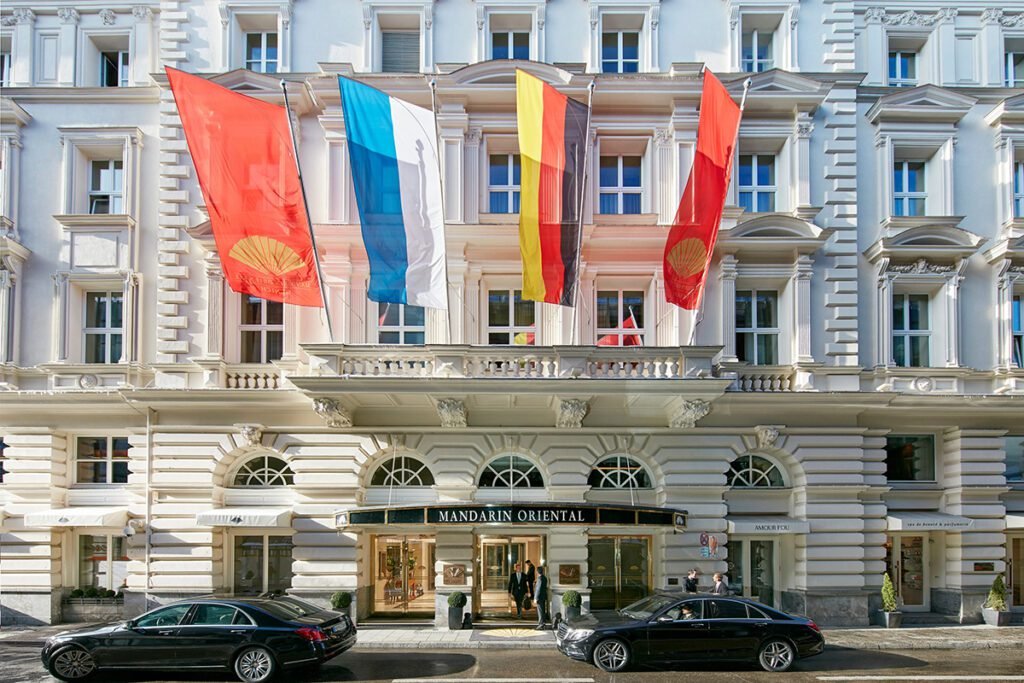
The Mandarin Oriental Munich: A Landmark Property
Located in the historic heart of the city, just steps from Marienplatz and the Hofbräuhaus beer hall, the Mandarin Oriental Munich is known for combining Old World charm with modern elegance.
The property features 48 luxurious rooms and 25 suites, each styled with a mix of Bavarian flair and contemporary comfort. It is home to Matsuhisa Munich, a Michelin-starred restaurant by world-famous chef Nobu Matsuhisa. Guests also enjoy a rooftop terrace with a heated pool and panoramic views of the city and Bavarian Alps. The hotel offers exclusive spa and wellness facilities and caters to a global clientele seeking high-end service.
The hotel is housed in a building that dates back to the 19th century and has preserved its historic character while offering a luxurious modern experience. For Eagle Hills, this is a trophy asset. It allows the developer to associate its brand with one of the most iconic luxury properties in Europe.
About Eagle Hills: A Global Vision for Urban Luxury
Eagle Hills, founded by Emirati businessman Mohamed Alabbar, is known for large-scale mixed-use development projects in emerging markets. The company has developments in the UAE, Serbia, Morocco, Ethiopia, and other regions.
Some of Eagle Hills’ most notable projects include Belgrade Waterfront in Serbia, La Gare in Addis Ababa, Marassi Al Bahrain, and Rabat Square in Morocco.
With the acquisition of Mandarin Oriental Munich, Eagle Hills signals its intent to expand beyond emerging markets into mature and competitive regions like Western Europe.
A spokesperson for Eagle Hills said, “This acquisition aligns with our goal of owning and enhancing world-class urban assets. We see strong growth potential in Europe’s luxury hospitality market.”
Impact on Munich’s Real Estate and Tourism
The acquisition of such a landmark hotel brings positive implications for Munich’s economy, real estate market, and tourism industry.
Among the expected impacts are job creation in both construction and hospitality. Future renovations and operational changes may open new employment opportunities. The deal will also bring increased global interest in Munich as a luxury travel destination and investment hub. The presence of Eagle Hills may boost investor confidence and draw attention from other international developers.
The local economy stands to benefit as high-end travelers bring more business to restaurants, shops, and cultural venues. Additionally, large real estate deals tend to have a ripple effect, often leading to an increase in nearby property values.
What It Means for the Luxury Hospitality Sector
The luxury hospitality industry is recovering well after the global pandemic, and this deal adds momentum to that trend. It shows confidence in long-term travel growth, especially in the premium segment of the market.
This acquisition reflects several ongoing market trends. Many hotel groups are adopting asset-light models, preferring to manage rather than own properties. Mandarin Oriental continues to manage the Munich hotel under this model. The deal also shows that investors are still eager to pay premium prices for branded luxury assets in key cities. Iconic hotel brands like Mandarin Oriental are viewed as stable, long-term investments.
There is also a noticeable shift toward offering unique, experience-driven hospitality. More travelers are seeking authenticity, exclusivity, and high levels of comfort—precisely what Mandarin Oriental Munich delivers.

Future Plans and Expectations
Although no detailed plans have been announced, Eagle Hills is known for upgrading its properties after acquisition. Industry analysts expect that substantial capital may be invested to enhance the hotel even further.
Possible developments could include renovations or room expansions to increase capacity, as well as modernizing interiors. The company may introduce sustainability initiatives aligned with global ESG standards. Smart technologies may also be integrated into guest experiences, such as app-based concierge services and smart room controls.
There is also speculation that Eagle Hills could make similar acquisitions in cities like Vienna, Milan, or Paris, continuing its expansion into the European luxury hotel market.
Conclusion: A Strategic and Symbolic Acquisition
The Eagle Hills Mandarin Oriental Munich deal is a major step in the developer’s global expansion strategy and a significant event for the European hospitality sector. By acquiring one of Germany’s most prestigious hotels in a high-demand city, Eagle Hills is showing its commitment to long-term growth and its confidence in the luxury travel market.
For Munich, this means renewed global attention, potential upgrades in infrastructure, and stronger ties with international investors. For the hospitality industry, it is a sign that luxury travel remains a top priority and that branded, experience-rich properties are still seen as valuable assets.
To summarize, Eagle Hills has not just purchased a hotel. It has bought into a legacy, a brand, and a city. With its track record of urban transformation and visionary development, all eyes are now on what comes next for the Mandarin Oriental Munich.
Do follow UAE Stories on Instagram
Read More: Dubai Chocolate Bar Recall: Why the FSA Issued an Urgent Warning in the UK