
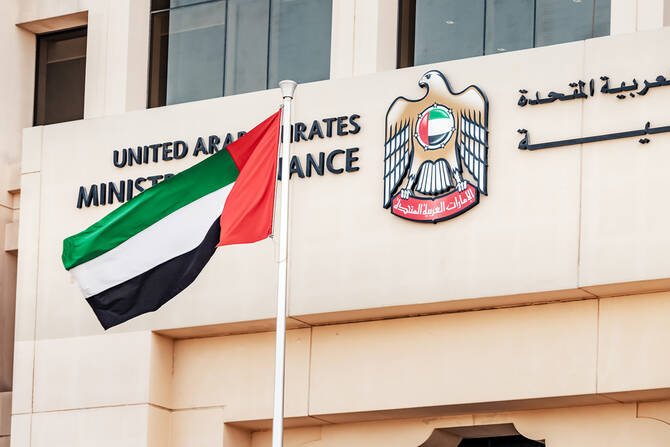
A Future-Ready Vision for the Nation
The United Arab Emirates has officially launched its new 2027–2029 budget cycle—and it’s nothing short of transformative. With a core focus on sustainability, artificial intelligence (AI), and boosting efficiency, the UAE government is signalling a future where smart governance and green priorities go hand in hand.
This strategic shift aims to revolutionise how the federal budget is used. Moving beyond a traditional financial planning document, it is now positioned as a dynamic, future-ready tool designed to support national goals, improve public services, and advance the country’s development in meaningful, measurable ways.

Sheikh Maktoum bin Mohammed, First Deputy Ruler of Dubai, Deputy Prime Minister and Minister of Finance, emphasized that this new cycle reflects the government’s progressive approach—one that is proactive, flexible, and driven by long-term integration of policies.
From Routine Budgeting to Strategic Impact

For years, federal budgets around the world have been treated as yearly forecasts. But the UAE is changing that narrative by transforming its financial plans into multi-year instruments that act as roadmaps for sustained progress.
The new 2027–2029 budget builds on the solid foundation of four previous strategic cycles, during which the federal budget reached a combined value of about Dh900 billion. But this time, the focus is even sharper. It’s about using every dirham with purpose—targeting areas like sustainability, technology, education, health care, and social welfare.
This evolution is not just financial. It’s structural. It’s philosophical. The aim is to align budgeting with real-world priorities: clean energy, data-driven innovation, modern governance, and human wellbeing.
Empowering Smart Governance with AI
Artificial intelligence isn’t just a buzzword in this budget—it’s a foundational tool.
The Ministry of Finance has committed to embedding smart technologies and advanced analytical models into the core of its financial planning and decision-making. This leap into digital efficiency is designed to cut red tape, improve accuracy, and help federal entities better anticipate and adapt to changing economic and social landscapes.
Smart budgeting means more than just better numbers. It means better lives. With AI models supporting data-driven decisions, the country can ensure that resources are channelled to where they’re needed most—whether it’s upgrading schools, expanding healthcare access, or developing infrastructure that supports a greener future.
A Strong Foundation for Ambitious Goals
As of June 2025, public debt stood at Dh62.1 billion. In contrast, the federal government’s assets reached approximately Dh464.4 billion by the end of 2024—a clear sign of financial stability.
This balance allows the government to push forward with ambitious plans, knowing that the financial backing is there. It also reflects years of work to enhance regulatory frameworks and expand international partnerships. The digital transformation of the financial system is already paying dividends, and the new budget cycle is designed to take those results even further.
Mohamed Al Hussaini, Minister of State for Financial Affairs, said the ministry has not only upgraded the tools it uses, but also reimagined the entire budgeting experience. What used to involve 50 steps has been streamlined to just 10. Procurement processes that once took 60 days can now be completed in under six minutes.
That kind of leap in operational efficiency isn’t just convenient—it’s transformative.
Strategic Investments in Key Sectors
The new budget cycle doesn’t just focus on how money is managed. It zeroes in on where the money goes.
Core sectors like education, healthcare, social welfare, and government services are taking center stage. These are the pillars of a resilient, forward-thinking society—and the UAE is making it clear that its future will be built on the strength of its people.
By focusing public spending on these essential areas, the government is ensuring long-term societal returns. It’s not just about funding schools or clinics—it’s about empowering the next generation of scientists, innovators, teachers, and public servants.
The UAE’s Economy: Stronger Than Ever
The foundation for this budget’s ambition lies in a healthy, fast-growing economy.
Last year, the UAE’s economy expanded by 4 per cent, with most of that growth driven by the thriving non-oil sector. Real GDP reached Dh1.776 trillion. Non-oil activities contributed a record Dh1.34 trillion—about 75 per cent of the total economic activity—while oil-related activities added Dh434 billion.
Looking ahead, the Central Bank forecasts even brighter days. Real GDP is expected to grow by 4.4 per cent in 2025, and 5.4 per cent in 2026. This growth is fuelled by a combination of dynamic non-oil sectors and an anticipated boost in oil production under updated Opec+ plans.
The hydrocarbon sector is expected to grow by 4.1 per cent in 2025, with a significant jump to 8.1 per cent in 2026. Meanwhile, the non-hydrocarbon economy is projected to maintain a steady growth of 4.5 per cent annually.
These numbers are more than statistics—they’re the backdrop for a government ready to invest confidently in its people and infrastructure.
A Commitment to Sustainability at Every Level
One of the standout elements of the new budget is its deep commitment to sustainability—not just in environmental terms, but across every level of policy and practice.
The focus on sustainable growth means more than just supporting green energy projects or planting trees. It’s about creating an economy that is self-reliant, diversified, and resilient to shocks. It’s about integrating sustainability into fiscal policy, procurement, public investment, and digital transformation.
This approach ensures that every aspect of government spending contributes to the broader goal of long-term environmental, economic, and social balance.
A Budget That Reflects Confidence and Clarity
Last year, the UAE Cabinet approved the largest federal budget in the country’s history—Dh71.5 billion for 2025, with an equal projection in revenue. This came on the heels of the approval of the Dh192 billion federal budget for the 2024–2026 cycle.
These numbers reflect not only confidence in the UAE’s financial systems but also the clarity of its vision for the future.
The launch of the 2027–2029 cycle cements this vision: one where public resources are managed with precision, priorities are people-centred, and results are measured in both economic output and human happiness.
Looking Ahead: A Smarter, Greener, More Inclusive UAE
This budget cycle is more than a government plan. It’s a statement of intent.
It represents the UAE’s promise to its people—that the future will be smarter, greener, and more inclusive. That every investment will be made with purpose, and every dirham will serve the greater good.
As the UAE continues its journey toward becoming a global model for sustainable development, innovation, and excellence in governance, the 2027–2029 federal budget stands as both a blueprint and a beacon.
In a region—and a world—marked by rapid change, the UAE is choosing to lead with clarity, courage, and commitment.
Do follow UAE Stories on Instagram
Unforgettable Summer in the UAE: What Every Tourist Should Know