
A Desert City That Thinks Smart
In the heart of one of the world’s most modern cities lies a timeless secret. While Dubai dazzles with glass towers, luxury malls, and air-conditioned lifestyles, the older quarters of the city tell a different story — one of human intuition, community planning, and a deep understanding of nature.
Old Dubai, especially areas like Al Fahidi Historical Neighbourhood and Deira’s winding souks, stands as a masterclass in climate-conscious urban design. The people who built these neighborhoods weren’t just thinking about beauty or structure — they were thinking about survival in one of the harshest climates on Earth.

Narrow Lanes, Tall Walls, and Strategic Shadows
What strikes most first-time visitors about Old Dubai isn’t just the charm or the culture — it’s how cool the air feels. Even on a blistering afternoon, when the sun burns down mercilessly, walking through these tight alleyways brings surprising comfort.

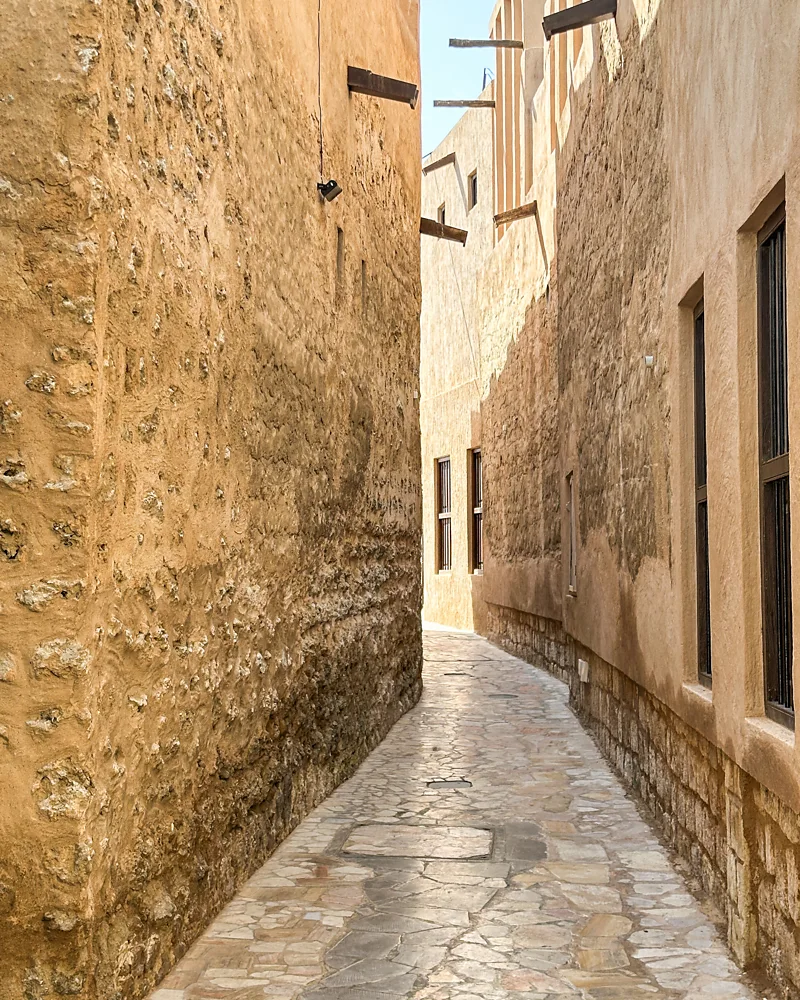
The narrow streets weren’t built by accident. These lanes create a maze that shields pedestrians from direct sunlight for most of the day. As the sun travels across the sky, the tall sand-colored buildings throw long shadows, which move but never fully leave the streets exposed. There’s always a shaded escape somewhere nearby.
Walls built close to each other also trap cooler night air, creating natural breezeways. Wind is funneled through the narrow corridors, amplifying airflow and keeping temperatures lower than in the open areas just a few blocks away.
Wind Towers: Dubai’s Original Air Conditioners
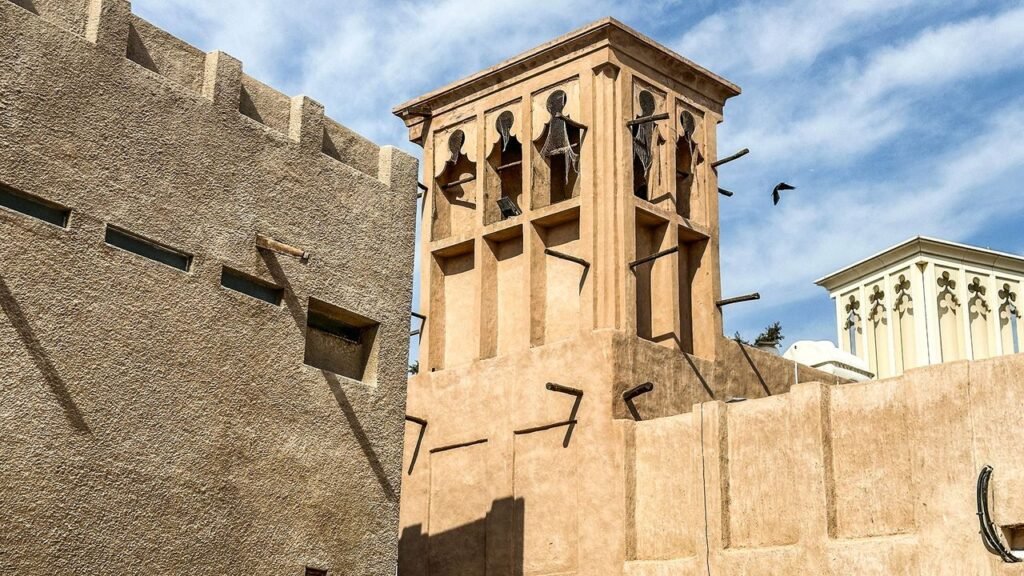
One of the most genius design elements you’ll spot in Old Dubai is the Barjeel, or wind tower. These architectural marvels were used long before electricity powered AC units. Each tower rises above the rooftop and catches even the slightest breeze. The structure channels the air downward into the living spaces below, creating a cooling effect that feels natural and refreshing.
Some homes were built with multiple wind towers to ensure there was always some air movement, even on days with minimal wind. The system may seem simple, but it’s a testament to how deeply people respected and worked with nature.
Materials That Breathe With the Heat
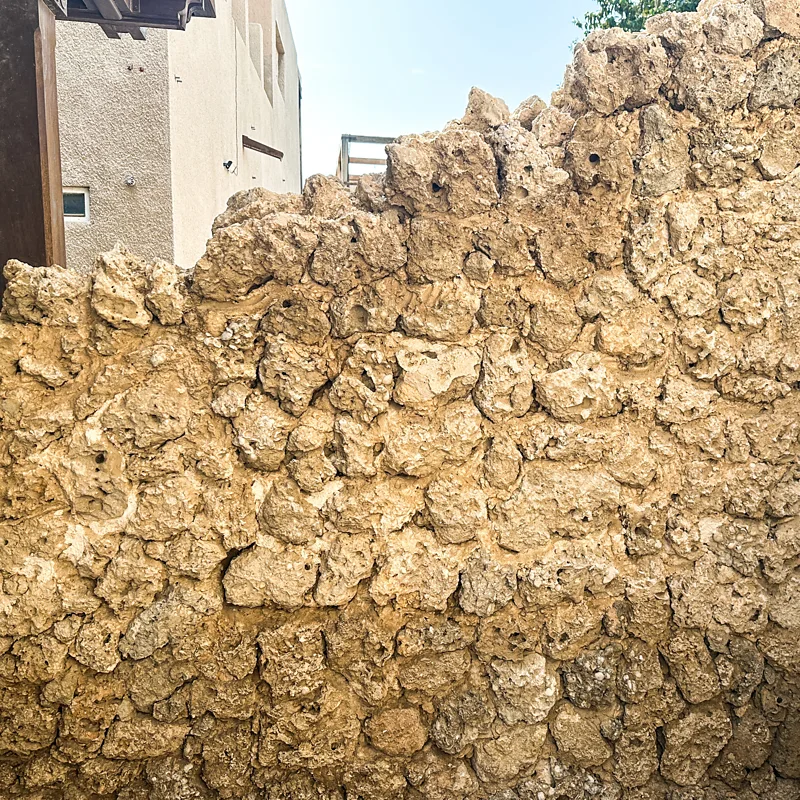
The buildings in Old Dubai weren’t constructed with concrete and steel — they were built with coral stone, gypsum, and lime, materials known to insulate against heat. Coral, in particular, is porous and holds onto the cool air from the night, slowly releasing it during the hotter parts of the day.
These materials, sourced locally, acted like nature’s thermostat. The thick walls prevented interiors from heating up quickly, and rooms remained cool without the need for any electrical assistance. It’s smart, sustainable, and surprisingly effective.
A Lifestyle Built Around the Sun
In Old Dubai, the daily schedule once revolved around the movement of the sun. Markets opened early, long before the sun reached its peak. As the heat intensified around noon, shopkeepers would close their stores and retreat indoors for lunch and rest. The bustling activity returned only after the sun had dipped low, casting cooler shadows across the streets.
Even today, some shops and homes maintain that rhythm — a nod to a way of life that respected nature’s tempo instead of rushing against it.
Community Living: More Than Just Architecture
It wasn’t just the buildings that made Old Dubai cooler — it was the people and how they lived. Homes were built around central courtyards, often with trees or small water features. These spaces weren’t just for family gatherings — they were temperature regulators. Shade from trees and the evaporation from water helped keep the surrounding air cooler.
Neighbors interacted regularly, often sharing courtyards or sitting areas, which meant fewer redundant structures and more shared shaded zones. It was a lifestyle that placed comfort and community over isolation and extravagance.
Modern Lessons from Ancient Streets
While much of Dubai has embraced hyper-modern living, architects and planners are beginning to look backward for inspiration. Sustainable design is the buzzword of the future — and Old Dubai has already written that playbook.
There are now renewed efforts to integrate traditional Emirati architectural principles into newer projects. From shaded walkways to wind tower-inspired ventilation systems, the city is slowly finding a balance between its ambitious future and its intelligent past.
In a world grappling with climate change and energy shortages, places like Old Dubai shine as reminders of how built environments can adapt, thrive, and even beat the heat — without relying on technology alone.
Why Old Dubai Still Feels Alive
There’s something magical about walking through these historic streets at sunset. The colors deepen, the air feels lighter, and the city hums with a gentle energy. Tourists explore spice-scented souks, locals gather in shaded courtyards, and children play in narrow alleys untouched by the harsh glare of the sun.
Old Dubai is more than a tourist attraction — it’s proof that tradition and innovation can coexist. It’s living history that still serves a very real, very practical purpose.
Beating the Heat, One Street at a Time
While skyscrapers continue to rise and technology gets smarter, there’s something incredibly comforting about knowing that the oldest parts of Dubai — built without machines or modern materials — are still the coolest places to be.
In the battle against the heat, Old Dubai doesn’t fight. It adapts, flows, and breathes — and in doing so, it wins.
And perhaps, in this desert city that never stops evolving, the greatest innovations are the ones that have always been there.
Do follow UAE Stories on Instagram
Indians Flock to Visa-Friendly Destinations: Dubai and Bali Lead the Way